
Does Gluco6 Work? 2026 Review of Claims and Dose Gaps
Affiliate disclosure: purchases through links may earn a commission at no extra cost to you. Read disclosure.
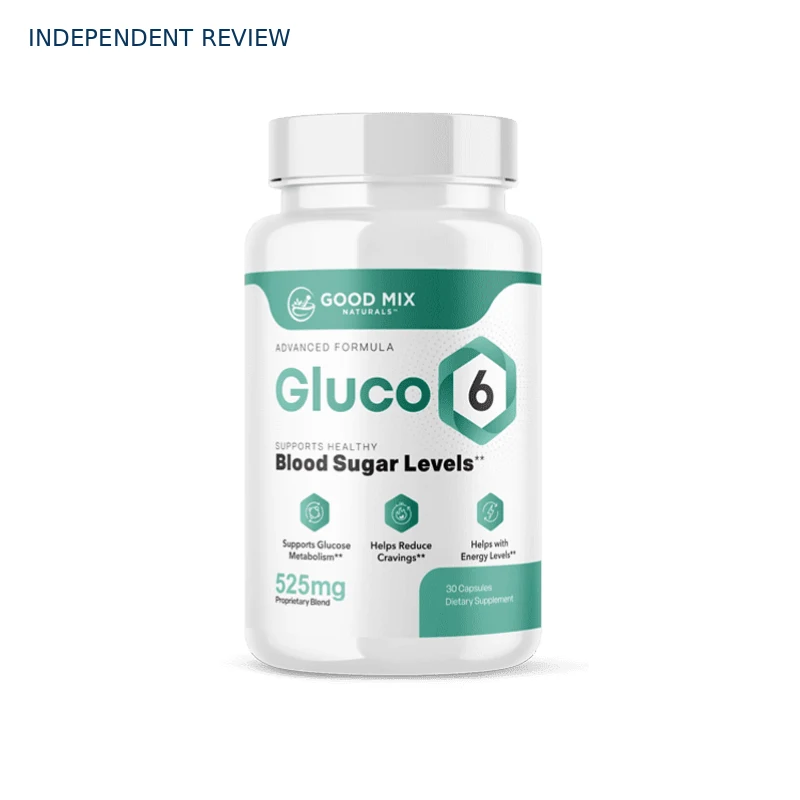
This evidence review complements the main Gluco6 review by examining what the cited research actually measured. It distinguishes ingredient experiments from a trial of the marketed capsule and acute glucose responses from sustained disease outcomes. A plausible pathway or favorable testimonial does not establish the finished formula’s effect against placebo.
| Advertised outcome | Proposed pathway | Human research context | Evidence judgment |
|---|---|---|---|
| Blood sugar support | L-arabinose and sucrose digestion | Krog-Mikkelsen et al. (2011) (PMID: 21677059) [reference]: n=15 healthy men; acute beverage crossover | Not a chronic Gluco6 or diabetes trial |
| General meal protection | Delayed carbohydrate absorption | Halschou-Jensen et al. (2015) (PMID: 25400106) [reference]: mixed-meal studies did not reproduce beverage benefits | Food-matrix dependence limits extrapolation |
| Improved glucose variables | Chromium supplementation | Anderson et al. (1997) (PMID: 9356027) [reference]: n=180; 200/1,000 mcg picolinate; 4 months | Different chromium form; participants retained medication |
| Energy / tolerability | TeaCrine / theacrine | Taylor et al. (2016) (PMID: 26766930) [reference]: n=60; 8 weeks; 200/300 mg | Safety endpoints do not establish diabetes efficacy |
| Cinnamon benefit | Ingredient-level hypothesis | Khan et al. (2003) (PMID: 14633804) [reference]: 2025 Expression of Concern flagged See the 2025 Expression of Concern (PMID: 40834253) [correction]. | Do not treat as dependable proof |
| Formula-specific weight / A1C result | Combined marketed product | No identifiable published human trial established in reviewed material | Effect size and response rate unestablished |
The Claimed Mechanism Versus What Was Tested
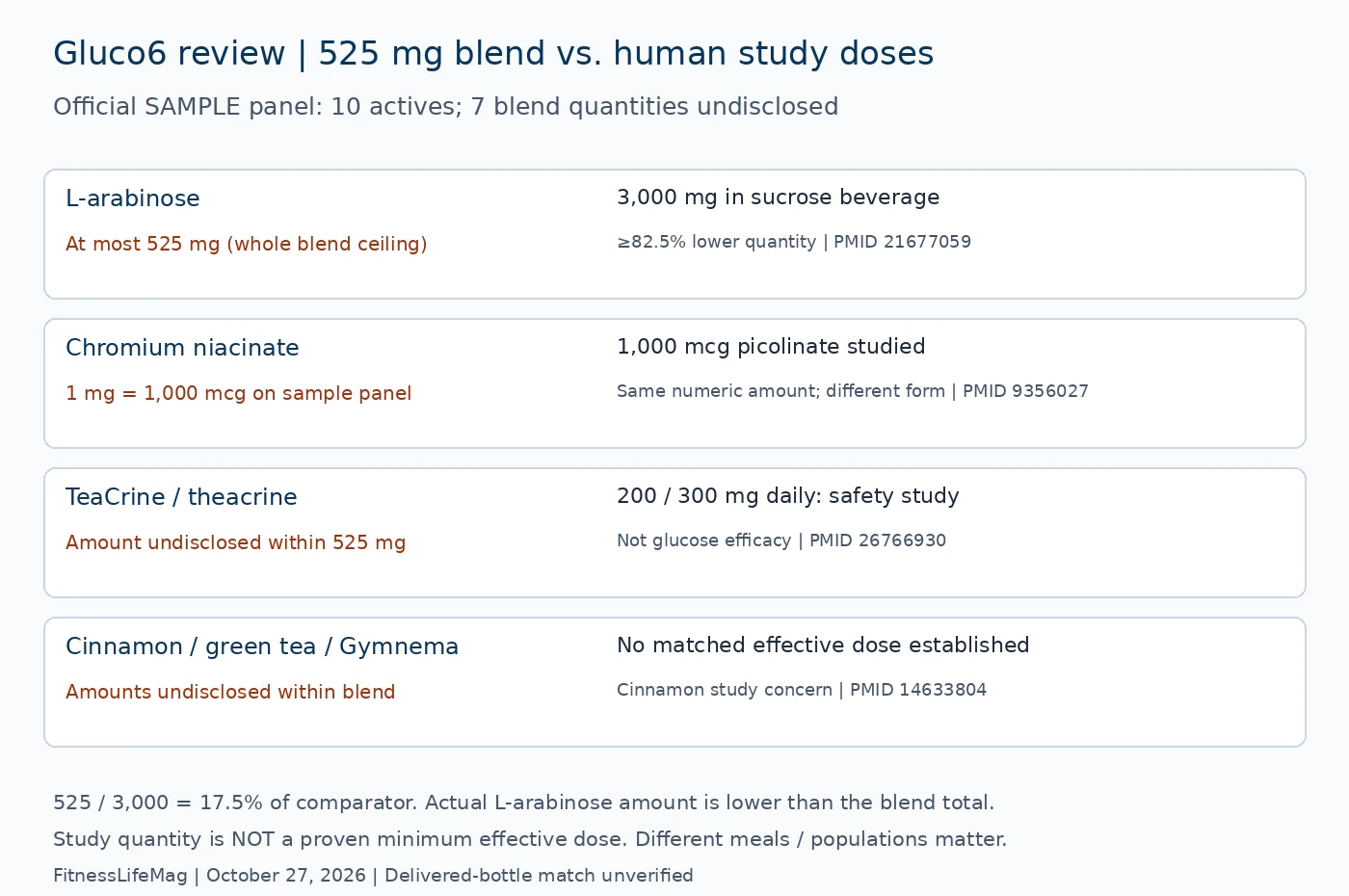
A Gluco6 mechanism claim must be supported at the level being asserted. Human L-arabinose research addresses sucrose digestion, not a demonstration that the commercial capsule corrects a universal glucose disorder. The 525 mg blend ceiling also limits transfer from gram-scale beverage experiments to the published sample formula.
The useful question is whether a proposed process produces a meaningful outcome in the intended users. Showing an effect in a laboratory system, a sweetened drink or a healthy-volunteer experiment does not establish lasting glucose control in adults with diabetes. The exact ingredient preparation and dosing conditions matter. [diabetes]
The contrast between sucrose drinks and mixed meals is especially informative. The mixed-meal publication reported that earlier benefits could not be reproduced under its meal conditions. That is a limit on broad claims about routine eating, rather than proof that the ingredient never has a physiological effect. Halschou-Jensen et al. (2015) — PMID 25400106 [mixedmeal]
Finished-Product Trial Gap and Human Research Findings
The reviewed sources did not establish a published human trial on the exact Gluco6 formula. Ingredient studies differ in population, dose and endpoint. A 180-person chromium trial and a 60-person TeaCrine safety study cannot be combined into a new trial or treated as measured results for the commercial capsule.
In the L-arabinose crossover experiment, 15 healthy men tested sucrose drinks containing different ingredient proportions. The 4% condition corresponds to 3 g with 75 g sucrose. A short post-meal glucose curve is a different endpoint from months-long HbA1c change, medication requirements or diabetes complications. Krog-Mikkelsen et al. (2011) — PMID 21677059 [arabinose]
The chromium study randomized 180 adults receiving their usual diabetes medicines to placebo or chromium picolinate. Gluco6’s sample label instead states niacinate. This does not erase the ingredient research, but it prevents a direct assumption that the capsule reproduces the study’s outcomes or replaces medication. Anderson et al. (1997) — PMID 9356027 [crtrial]
- TeaCrine trial: safety and habituation in healthy adults; no established diabetes-treatment endpoint. Taylor et al. (2016) — PMID 26766930 [teacrine]
- Cinnamon paper: retain its Expression of Concern flag when discussing historical findings. Khan et al. (2003) — PMID 14633804 [cinnamontrial]
- Formula search: access to the trial-search endpoints was incomplete; report no identifiable trial, not an exhaustive proof of absence.
Week 2, Week 4 and Weeks 8–12: What Can Be Concluded?
No validated Gluco6 results timeline was established. Week 2, week 4 and weeks 8–12 are possible review points for an agreed monitoring plan, not promised milestones. Short-term energy, weight fluctuation or a single glucose reading cannot identify the capsule’s effect without considering food, medicines, illness and measurement conditions.
| Checkpoint | Reasonable observation question | Unsupported conclusion |
|---|---|---|
| Week 2 | Any new symptom or change in established monitoring? | The product has started reversing diabetes |
| Week 4 | Are measurements interpreted consistently with the clinician’s plan? | A good day proves the capsule works |
| Weeks 8–12 | Does a clinician see a meaningful trend with other changes considered? | Any laboratory change is caused solely by Gluco6 |
Do not delay a treatment review while waiting for a seller’s preferred timeframe. Symptoms of poor control, medication side effects or unexplained readings deserve appropriate assessment regardless of how many capsules have been taken. Clinical monitoring should follow personal risk, not an advertising calendar. [diabetes]
A simple record can include dates, clinician-requested measurements, meal context, medicines, symptoms and other changes. It improves interpretation but is not a substitute for a controlled trial. Avoid deliberately changing prescribed treatment or repeatedly testing a suspected harmful product to manufacture a before-and-after comparison.
Factors That Influence Real-World Interpretation
Baseline health, medicines, diet, adherence and measurement methods can change observed glucose results. These factors also make testimonials difficult to interpret. The lack of an established Gluco6 trial means no reliable responder subgroup, success percentage or predicted personal benefit can be assigned from the reviewed sources.
Improvement after starting a capsule may coincide with renewed attention to meals, activity or prescription use. Without a suitable comparator, the contribution of each change remains uncertain. Similarly, no noticeable benefit in one individual cannot identify whether formulation, dose, baseline status or another factor explains the experience. [ftc]
- Check that the studied population resembles the intended user.
- Separate statistical change from a change that improves health or management.
- Look for prespecified endpoints and balanced adverse-event reporting.
- Ask whether all randomized participants and important medication changes were accounted for.
Use the label audit for composition and the safety review for suitability questions. The ingredient hub supports label interpretation. The Dietary Supplements Guide places these trial standards in context; commercial details remain in the parent review.
Gluco6 Effectiveness FAQs
These five effectiveness questions address beverage research, the eight-week TeaCrine study, mixed meals and subjective energy. Each distinguishes an observed research endpoint from a broader Gluco6 claim. Their purpose is to clarify evidence transfer, not assign an individual response probability or promise a particular glucose result.
Does an L-arabinose drink study prove a Gluco6 capsule works?
No. A beverage experiment tests a specified ingredient amount with a defined sucrose load in a particular population. Gluco6 contains a multi-ingredient blend and has different administration conditions. Those differences prevent treating an acute beverage response as a measured benefit of the finished capsule.
Can TeaCrine’s eight-week safety study establish weight loss?
A safety study can assess its specified tolerability markers over its observation period. That does not make it a positive weight-loss trial or a diabetes trial. The TeaCrine publication should be interpreted according to its actual endpoints and participants rather than the seller’s desired outcome.
Why does a mixed-meal study matter for glucose claims?
It tests whether a result transfers beyond a simplified drink challenge. The reviewed L-arabinose publication could not reproduce beverage benefits in its mixed-meal conditions. This limits generalization to everyday eating and shows why ingredient amount alone cannot establish the marketed capsule’s real-world effect.
Is feeling more energetic a reliable sign of improved glucose control?
Energy is subjective and can change with sleep, food, expectations or stimulating ingredients. It does not establish improved HbA1c or a reduction in diabetes risk. Interpret symptoms and objective measurements through a clinician’s monitoring plan, particularly when several lifestyle or medicine changes occur together.
Would a stronger ingredient dose guarantee better Gluco6 results?
No. Dose is only one part of an evidence comparison. Ingredient form, study population, timing, comparator and measured outcome also matter. Increasing capsule intake changes every listed ingredient together and can increase unwanted effects. Follow the label and seek professional advice instead of recreating research doses.
References
- Krog-Mikkelsen I et al. (2011). The effects of L-arabinose on intestinal sucrase activity: dose-response studies in vitro and in humans. Am J Clin Nutr. 94:472–478. DOI: 10.3945/ajcn.111.014225. PMID: 21677059.
- Halschou-Jensen K et al. (2015). A mixed diet supplemented with L-arabinose does not alter glycaemic or insulinaemic responses in healthy human subjects. Br J Nutr. 113:82–88. DOI: 10.1017/S0007114514003407. PMID: 25400106.
- Anderson RA et al. (1997). Elevated intakes of supplemental chromium improve glucose and insulin variables in individuals with type 2 diabetes. Diabetes. 46:1786–1791. DOI: 10.2337/diab.46.11.1786. PMID: 9356027.
- Taylor L et al. (2016). Safety of TeaCrine®, a non-habituating, naturally-occurring purine alkaloid over eight weeks of continuous use. J Int Soc Sports Nutr. DOI: 10.1186/s12970-016-0113-3. PMID: 26766930.
- Khan A et al. (2003). Cinnamon improves glucose and lipids of people with type 2 diabetes. Diabetes Care. 26:3215–3218. DOI: 10.2337/diacare.26.12.3215. PMID: 14633804. Read with the 2025 Expression of Concern.
- NCCIH: Diabetes and Dietary Supplements
- FTC: Health Products Compliance Guidance
- Official manufacturer SAMPLE label
- American Diabetes Association (2025). Expression of Concern regarding Khan et al., Cinnamon Improves Glucose and Lipids of People With Type 2 Diabetes. Diabetes Care. 48:1646. DOI: 10.2337/dc25-ec09. PMID: 40834253.