
Does Sugar Defender Work? 200 mg Blend vs Human Trials
Affiliate disclosure: labeled offer links may earn the publisher a commission. This independent assessment does not represent the seller.
Buying information is separate from evidence of benefit or individual suitability.
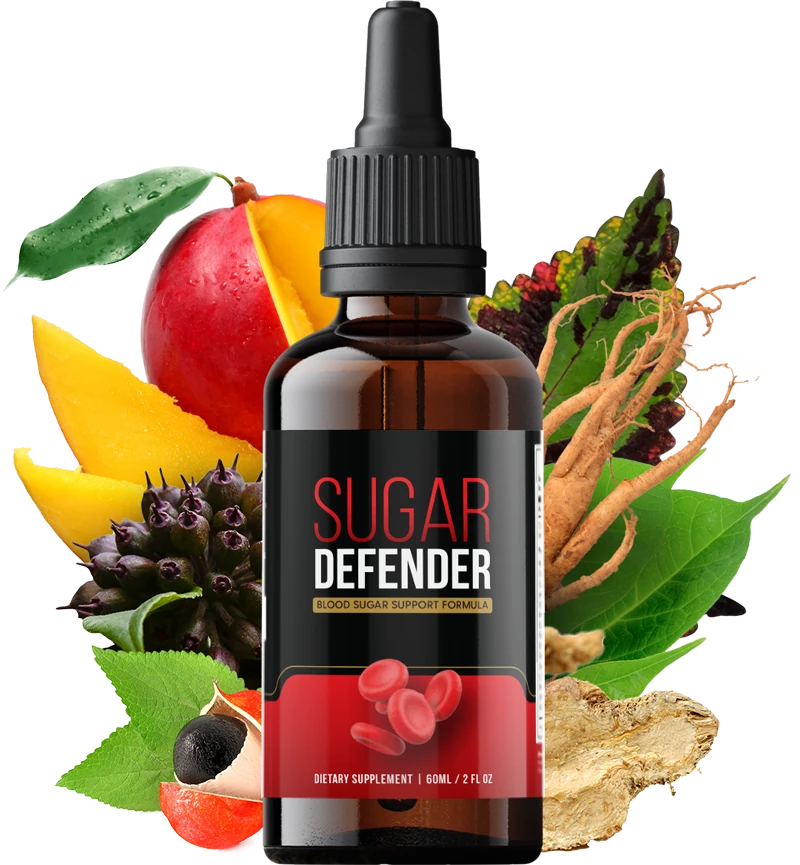
Does Sugar Defender work as advertised? Ingredient research offers signals, but the inspected evidence does not establish results for this finished liquid. Its 0.7 mcg chromium declaration and hidden blend amounts limit study matching. The main review combines these findings with safety and purchase terms.
| Advertised outcome | Inspected evidence | Applicability | Practical interpretation |
|---|---|---|---|
| Sharper thinking | The inspected studies address glycemic outcomes, not a validated cognitive benefit for this liquid. | Neither ingredient plausibility nor an energy testimonial establishes finished-product cognitive effects. | Do not infer improved thinking from an advertised metabolic mechanism. |
| Healthy blood sugar | Chromium and ginseng studies report mixed findings. Asbaghi et al. (2020), PMID: 32730903 [1] Shishtar et al. (2014), PMID: 25265315 [2] | They examine other doses or preparations, not the finished liquid. | A blood-sugar benefit cannot be predicted from ingredient names. |
| More energy or less fatigue | The blend lists guarana and green tea. | Caffeine exposure and finished-product fatigue outcomes remain unresolved. | Stimulation is not proof that glucose control improved. |
| Reduced cravings or weight support | The seller highlights ingredients including gymnema and African mango. | The inspected glycemic reviews do not establish this formula’s weight or craving outcomes. | Do not assume these claims follow from a blood-sugar mechanism. |
| Guaranteed results over time | Exact-name searches found no matching finished-product records. | This is bounded by the names and databases searched. | No reliable product-specific response timetable can be set. |
Plausible mechanisms are not measured benefits
Sugar Defender’s glucose-support narrative links chromium and botanical ingredients to metabolic pathways, but a plausible pathway is not a clinical outcome. A finished liquid must deliver relevant constituents and demonstrate useful effects in appropriate people. The inspected artwork does not disclose enough individual quantities to establish that chain.
Chromium has a role in insulin-related biology, yet NIH describes inconsistent supplementation results and questions about which people benefit. The existence of chromium in a formula does not show that its declared amount meaningfully changes glucose. NIH Office of Dietary Supplements, source [3]
- Ingredient presence answers a composition question, not an outcome question.
- Mechanistic laboratory findings do not specify a useful human serving of this liquid.
- Improved energy, weight and HbA1c are different outcomes and require their own evidence.
For the full panel and quantity bounds, use the ingredient analysis. General disease management belongs with professional care, not a supplement mechanism diagram.
What the human studies actually tested
The most informative Sugar Defender comparison is between its disclosed quantities and the actual preparations used in human research. The documented exact-name PubMed and ClinicalTrials.gov searches identified no matching finished-product records. Ingredient studies therefore inform plausibility and uncertainty; they do not establish that Sugar Defender itself works.
| Study | Design and population | Result inspected | Limit for Sugar Defender |
|---|---|---|---|
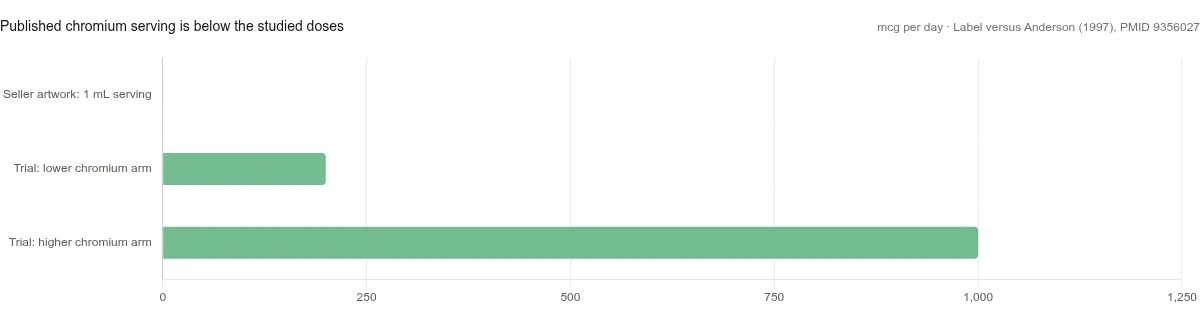
| Anderson (1997) Anderson et al. (1997), PMID: 9356027 [4] | A randomized trial enrolled 180 adults with type 2 diabetes for four months. | Daily chromium doses were 200 or 1,000 mcg, with favorable glucose-related findings. | The artwork declares 0.7 mcg; trial results cannot be scaled proportionally to that amount. |
| Asbaghi (2020) Asbaghi et al. (2020), PMID: 32730903 [1] | A meta-analysis included 28 chromium studies. | Pooled HbA1c changed by −0.71 percentage points, with varied studies. Fasting-glucose heterogeneity was 99.8%. | A pooled result across preparations is not an expected effect for this liquid. |
| Shishtar (2014) Shishtar et al. (2014), PMID: 25265315 [2] | Sixteen ginseng trials included participants with and without diabetes. | Fasting glucose fell modestly; overall HbA1c did not significantly change. | Preparations varied, many trials were short, and commercial conflicts were disclosed. |
| Vuksan (2019) Vuksan et al. (2019), PMID: 29478187 [5] | Twenty-four completers used American ginseng at 3 g daily in an eight-week crossover trial. | HbA1c differed by −0.29 percentage points and fasting glucose by −0.71 mmol/L. | The small trial used a different ginseng species and disclosed a commercial affiliation. |
| Devangan (2021) Devangan et al. (2021), PMID: 34467577 [6] | Ten gymnema studies involved 419 participants. | The review reported glycemic changes with very high heterogeneity. | Before–after comparisons do not isolate a placebo-controlled product effect. |
The study summaries above use inspected abstracts rather than full-paper risk-of-bias assessments. Unavailable funding or extraction details are not assumed favorable. Neither a small positive trial nor a heterogeneous pooled estimate validates an unspecified multi-ingredient serving.
Can a result timeline be supported?
Sugar Defender does not have a reliable response timetable established by the inspected finished-product evidence. Ingredient trials lasting eight weeks or four months cannot become a promise that this liquid works within the same period. Changes in glucose should be assessed clinically rather than inferred from how a supplement feels.
| Time-related statement | What the evidence permits |
|---|---|
| A few days of increased alertness | A subjective sensation cannot establish better long-term glucose control. |
| Eight weeks in an American-ginseng study | That period belongs to a different species and preparation, not a product guarantee. |
| Four months in a chromium trial | That period describes a specific randomized study, not directions for this liquid. |
Keep glucose monitoring, laboratory review and treatment decisions with your clinician. NCCIH advises against substituting unproven supplements for diabetes treatment. NCCIH, source [7]
Why an apparent improvement can be misleading
An observed change after starting Sugar Defender would not, by itself, identify its cause. Medicines, food intake, activity, illness and measurement variability can all change glucose readings. The undisclosed blend proportions add another uncertainty: even a relevant ingredient study may not match the amount or preparation in this liquid.
- A before–after comparison has no untreated counterfactual.
- A single glucose reading and a longer-term laboratory outcome answer different questions.
- A medication adjustment can explain improvement independently of a supplement.
- A testimonial may be sincere without establishing causation or representing typical buyers.
Sugar Defender’s seller-selected experiences are evaluated separately in the feedback and complaints assessment. For medication concerns use the safety page; ingredient context is in the ingredient hub and supplements guide.
Sugar Defender effectiveness questions
The central Sugar Defender effectiveness question is whether the complete liquid has demonstrated outcomes, not whether any listed ingredient has been studied. The inspected evidence supports distinctions among trial results, mechanisms and personal impressions. Those distinctions prevent a credible ingredient finding from becoming an unsupported promise for a different formula.
Does a chromium trial prove Sugar Defender works?
No. Anderson’s trial examined chromium picolinate at 200 or 1,000 mcg daily, not Sugar Defender. The artwork declares 0.7 mcg per 1 mL. Differences in quantity and the presence of a multi-ingredient blend prevent that trial from establishing this product’s effect.
Does the search prove that no product trial exists anywhere?
No. Exact-name PubMed and ClinicalTrials.gov searches identified no matching finished-product records on the stated check date. Studies using different names, unpublished work and unregistered trials could escape that search. The finding describes the searched evidence, not every possible source.
Can more energy show better glucose control?
No. Feeling more alert is not a validated measure of improved glucose control. Sugar Defender lists guarana and green tea, but their caffeine amounts are unresolved. Persistent fatigue or changing glucose readings warrant clinical assessment rather than interpretation through a supplement claim.
Can I predict an HbA1c change from the pooled chromium estimate?
No. A pooled estimate averages studies with different participants and preparations, and the inspected chromium review showed substantial heterogeneity. It does not forecast an individual response or the effect of Sugar Defender’s declared serving. Clinical monitoring remains necessary for treatment decisions.
Would doubling the serving make the research match?
There is no evidence supporting that conclusion. Changing the serving would change exposure to the entire blend, not just chromium, and the documents already conflict about directions. Do not calculate a self-selected dose from trial comparisons; obtain professional and seller clarification first.
Complete Sugar Defender assessment
Broad evidence, value and buying decision.
Full artwork, hidden amounts and study matching.
Interactions, cautions and warning signs.
Feedback provenance, returns and alternatives.
References
- Asbaghi et al. (2020). Chromium supplementation and glycemic control: meta-analysis. PMID: 32730903.
- Shishtar et al. (2014). The effect of ginseng on glycemic control: systematic review and meta-analysis. PMID: 25265315.
- NIH Office of Dietary Supplements. Chromium: health professional fact sheet.
- Anderson et al. (1997). Elevated intakes of supplemental chromium improve glucose and insulin variables in individuals with type 2 diabetes. PMID: 9356027.
- Vuksan et al. (2019). American ginseng extract: double-blind randomized crossover trial. PMID: 29478187.
- Devangan et al. (2021). Gymnema sylvestre supplementation: systematic review and meta-analysis. PMID: 34467577.
- NCCIH. Diabetes and Dietary Supplements.