
Sugar Defender Ingredients: 200 mg Blend & 0.7 mcg Label
Affiliate disclosure: labeled offer links may earn the publisher a commission. This independent assessment does not represent the seller.
Buying information is separate from evidence of benefit or individual suitability.
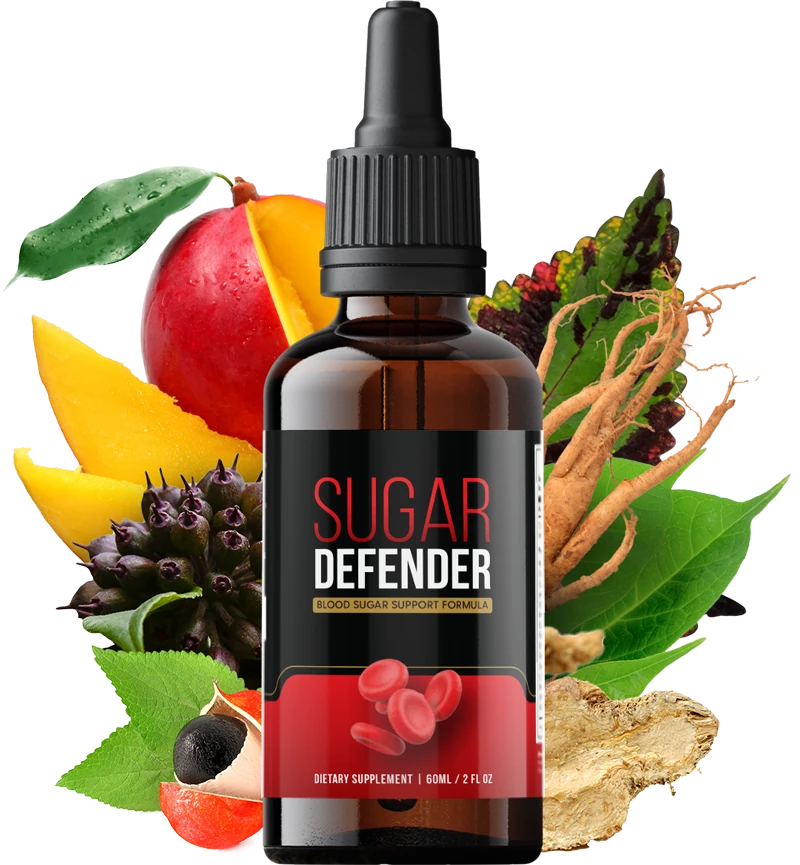
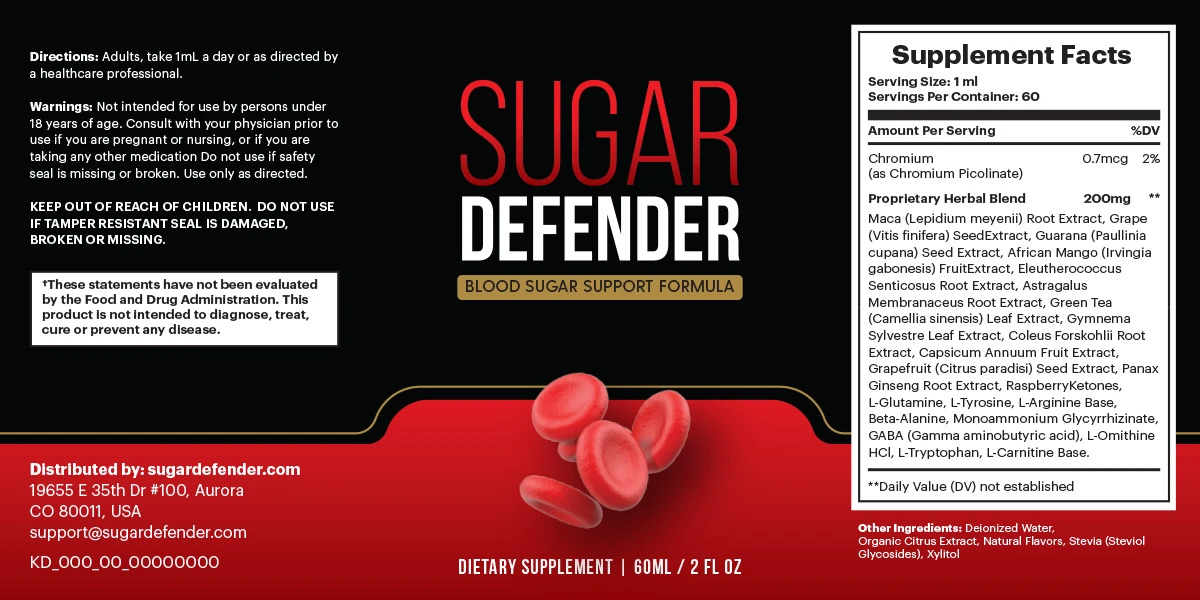
Sugar Defender ingredients are more extensive than the eight highlighted on its sales page. The supplied artwork lists chromium separately from a 200 mg blend containing 22 components. This page examines that panel, hidden quantities and research matching; the main review owns the overall buying decision.
| Panel entry | Role | Published amount | Transparency detail | Reader implication |
|---|---|---|---|---|
| Chromium picolinate | Active mineral | 0.7 mcg per 1 mL | Chemical form is named. | The amount is distinct from the herbal blend. |
| Maca through L-carnitine | 22 blend components | 200 mg combined | Individual quantities and extract strengths are unspecified. | The total cannot establish any individual ingredient dose. |
| Green tea, guarana and ginseng | Extracts within the blend | Included in the shared total | Caffeine, catechins and ginsenoside levels are unspecified. | Ask about active constituents before comparing studies. |
| Water, citrus, flavors, stevia and xylitol | Other ingredients | Amounts are unspecified | The artwork names carriers and sweeteners. | Review sensitivities and request clarification of natural flavors. |
What the 200 mg blend can—and cannot—tell you
Sugar Defender’s 200 mg blend supports mathematical limits, not an ingredient-by-ingredient dose estimate. Dividing that total by 22 gives 9.09 mg as an equal-share illustration. Actual proportions can differ substantially, so neither this average nor the entire blend ceiling establishes clinical equivalence, effectiveness or underdosing.
| Calculation | Result | Correct interpretation |
|---|---|---|
| 200 mg ÷ 22 components | 9.09 mg per component | This is an equal-share illustration, not a disclosed formulation. |
| Maximum for any one component | At most 200 mg | All other listed components also occupy part of the total. |
| 200 mcg ÷ 0.7 mcg chromium | About 286 times | This compares chromium quantities, not expected blood-sugar outcomes. |
| 1,000 mcg ÷ 0.7 mcg chromium | About 1,429 times | A larger trial dose does not establish a safe self-selected dose. |
The blend combines botanical extracts, amino acids, GABA and other substances. Calling every entry an herb would be inaccurate. A milligram total cannot disclose extract potency, absorption or interactions. The chromium comparison uses the separate microgram declaration, never the 200 mg blend. NIH Office of Dietary Supplements, source [1]
The complete blend and meaningful study matches
Sugar Defender’s artwork lists 22 blend components in addition to chromium, but the inspected studies do not test this complete liquid. The most useful comparisons preserve the studied species, preparation, dose and population. Matching an ingredient name alone cannot transfer a trial’s results to the finished product.
- Maca root extract
- Grape seed extract
- Guarana seed extract
- African mango fruit extract
- Eleutherococcus senticosus root extract
- Astragalus membranaceus root extract
- Green tea leaf extract
- Gymnema sylvestre leaf extract
- Coleus forskohlii root extract
- Capsicum annuum fruit extract
- Grapefruit seed extract
- Panax ginseng root extract
- Raspberry ketones
- L-glutamine
- L-tyrosine
- L-arginine base
- Beta-alanine
- Monoammonium glycyrrhizinate
- GABA
- L-ornithine HCl
- L-tryptophan
- L-carnitine base
| Ingredient | Relevant human evidence | Matching limit |
|---|---|---|
| Chromium | Anderson studied 200 or 1,000 mcg daily for four months in 180 adults with type 2 diabetes. Anderson et al. (1997), PMID: 9356027 [2] | The artwork declares 0.7 mcg, and the trial did not test Sugar Defender. |
| Panax ginseng | Shishtar pooled 16 ginseng trials; preparations differed and overall HbA1c did not improve significantly. Shishtar et al. (2014), PMID: 25265315 [3] | A family-level finding does not identify the effect of this unspecified extract amount. |
| American ginseng comparator | Vuksan studied 3 g daily for eight weeks in 24 completers. Vuksan et al. (2019), PMID: 29478187 [4] | That trial used Panax quinquefolius, whereas the artwork names Panax ginseng. |
| Gymnema | Devangan pooled 10 studies with 419 participants and substantial heterogeneity. Devangan et al. (2021), PMID: 34467577 [5] | Before–after changes and varied preparations do not establish this formula’s effect. |
For the remaining components, the artwork does not supply an individual quantity or standardized constituent percentage. This assessment does not assign a trial dose to an extract merely to fill a table. The effectiveness assessment evaluates advertised outcomes rather than repeating the complete ingredient inventory.
Carriers, sweeteners and label interpretation
Sugar Defender’s other ingredients are deionized water, organic citrus extract, natural flavors, stevia and xylitol. Their amounts are not specified in the inspected artwork. These names help identify questions about sensitivities, but they do not establish sugar content, allergen freedom or the tolerability of the complete liquid.
- Ask which citrus source and flavoring constituents are used if you have a relevant allergy.
- Do not interpret the absence of a pictured allergen statement as certification that the product is allergen-free.
- Chromium is printed as 0.7 mcg, not 0.7 mg. A unit change would alter the comparison by a factor of 1,000.
- The artwork shows a generic lot-code field; it is not a certificate of analysis or evidence about a delivered batch.
There is no visible SAMPLE legend on the inspected image. That observation does not authenticate a current bottle or independent testing. Facility-registration and manufacturing claims must be distinguished from product approval; FDA does not preapprove dietary supplements for safety or effectiveness. US Food and Drug Administration, source [6]
Questions worth taking to a pharmacist or clinician
A useful Sugar Defender ingredient discussion starts with the actual panel and your medicine list, not a generic promise that botanical ingredients are safe. Guarana, green tea extract and Panax ginseng create different questions from chromium. Ask for constituent amounts and a clear serving instruction before considering use.
- Can the seller supply a current, legible panel and batch-specific testing documentation?
- How much caffeine is present per intended serving, including guarana and green tea?
- What are the standardized strengths of green tea, gymnema and ginseng extracts?
- Does monoammonium glycyrrhizinate create a relevant concern with my blood pressure, potassium balance or medicines?
- How should the conflicting 1 mL and two-dropper instructions be resolved without guessing a volume?
Chromium can interact with glucose-lowering medicines and affect levothyroxine absorption. A clinician should assess relevance to the complete formula rather than infer safety from the low printed chromium amount. NIH Office of Dietary Supplements, source [1]
See the interaction and safety assessment and the publisher’s ingredient hub. General supplement-label context belongs in the dietary supplements guide.
Sugar Defender ingredient questions
Sugar Defender ingredient questions are best answered by distinguishing the printed artwork from measured product composition. The panel provides names and two quantitative declarations, while individual blend amounts remain unresolved. These answers explain what can be read directly and what requires a more specific document from the seller.
Does the 200 mg figure describe chromium?
No. The artwork separates chromium, printed as 0.7 mcg, from a 200 mg proprietary blend. Milligrams and micrograms are different units. Keep the two declarations separate when comparing the panel with research or asking a pharmacist about the formula.
Are there only eight ingredients?
The sales page highlights eight ingredients, but the inspected panel lists 22 components in its proprietary blend plus chromium separately. Highlights are not a complete formula inventory. Other ingredients, including water, citrus extract, flavors and sweeteners, appear outside that blend.
Can the blend average show the actual gymnema dose?
No. Dividing 200 mg by 22 yields an equal-share illustration of about 9.09 mg. It does not reveal how much gymnema is present. The true amount depends on undisclosed proportions, so the average cannot support an ingredient-specific efficacy conclusion.
Is the pictured label an independent laboratory report?
No. It is seller label artwork showing names, amounts, directions and warnings. It does not report analytical results for a purchased bottle. Independent testing requires a relevant report with an identifiable product, batch and test scope, not just a reproduced panel.
Why does ginseng species matter?
Panax ginseng and Panax quinquefolius are different species. The inspected American-ginseng trial used the latter, while Sugar Defender’s artwork names the former. Species, extraction and dose differences limit transfer of results, even when both ingredients are commonly called ginseng.
Complete Sugar Defender assessment
Broad evidence, value and buying decision.
Claim-by-claim outcomes and research limits.
Interactions, cautions and warning signs.
Feedback provenance, returns and alternatives.
References
- NIH Office of Dietary Supplements. Chromium: health professional fact sheet.
- Anderson et al. (1997). Elevated intakes of supplemental chromium improve glucose and insulin variables in individuals with type 2 diabetes. PMID: 9356027.
- Shishtar et al. (2014). The effect of ginseng on glycemic control: systematic review and meta-analysis. PMID: 25265315.
- Vuksan et al. (2019). American ginseng extract: double-blind randomized crossover trial. PMID: 29478187.
- Devangan et al. (2021). Gymnema sylvestre supplementation: systematic review and meta-analysis. PMID: 34467577.
- US Food and Drug Administration. FDA 101: Dietary Supplements.