
Honest Product Review • Evidence-Focused • 2026
DentaBiome Research Guides: The Science Behind Oral Microbiome Supplements (2026)
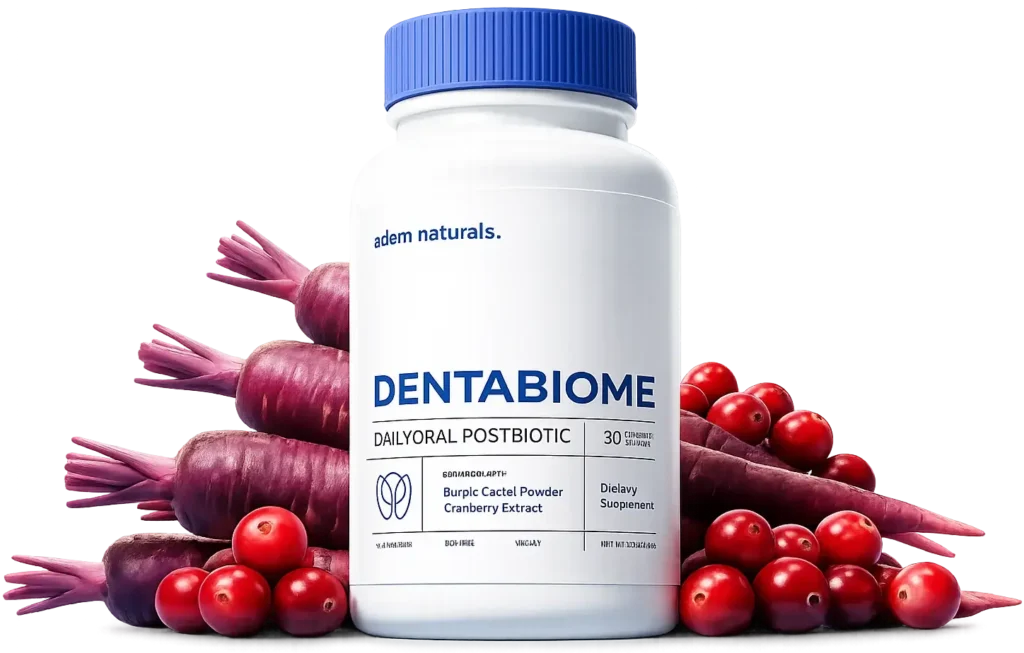
Want to understand the actual research behind oral-microbiome ingredients — not just what DentaBiome claims, but how this type of science generally works and what it can and can’t tell you? This guide is a research primer, not a product pitch.
Evidence Reviewed
Updated Sept 05, 2026
Daily Chewable
Oral Health Supplement
Editorial approach: Seller claims, ingredient research, finished-product evidence, regulatory information and customer anecdotes are treated as separate evidence categories.
Want to understand the actual research behind oral-microbiome ingredients — not just what DentaBiome claims, but how this type of science generally works and what it can and can't tell you? This guide is a research primer, not a product pitch.
Most supplement pages lean on research in passing, citing a study here or a compound there without explaining what that research actually involved or how confident you should be in it. This page takes a step back and functions as a research hub: the underlying science of oral-microbiome ingredients, what different types of evidence mean, and how to evaluate supplement claims generally — using DentaBiome's ingredient categories as the working example.
For a product-specific look at what's in DentaBiome and why, see DentaBiome Ingredients. For the full product overview, see our main DentaBiome Reviews 2026 pillar page.
What Is the Oral Microbiome, and Why Does Research Focus on It?
The mouth hosts a large, diverse community of bacteria — collectively called the oral microbiome — that interacts with everything from diet to saliva composition to daily hygiene habits. Research interest in this area has grown because an imbalance in oral bacterial communities is often discussed as one contributing factor in issues like bad breath and plaque buildup, alongside more established factors like hygiene habits and diet.
It's important to be precise here: oral microbiome research is an active, evolving field. Much of it identifies associations and plausible mechanisms rather than establishing simple cause-and-effect relationships that a single supplement can be said to "fix."
Probiotics vs. Postbiotics: The Research Distinction
This distinction matters for interpreting almost any oral-microbiome product's claims:
- Probiotics are live microorganisms intended to provide a benefit when consumed in adequate amounts. Research on oral probiotics often examines whether live strains can survive, and what happens when they interact with existing oral bacteria.
- Postbiotics are compounds produced by bacteria during fermentation — metabolic byproducts rather than living organisms. Postbiotic research generally examines the properties of these byproducts themselves, independent of whether any live bacteria are present in the final product.
DentaBiome is formulated as a postbiotic product. This matters because postbiotic research and probiotic research, while related, are not interchangeable bodies of evidence — a study on live L. rhamnosus colonization doesn't automatically apply to a postbiotic compound derived from the same species.
What Does Research Say About Common Oral-Supplement Strains?
Strains like L. plantarum, L. salivarius, and L. rhamnosus appear frequently across oral-health research generally, most often examined in relation to oral bacterial balance and, in some studies, gum-related outcomes. This research typically:
- Uses specific, disclosed concentrations
- Is often conducted over defined, limited timeframes
- Frequently involves smaller sample sizes than large-scale drug trials
- Varies significantly in quality and methodology from study to study
This is general context about the strain categories, not a DentaBiome-specific claim — for how these strains specifically factor into DentaBiome's formula, see DentaBiome Ingredients.
What Does Xylitol Research Generally Show?
Xylitol has one of the more established general research bases among ingredients used in oral-care products, with a substantial body of literature examining its role in oral bacterial environments — largely because it isn't metabolized by certain oral bacteria the way sugar is. This research spans decades and multiple product categories (gum, mints, toothpaste), which is part of why xylitol appears so widely across the oral-care industry, not just in supplements like DentaBiome.
Cranberry Compounds and Oral Bacteria: What the Research Says
Cranberry-derived compounds have been studied in relation to bacterial adhesion — the process by which bacteria attach to surfaces, including teeth. This research area is still developing and includes a mix of lab-based and preliminary studies. It has not reached the same level of established, long-standing research as xylitol, and conclusions here should be treated as more tentative.
Types of Evidence: A Quick Framework
Not all "research" carries the same weight. A useful mental framework:
- Lab/in-vitro studies — testing a compound in a controlled lab setting, not in a living organism. Useful for understanding mechanisms, but results don't always translate to real-world use.
- Animal studies — testing in animal models, which can suggest biological plausibility but doesn't guarantee the same effect in humans.
- Human studies (general ingredient) — testing an ingredient or strain in people, often at a specific, disclosed dose.
- Human studies (finished product) — testing an actual commercial product, at its real dose and format, on real users. This is the category most directly relevant to answering "does this specific product work," and it's the category most often missing for individual branded supplements.
Most of what's publicly available regarding DentaBiome's ingredients sits in categories 1–3. As covered in our Does DentaBiome Work? analysis, category 4 — finished-product evidence — does not currently appear to be publicly available for DentaBiome.
Common Research Limitations Across the Supplement Industry
These limitations aren't unique to DentaBiome — they're common across the broader supplement category, and worth understanding generally:
- Proprietary blends obscure individual ingredient doses, making it hard to compare a product to the research literature
- Small sample sizes in many ingredient studies limit how confidently results generalize
- Funding sources for some ingredient research can create potential bias, which should be considered when weighing study conclusions
- Marketing language frequently stretches ingredient-level findings into implied whole-product claims
- Publication gaps mean that finished-product testing, when it exists at all, is often not independently published or peer-reviewed
How to Evaluate Any Supplement's Evidence Claims
A practical checklist you can apply to DentaBiome — or any supplement:
- Is the claim about an ingredient, or about the finished product? These are different claims requiring different evidence.
- Is the dose disclosed? If a proprietary blend is used, ask whether that limits your ability to compare it to cited research.
- What type of study is being referenced? Lab studies, animal studies, and human clinical trials carry different weight.
- How many participants, and for how long? Larger, longer studies generally provide more reliable signal than small, short ones.
- Does the seller distinguish evidence from marketing language? A transparent brand will acknowledge these distinctions rather than blur them.
What This Means When Evaluating DentaBiome Specifically
Applying this framework to DentaBiome: the ingredient categories used draw from real, active areas of oral-microbiome research, with xylitol carrying the strongest general research base and cranberry compounds representing a newer, more preliminary area of study. What's missing is finished-product research — a study testing DentaBiome itself, at its actual formulation and dose. That gap is common across the supplement industry, not a defect unique to this product, but it's the key thing to keep in mind before treating any of DentaBiome's marketing claims as independently proven.
DentaBiome Research Basis: Pros and Cons
Reasons the Research Foundation Is Reasonable
- Ingredient categories draw from genuinely active, ongoing areas of oral-microbiome science
- Xylitol carries a well-established general research base across the oral-care industry
- The postbiotic mechanism is a legitimate, distinct research category, not a marketing invention
- Ingredient choices are conceptually consistent with current research trends rather than arbitrary
Reasons for Caution
- No independently published finished-product study on DentaBiome itself appears to exist
- Proprietary blend dosing limits direct comparison to research concentrations
- Cranberry-compound research in this context is still preliminary compared to xylitol
- Ingredient-level evidence is commonly overstated into whole-product marketing claims across this industry
Want to see the complete evaluation of DentaBiome and its breakdown?
Read the Full DentaBiome Review →Frequently Asked Questions
Is oral microbiome research well-established?
It's an active and growing field, but much of the available evidence identifies associations and plausible mechanisms rather than definitive, product-specific cause-and-effect outcomes.
What's the difference between a probiotic study and a postbiotic study?
Probiotic research examines live bacteria and their survival/colonization potential. Postbiotic research examines bacterial byproducts directly, independent of whether live bacteria are present. They are related but distinct bodies of evidence.
Which DentaBiome ingredient has the strongest research base?
Based on general research volume, xylitol has one of the more established evidence bases among the ingredient categories used, given its long history across the broader oral-care industry.
Does ingredient research prove a supplement works?
Not on its own. Ingredient-level research provides context and plausibility, but it doesn't substitute for a study on the finished product at its actual formulation and dose.
How can I tell if a supplement's research claims are being overstated?
Check whether the claim refers to an ingredient or the finished product, whether the dose is disclosed, and what type of study (lab, animal, or human) is being cited. A precise answer to all three questions is a good sign of a transparent claim.
Editorial Note
This page summarizes general research areas relevant to oral-microbiome supplement ingredients. It is not a systematic review and does not constitute medical advice. For product-specific ingredient information, see DentaBiome Ingredients; for safety guidance, see DentaBiome Side Effects.
Last reviewed: 2026
Sources & References
We prioritize primary product information, regulatory sources, and peer-reviewed research. Seller claims are labeled as such and are not treated as independent clinical evidence.
- DentaBiome official product pageSeller-reported: formula, pricing, and guarantee terms as currently listed.
- FDA — Questions and Answers on Dietary SupplementsConfirms dietary supplements are not pre-approved by the FDA before marketing.
- D’Agostino et al., 2024 — Effect of Probiotics Lactobacillus rhamnosus and Lactobacillus plantarum on Caries and Periodontal Diseases: A Systematic Review (PMID 38668014)Ingredient-level evidence for two of DentaBiome’s core probiotic strains.
- Riley et al., 2015 — Cochrane Database of Systematic Reviews, Xylitol-containing products for preventing dental caries in children and adults (PMID 25809586)Found limited high-quality evidence for xylitol’s caries-prevention effect — reflected in this page’s cautious framing.
- Journal of the Canadian Dental Association — Cranberry Polyphenols: Potential Benefits for Dental Caries and Periodontal DiseaseIngredient-level research on cranberry proanthocyanidins and oral bacterial adhesion.
Related Research
Ready to Check DentaBiome?
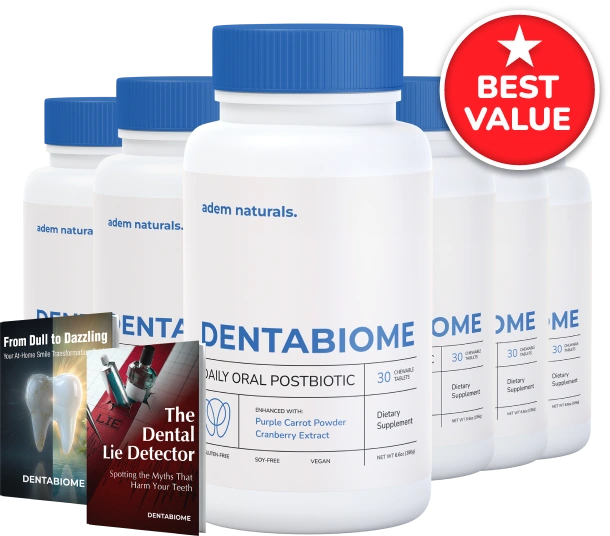
Best listed per-bottle price
6-bottle package: $49 per bottle
At the current seller pricing, the 6-bottle option is $294 total and has the lowest listed per-bottle cost. The seller also advertises free US shipping and two digital bonuses on this package.
Package imagery and bonus inclusions can change. Confirm the live order page before purchase.
Visit the current DentaBiome order page to review the latest package pricing, shipping and guarantee terms before ordering.
General health information: This content is for general informational purposes and is not a diagnosis or a substitute for professional dental or medical advice.
© 2026 FitnessLifeMag.com. Product names and trademarks belong to their respective owners.
💬 Leave a Comment
Click to rate