
Honest Product Review • Evidence-Focused • 2026
DentaBiome vs Traditional Oral Probiotics: Which Is Right for You? (2026)
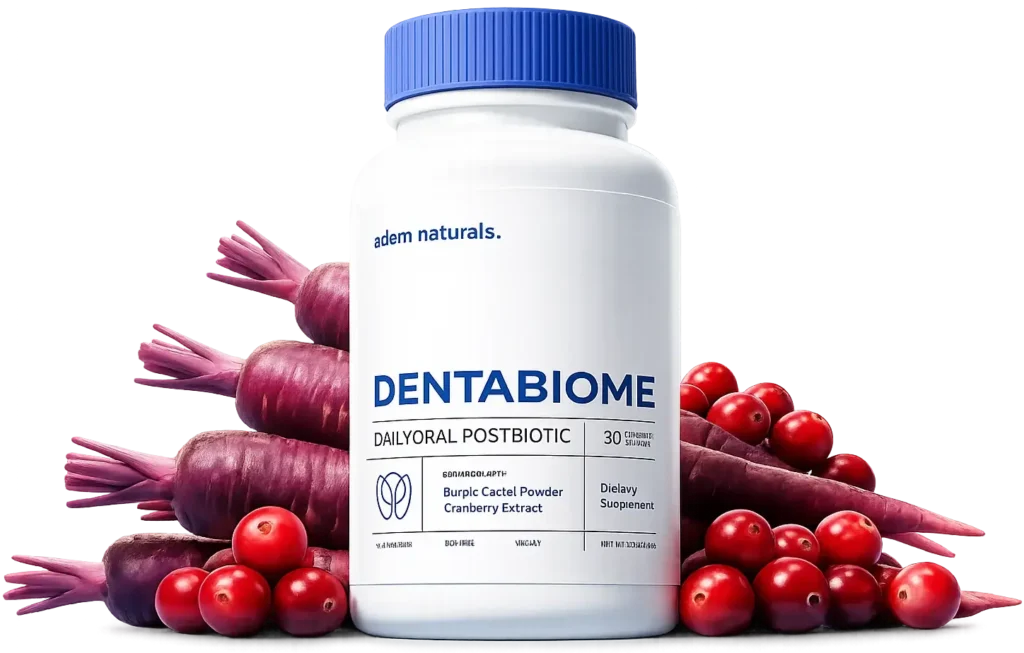
Trying to decide between DentaBiome and a traditional oral probiotic supplement? This guide compares how the two approaches differ in mechanism, format, evidence, and transparency — so you can judge which fits your situation, rather than assuming one category is universally “better.”
Evidence Reviewed
Updated Sept 05, 2026
Daily Chewable
Oral Health Supplement
Editorial approach: Seller claims, ingredient research, finished-product evidence, regulatory information and customer anecdotes are treated as separate evidence categories.
Trying to decide between DentaBiome and a traditional oral probiotic supplement? This guide compares how the two approaches differ in mechanism, format, evidence, and transparency — so you can judge which fits your situation, rather than assuming one category is universally "better."
Oral-microbiome supplements generally fall into two broad approaches: postbiotic-based products like DentaBiome, and traditional live-probiotic products, which rely on live bacterial strains reaching the mouth. Neither approach is automatically superior — they work on different mechanisms, with different tradeoffs. This page compares them directly so you can judge which fits your situation.
For the full DentaBiome overview, see our main DentaBiome Reviews 2026 pillar page.
Quick Answer
DentaBiome uses a postbiotic approach (compounds produced by bacteria, not live bacteria themselves), which generally means better shelf stability and no refrigeration requirement. Traditional oral probiotics use live bacterial strains, which some research associates with the possibility of the bacteria itself colonizing or interacting directly with the oral environment — but which also require more careful storage and viability management. Neither category currently has strong, independent finished-product clinical evidence specific to a single branded formula, including DentaBiome.
Postbiotic vs. Probiotic: The Core Mechanism Difference
This is the single biggest distinction between the two categories.
- Postbiotics (DentaBiome's approach): Compounds and byproducts generated through bacterial fermentation. The bacteria themselves don't need to survive or remain "alive" in the product for the postbiotic compounds to be present. For a full ingredient breakdown, see DentaBiome Ingredients.
- Traditional probiotics: Live bacterial strains that are intended to remain viable through manufacturing, storage, and ideally reach the mouth in a living state. Some research on oral probiotics has focused on live strains potentially interacting with existing oral bacteria populations, though outcomes vary by strain and study design.
Neither mechanism is inherently "better" in a universal sense — postbiotic approaches trade live-strain colonization potential for greater formulation stability, while live-probiotic approaches trade some stability for the possibility of direct bacterial interaction.
Shelf Stability and Storage
One practical area where the two categories tend to differ:
- DentaBiome (postbiotic): Presented as shelf-stable without refrigeration, since there's no live culture to keep alive.
- Traditional oral probiotics: Live-strain products often require more careful storage conditions (sometimes refrigeration, or strict handling to preserve strain viability), since the product's core mechanism depends on bacteria surviving until use.
If storage convenience and travel-friendliness matter to you, a postbiotic-based product like DentaBiome has a practical edge here.
Evidence Comparison: What's Actually Been Studied?
This is where both categories share a similar limitation, worth being upfront about.
- Ingredient/strain-level research exists for components used in both postbiotic and traditional probiotic products — certain Lactobacillus strains, for example, appear in research across both categories.
- Finished-product clinical evidence — a study testing the specific branded formula, at its actual dose, on real users — is limited or absent for most individual products in this space, DentaBiome included. See Does DentaBiome Work? for the full evidence breakdown specific to this product.
Neither category should be assumed to have stronger finished-product proof than the other by default — that has to be evaluated product by product, not category by category.
Dosage Transparency
DentaBiome: Uses at least one proprietary blend, meaning individual strain/compound amounts aren't disclosed on the label.
Traditional oral probiotics: Transparency varies significantly by brand — some disclose exact colony-forming unit (CFU) counts per strain, while others also use proprietary blends. This isn't a category-wide advantage for either side; it depends on the specific product.
If dosage transparency is a priority, this needs to be checked on a brand-by-brand basis rather than assumed based on postbiotic vs. probiotic positioning alone.
Format and Daily Use
DentaBiome: Chewable tablet, taken once daily. See How to Use DentaBiome for the full routine breakdown.
Traditional oral probiotics: Commonly available as chewables, lozenges, or dissolvable tablets designed to stay in contact with the mouth longer, since some products aim for local, direct bacterial contact with oral surfaces.
Format preference is largely personal — some people prefer a quick chewable, while others don't mind a longer-dissolving lozenge if the product calls for it.
Price Positioning
Both postbiotic and traditional probiotic oral supplements tend to fall in a similar general price range within the direct-to-consumer supplement market, though this varies significantly by brand, package size, and current promotions. Rather than assuming one category is inherently cheaper, compare the specific per-bottle or per-serving cost of the actual products you're considering. See DentaBiome Price & Refund for DentaBiome's current pricing structure.
Who Might Prefer DentaBiome's Postbiotic Approach?
- Buyers who want a shelf-stable product without refrigeration concerns, useful for travel or inconsistent storage conditions
- Those specifically interested in postbiotic compounds rather than live-strain products, whether for personal preference or a desire to avoid live bacteria in a supplement
- Buyers comfortable with a proprietary blend format, provided they've reviewed the safety information in DentaBiome Side Effects
Who Might Prefer a Traditional Live-Probiotic Product?
- Buyers specifically interested in live bacterial strain colonization as a mechanism, based on their own research or provider recommendation
- Those who prioritize CFU-count transparency and can find a traditional probiotic brand that discloses exact strain amounts
- Buyers who don't mind additional storage requirements in exchange for a live-culture format
DentaBiome vs. Traditional Oral Probiotics: Pros and Cons
Where DentaBiome Has an Edge
- No refrigeration required; more shelf-stable and travel-friendly
- Doesn't depend on maintaining live bacterial viability through shipping and storage
- Ingredient categories are named on the label, offering some baseline transparency
- Chewable format is simple and doesn't require special handling
Where Traditional Oral Probiotics May Have an Edge
- Some brands offer clearer per-strain CFU dosing than DentaBiome's proprietary blend
- Live-strain mechanism has its own body of research interest, separate from the postbiotic approach
- Product variety in this category is broader, offering more format and strain options to choose from
Shared Limitations Across Both Categories
- Neither postbiotic nor traditional probiotic products in this space commonly have strong, independent finished-product clinical trials
- Individual response is likely to vary regardless of which mechanism a product uses
- Marketing claims in both categories can outpace what's been directly demonstrated for the specific branded formula
Want to see the full breakdown of DentaBiome's formula and overall evaluation?
Read the Full DentaBiome Review →Frequently Asked Questions
Is a postbiotic supplement better than a traditional probiotic for oral health?
Neither is universally better — they work through different mechanisms. Postbiotics offer more shelf stability, while traditional probiotics center on live bacterial strains. The better fit depends on your priorities and the specific product's evidence and transparency.
Does DentaBiome contain live bacteria like a traditional probiotic?
No. DentaBiome is formulated as a postbiotic product, meaning it's based on bacterial byproducts rather than live bacterial strains that need to remain viable.
Which has more research: postbiotics or traditional oral probiotics?
Both categories have ingredient- and strain-level research, but finished-product clinical evidence is limited across most individual branded products in either category, not just DentaBiome.
Is DentaBiome cheaper than traditional oral probiotics?
Pricing varies significantly by brand and package size in both categories. Compare specific products directly rather than assuming one category is inherently less expensive.
Can I take a postbiotic and a traditional probiotic at the same time?
There's no documented conflict between the two categories, but if you're considering combining supplements, it's reasonable to check with a healthcare provider, especially if you have a specific medical condition.
Editorial Note
This comparison evaluates general category differences between postbiotic-based products like DentaBiome and traditional live-probiotic oral supplements. It does not name or evaluate a specific competing brand, since claims about any individual competitor product would require separate, direct verification. DentaBiome is a dietary supplement, not an FDA-approved drug or a substitute for professional dental care.
Last reviewed: 2026
Sources & References
We prioritize primary product information, regulatory sources, and peer-reviewed research. Seller claims are labeled as such and are not treated as independent clinical evidence.
- DentaBiome official product pageSeller-reported: formula, pricing, and guarantee terms as currently listed.
- FDA — Questions and Answers on Dietary SupplementsConfirms dietary supplements are not pre-approved by the FDA before marketing.
- D’Agostino et al., 2024 — Effect of Probiotics Lactobacillus rhamnosus and Lactobacillus plantarum on Caries and Periodontal Diseases: A Systematic Review (PMID 38668014)Ingredient-level evidence for two of DentaBiome’s core probiotic strains.
- Riley et al., 2015 — Cochrane Database of Systematic Reviews, Xylitol-containing products for preventing dental caries in children and adults (PMID 25809586)Found limited high-quality evidence for xylitol’s caries-prevention effect — reflected in this page’s cautious framing.
- Journal of the Canadian Dental Association — Cranberry Polyphenols: Potential Benefits for Dental Caries and Periodontal DiseaseIngredient-level research on cranberry proanthocyanidins and oral bacterial adhesion.
Related Research
Ready to Check DentaBiome?
Best listed per-bottle price
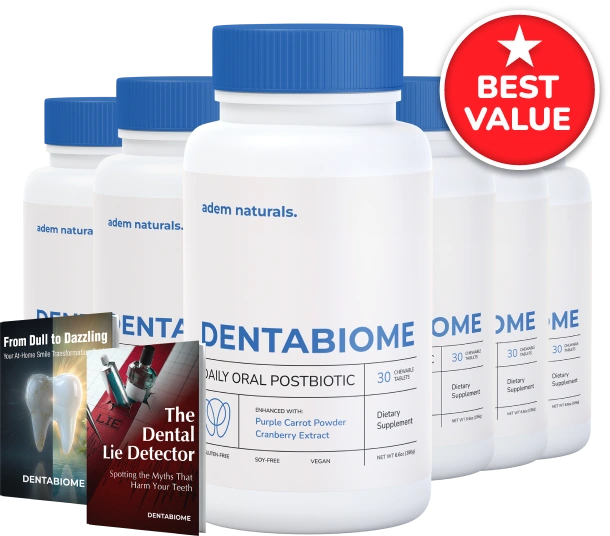
6-bottle package: $49 per bottle
At the current seller pricing, the 6-bottle option is $294 total and has the lowest listed per-bottle cost. The seller also advertises free US shipping and two digital bonuses on this package.
Package imagery and bonus inclusions can change. Confirm the live order page before purchase.
Visit the current DentaBiome order page to review the latest package pricing, shipping and guarantee terms before ordering.
General health information: This content is for general informational purposes and is not a diagnosis or a substitute for professional dental or medical advice.
© 2026 DentaBiome Review. Product names and trademarks belong to their respective owners.
💬 Leave a Comment
Click to rate