
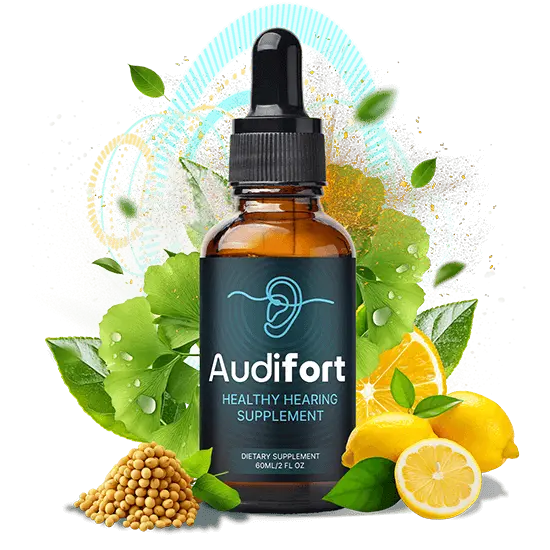
Audifort review: quick verdict
Audifort has an inspectable supplier label, but the evidence reviewed does not justify a strong hearing-improvement recommendation. Its supplied label shows a 60 mL liquid, 60 servings and a 200 mg blend shared by 22 ingredients; individual blend amounts are undisclosed. We did not identify a human trial of the finished product in our searches. Ingredient studies do not prove this blend improves hearing or tinnitus.
Before deciding: clarify the conflicting dropper directions and 60/90-day return conditions. Prioritize professional assessment for hearing changes; sudden hearing loss needs urgent care.
Review scope: Public seller documents, the supplied REV 04/24 label and independent sources were checked remotely. We have not bought, consumed, laboratory-tested or clinically tested Audifort. No clinician has reviewed this article.
What is Audifort, and what is it intended to do?
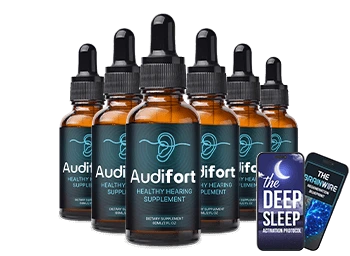
The inspected offer presents Audifort as oral liquid drops for hearing support. It is a dietary supplement, not a hearing aid or a diagnostic service. The seller promotes botanical ingredients and GABA. Those descriptions establish the positioning of the offer, not its clinical effectiveness.
The important distinction is the outcome you want. Hearing a conversation more clearly, feeling less distressed by ringing and sleeping better are different outcomes. A study about one cannot automatically support the others. Before judging the product, name the problem you are trying to solve and ask whether the available evidence measures that problem directly.
| Review question | Current assessment |
|---|---|
| Product format | Seller presents liquid drops |
| Intended positioning | Hearing-support dietary supplement |
| Supplied label | REV 04/24: 60 mL bottle, 1 mL serving, 60 servings; individual blend amounts undisclosed |
| Finished-product clinical evidence | No matching trial identified in the searches performed |
| Personal testing | None; documents and public research inspected remotely |
| Purchasing terms | Snapshot available, with unresolved refund discrepancies |
The United States FDA does not approve dietary supplements for safety and effectiveness before sale in the way it approves drugs. An approval claim or a facility-related badge should therefore be examined carefully. A statement about a facility does not establish that the finished supplement improves hearing. FDA explanation.
Potential advantages and important limitations
- The supplied label can be inspected and compared with a shipment.
- Liquid format offers an alternative to swallowing tablets.
- Package prices allow transparent unit-cost arithmetic.
- Individual blend doses are undisclosed.
- No finished-product trial was identified in our searches.
- Usage and refund documents need clarification.
Does Audifort work for hearing loss or tinnitus?
The material inspected does not establish Audifort as an effective treatment for either hearing loss or tinnitus. Exact-name searches included Audifort clinical-trial and randomized-trial wording, PubMed-indexed results and ClinicalTrials.gov-indexed results. We located reviews and marketing material, but no identifiable human trial of the finished Audifort formula. A full registry/database review and any study supplied by the manufacturer remain useful follow-up checks.
NIDCD distinguishes tinnitus management from advertised supplement cures and states that commonly promoted vitamins, herbal extracts and supplements have not been proven effective for tinnitus. This is relevant category guidance, not a test of this particular bottle. NIDCD: tinnitus.
What would convincing product evidence look like?
A useful trial would identify the exact preparation, ingredient quantities, participant group, comparison treatment, duration and relevant outcomes. It should report what happened to everyone assigned to treatment, how adverse events were collected and whether the result was meaningful to participants. Funding and author relationships also matter.
For this review, a seller's reference list is a starting point. It must be traced to an actual study and checked against the product. A laboratory mechanism, an animal finding or a different supplement blend does not become Audifort evidence simply because the topics overlap.
Why an ingredient study cannot validate the blend
Suppose a study tests a measured amount of a standardized extract for a particular outcome. To transfer that result, we would need to know whether Audifort contains a comparable extract and amount, uses the same route and is intended for a comparable population. Without those details, the bridge is missing.
An attractive explanation about antioxidants or relaxation can be biologically interesting. It still leaves unanswered whether the product changes hearing thresholds, tinnitus distress or another outcome at its actual serving. We therefore separate a proposed rationale from demonstrated benefit.
Affiliate link: checking an offer is not evidence of effectiveness. Resolve the questions above before buying.
Which Audifort ingredients could we verify?
The seller's ingredient highlights name maca, grape seed, green tea, capsicum, gymnema and GABA. We subsequently obtained the readable REV 04/24 label from the seller-linked affiliate resource folder. It lists a 60 mL bottle, a 1 mL serving, 60 servings, chromium at 0.7 mcg and one 200 mg proprietary blend. This is a transcription of the supplied asset, not verification of a current physical shipment. Compare the bottle received with this revision.
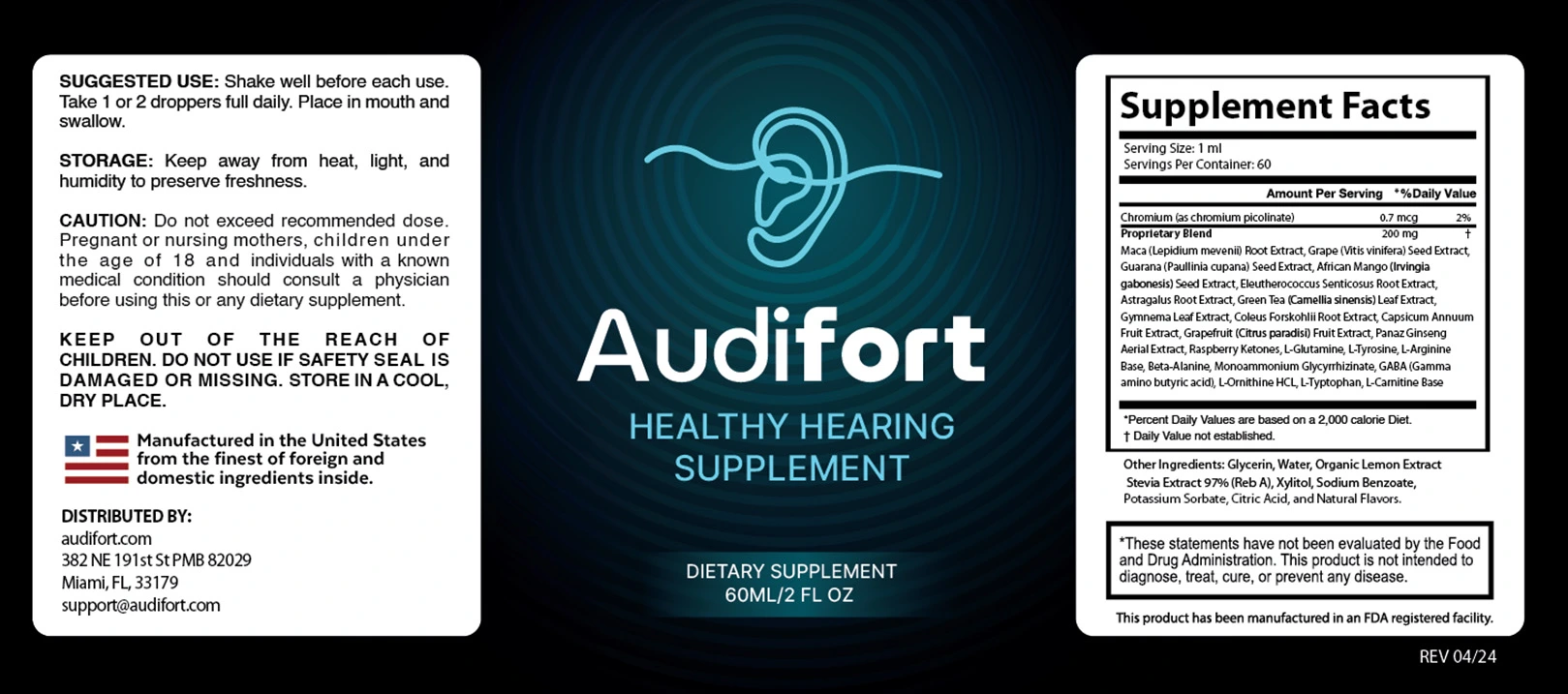
Complete blend list on the supplied label
All 22 components below share the combined 200 mg amount per 1 mL serving. No individual amount is provided:
| Components 1–11 | Components 12–22 |
|---|---|
| Maca root extract | Panax ginseng aerial extract |
| Grape seed extract | Raspberry ketones |
| Guarana seed extract | L-glutamine |
| African mango seed extract | L-tyrosine |
| Eleutherococcus senticosus root extract | L-arginine base |
| Astragalus root extract | Beta-alanine |
| Green tea leaf extract | Monoammonium glycyrrhizinate |
| Gymnema leaf extract | GABA |
| Coleus forskohlii root extract | L-ornithine HCl |
| Capsicum annuum fruit extract | L-tryptophan |
| Grapefruit fruit extract | L-carnitine base |
The panel separately lists chromium as chromium picolinate at 0.7 mcg, with 2% Daily Value. Other ingredients are glycerin, water, organic lemon extract, stevia extract 97% (Reb A), xylitol, sodium benzoate, potassium sorbate, citric acid and natural flavors. These details identify the supplied label; they do not demonstrate benefit.
| Highlighted ingredient | Useful independent context | What remains unknown for Audifort |
|---|---|---|
| Maca | A botanical name alone does not establish a hearing outcome | Preparation, amount and relevant product-level results |
| Grape seed | Human research summarized by NCCIH concerns outcomes such as blood pressure and lipids | Whether the extract and dose match, and whether any hearing outcome applies |
| Green tea | Beverage and concentrated extract evidence must be distinguished | Catechin/caffeine content and actual exposure |
| Capsicum | Ingredient identity is not a product trial | Extract form, amount and tolerability at the labeled serving |
| Gymnema | A hearing-support marketing description is not clinical substantiation | Current label amount, preparation and suitable interaction review |
| GABA | A systematic review assessed oral GABA for stress and sleep | Individual GABA dose, preparation and evidence relevant to hearing |
NCCIH describes some grape-seed studies as small and heterogeneous, with differing preparations. These cardiovascular findings should not be presented as proof of an ear-specific benefit. NCCIH: grape seed extract.
The 2020 oral-GABA systematic review included 14 placebo-controlled human studies and found limited evidence for stress benefits and very limited evidence for sleep benefits. Its outcomes were not a demonstration that Audifort treats hearing loss. Differences in interventions and methods limit confident transfer to an undisclosed blend. Hepsomali and colleagues.
Our formula verification rule
The supplied panel resolves the ingredient-list question, but not the amount of each blend component. It also cannot confirm whether a new order will carry the same revision. Buyers should compare formula, warning, serving and expiry information on the bottle received.
A 200 mg total across 22 components is an average of about 9.1 mg only in a hypothetical equal split. The actual allocation is not disclosed. Some components could be above or below that average; extraction strength and standardization also matter. This arithmetic identifies the limits of the shared total, not proven underdosing or a clinical outcome. It cannot support individual dose-to-study matching.
Related-topic bridge — linked ingredients analysis: the Audifort ingredients page transcribes the verified panel and compares preparation and dose with relevant research. The linked analysis is published. Read the linked Audifort ingredients analysis (Published.)
Is Audifort safe, and who should be cautious?
We cannot establish the safety of the finished formula from a promotional label alone. Undisclosed individual blend amounts and absent product-specific safety data limit an individualized interaction assessment. Natural ingredients can still have adverse effects or interact with medicines.
NCCIH reports adverse effects and interactions for concentrated green-tea products, including uncommon liver injury reports and interactions with certain medicines. These are ingredient-level cautions; they do not establish that Audifort causes those outcomes or quantify a buyer's risk. Take the complete label and a list of medicines to a pharmacist or clinician. NCCIH: green tea.
When medical assessment should take priority
Sudden hearing loss is an urgent reason to seek medical care, including when it accompanies ringing, dizziness or a blocked-ear feeling. Do not wait for a supplement trial to see whether it improves. NIDCD explains that delayed diagnosis and treatment can reduce treatment effectiveness. NIDCD: sudden deafness.
One-sided hearing loss or tinnitus, ear pain, discharge and vertigo with hearing changes also warrant prompt professional assessment. NIDCD: hearing-aid screening cautions.
Who is this review for—and who should avoid self-treatment?
This review is for adults comparing an optional supplement who want to understand its label and evidence limits. It does not establish Audifort as suitable for any individual. People expecting a proven tinnitus cure or restored hearing should not mistake this offer for established treatment. Sudden or one-sided hearing changes need professional assessment, and medicine users need a product-specific interaction review.
Who should resolve questions before using it?
People taking prescription medicines, using several supplements, living with a medical condition, preparing for a procedure, or who are pregnant or breastfeeding should obtain product-specific advice before use. Do not infer suitability for children from adult marketing. The supplied label advises physician consultation for pregnancy/nursing, children under 18 and known medical conditions, and says not to exceed its directions. Those cautions do not establish suitability for these groups. It also says not to use a damaged or missing safety seal.
If your goal is restoring hearing or treating tinnitus, this review does not provide an evidence-based reason to choose Audifort over evaluation and appropriate care. An adult comparing optional supplements still needs to accept the uncertainty, resolve the label and understand the financial conditions first.
Affiliate link: checking an offer is not evidence of effectiveness. Resolve the questions above before buying.
Related-topic bridge — linked safety analysis: the linked Audifort safety page maps verified label components to appropriate warnings and interaction sources. Published. Read the linked Audifort safety analysis (Published.)
How should Audifort be used, and how soon should results appear?
The inspected seller FAQ describes one full dropper daily, while the supplied REV 04/24 label says to shake well and take one or two full droppers daily, placing the liquid in the mouth and swallowing. The Supplement Facts basis is 1 mL, but the label does not establish that a full dropper always contains exactly 1 mL. We report this discrepancy rather than choose a dose for the reader.
The 60 mL/60-serving label also needs to be distinguished from promotional package descriptions suggesting 30 days per bottle. Sixty labeled 1 mL servings would last 60 days at one serving per day or 30 days at two servings per day. Those are arithmetic scenarios, not confirmation of dropper calibration or a recommended regimen. Ask the seller to reconcile the current bottle, measured serving and directions; follow the verified current label and professional advice rather than an approximate online drop count.
There is no verified product-trial basis in this review for promising a first-week improvement or a particular result after several months. A recommended bundle duration is not evidence of an effective treatment course. Avoid purchasing a larger supply simply to match an unsupported timeline.
If a clinician has advised you about an optional supplement, retain the label and record the start date, other changes and any symptoms. A personal observation may be useful to discuss, but it cannot isolate a treatment effect: sleep, stress, concurrent care and normal variation can all change how someone feels.
A separate dosage page is currently held. The supplied label is readable, but unresolved dropper measurement and conflicting directions need clarification before a separate usage page could give a reliable, distinct answer.
What do Audifort reviews and complaints tell us?
Seller-selected testimonials cannot establish typical outcomes. The seller's terms explicitly qualify testimonial results and explain that actors or voice actors may be used in presentations. That does not prove every testimonial is false; it means presentations and independent outcome evidence should be evaluated separately.
Our search surfaced review pages that disagree about formula identity and bottle size. Those discrepancies are reasons to verify the primary label, not to choose whichever description looks most convincing. An article calling itself independent does not establish that it inspected a current bottle.
We did not obtain a representative dataset of verified buyer reports. Consequently, we cannot publish a satisfaction percentage, complaint rate or assertion that refunds are routinely honored. Lack of a complaint in our limited inspection is not proof of universal satisfaction.
When checking a report, distinguish product effects from delivery, billing and return issues. Look for an identifiable purchase route, date, exact product and specific account of what happened. Do not treat the same syndicated testimonial on multiple sites as multiple customers.
Related-topic bridge — linked reviews and complaints analysis: the linked page distinguishes attributable consumer accounts from seller-selected material and document sampling limits. Published. Read the linked Audifort reviews and complaints analysis (Published.)
How much does Audifort cost?
The inspected Audisoothe offer displayed the following US-dollar snapshot on October 7, 2026. These are seller-displayed figures, not a guarantee of the destination reached through the affiliate link.
| Package | Displayed total | Arithmetic per bottle | Seller-displayed shipping |
|---|---|---|---|
| 2 bottles | $158 | $79 | Additional shipping |
| 3 bottles | $207 | $69 | Free US shipping |
| 6 bottles | $294 | $49 | Free US shipping |
Our arithmetic confirms the displayed per-bottle figures. Compared with the two-bottle unit price, the six-bottle unit price is $30 lower, approximately 38%. However, the six-bottle upfront spend is $136 higher. A lower unit price does not establish better value when benefit and usable supply are uncertain. On the supplied 60-serving label basis, package unit costs equal approximately $1.32, $1.15 and $0.82 per 1 mL serving respectively, before additional charges. These are label-based arithmetic figures, not confirmed cost per day: current shipment and actual directions must match.
Affiliate link; inspect the final package and return conditions rather than treating this as a recommendation to purchase.
Buying and identity checks
Before paying, confirm that the final order identifies Audifort, the quantity, currency, full shipping/tax total and any recurring billing. Record the merchant and processor printed on the actual receipt. Different seller routes can use different payment providers; we cannot assume a provider from an unrelated checkout page.
We could not verify the authorized hoplink's final redirect during this inspection. Its exact supplied destination is retained without adding tracking parameters or substituting another seller link. No test transaction was made. Do not claim that attribution or checkout terms have been confirmed.
Related-topic bridge — linked transaction analysis: the linked price-and-refund page covers price, package, shipping, merchant verification and return questions together. Published. Read the linked Audifort price and refund analysis (Published.)
Is the advertised 90-day refund straightforward?
The documents inspected contain a material contradiction. The Return Policy permits requesting authorization within 90 days of purchase and describes sending the item back within 14 days of receiving authorization. It also includes a sale-item exclusion. The Shipping Policy instead says returned bottles must arrive within 60 days of the original order. The promotional offer advertises a 90-day guarantee.
These conditions cannot be responsibly collapsed into “risk-free.” Ask the seller which terms govern your specific order, whether an advertised bundle is eligible, whether empty bottles qualify, the return deadline and address, and which charges are excluded. Obtain a written answer before paying and retain it with the receipt.
Return postage is a further financial consideration. A guarantee with postage costs, return requirements or unclear exclusions is not the same as a full reimbursement without conditions. We have not requested or received a refund ourselves and cannot verify processing performance.
A practical record to keep
Save your dated order confirmation, the terms shown when you paid and the seller's clarification. If you request a return, keep the authorization, correspondence and tracking evidence. Contact the support route on the order record rather than relying on an old address copied by a third-party review.
Related-topic bridge — linked seller-verification analysis: the linked legitimacy page distinguishes product identity, transactional documentation and clinical substantiation without unsupported accusations. Published. Read the linked seller and product verification analysis (Published.)
What alternatives are worth considering first?
For broader context, see the linked tinnitus and hearing-support guide (published). It separates assessment and management options from product marketing.
The relevant alternative depends on the problem, rather than which supplement has the longest ingredient list. Hearing difficulties call for assessment and discussion of suitable hearing support. Tinnitus distress may call for a management plan tailored to the person's symptoms and associated hearing changes.
NIDCD discusses approaches such as hearing aids for people with hearing loss, sound-based options and behavioral therapy for tinnitus-related distress. These options target different needs; none should be presented as a universal cure. Discuss suitability with a qualified professional. NIDCD overview.
If the concern is buying an optional nutritional product, compare transparent labeling, relevant evidence, interaction information and transaction conditions. Do not presume that another hearing supplement is effective simply because Audifort has evidence gaps. We have not established a better supplement in a head-to-head trial.
Related-topic bridge — linked effectiveness analysis: the linked does-Audifort-work page examines exact-product and ingredient research with population, preparation and outcome matching. Published. Read the linked Audifort effectiveness analysis (Published.)
Related-topic bridge — linked alternatives analysis: the linked alternatives page compares decision pathways and evidence boundaries rather than publish an unsupported ranked supplement list. Published. Read the linked Audifort alternatives analysis (Published.)
Final buyer checkpoint: what should be resolved?
| Before deciding | Why it matters |
|---|---|
| A physical bottle matching the supplied label | Confirms shipment formula, serving, warnings and revision |
| An appropriate hearing assessment | Avoids treating an unknown problem as a nutritional issue |
| Evidence matching the desired outcome | Separates relaxation or general mechanisms from hearing results |
| Product-specific medicine review | Ingredient highlights alone cannot resolve interactions |
| Written refund clarification | The inspected 60-day and 90-day instructions conflict |
| Final order and hoplink inspection | Verifies the actual destination, merchant, total and billing terms |
Our conclusion: The current evidence does not justify a strong hearing-improvement recommendation. Resolve the current-shipment, usage and transaction uncertainties, and prioritize professional assessment when symptoms warrant it. An available product, familiar ingredients and a guarantee are different questions from whether the product helps.
Affiliate link: checking an offer is not evidence of effectiveness. Resolve the questions above before buying.
Frequently asked questions
Is Audifort a medicine or a hearing aid?
The inspected seller material presents it as a dietary supplement. It does not substitute for diagnosis, a hearing device or prescribed care.
Is Audifort clinically proven?
We did not identify a trial of the finished formula in the searches performed. Ingredient studies and references to hearing science do not establish a product-level result.
Is the complete formula verified in this review?
The complete list on the affiliate-supplied REV 04/24 label is transcribed here. Individual amounts inside its 200 mg blend are not disclosed, and we have not checked a current physical shipment. Those limitations remain.
Can I expect results in a week?
This review does not establish a reliable product-specific timeline. Do not treat a marketing schedule as a clinical expectation.
Does a 90-day guarantee remove the financial risk?
No. The inspected documents contain conflicting return deadlines and conditions that need written clarification. Return costs and eligibility matter too.
Should sudden hearing loss wait for a supplement trial?
No. NIDCD describes sudden hearing loss as a medical emergency. Seek medical attention immediately.
Did FitnessLifeMag personally test Audifort?
No. This article is a remote review of public documents and research, with access limitations disclosed.
Method, sources and limitations
We inspected seller offer text, the affiliate-supplied REV 04/24 label, affiliate-use conditions, return/shipping documents, FDA and NIH guidance and a published oral-GABA systematic review on October 7, 2026. We compared claims with what each source actually supports. Our original analysis includes the conflicting return windows, blend arithmetic, serving/direction discrepancies, preparation/outcome matching and package arithmetic.
Commercial documents checked: Audifort/Audisoothe ordering offer; Audifort Return Policy; Shipping Policy; Terms and Conditions; affiliate resource conditions. Exact commercial research addresses are retained in the private project record. No direct seller research link is used as an affiliate-independent evidence citation.
Independent sources:
- NIDCD: tinnitus.
- NIDCD: sudden sensorineural hearing loss.
- NIDCD: hearing-aid screening cautions.
- NCCIH: green tea.
- NCCIH: grape seed extract.
- Hepsomali et al., oral GABA systematic review, 2020.
- FDA: approval distinctions.
Read our methodology, sources policy and affiliate disclosure. The verified author profile describes the editorial identity; a brand byline is not a medical credential.
Limitations: no physical bottle inspection, verification of the current shipment revision, laboratory assay, product use, qualified clinical review, representative consumer dataset, completed transaction, affiliate redirect confirmation or account-level search data. We will revise material conclusions if reliable new information resolves these gaps.