
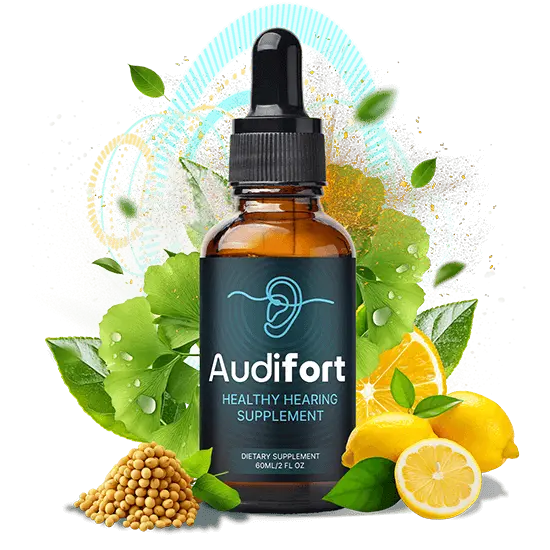
Does Audifort work? Quick verdict
Audifort has not been established as an effective tinnitus treatment or a way to restore hearing in the evidence we identified. Our October 7, 2026 searches did not locate a published controlled trial testing the exact finished formula. This is a limitation of the available search and documentation, not proof that no unpublished or differently indexed study exists.
Audifort is marketed as a hearing-support liquid dietary supplement. The supplied label lists a shared botanical and other-component blend, but it does not disclose every component’s individual dose. Ingredient names and biological explanations therefore cannot establish the size, likelihood or timing of a benefit from this bottle.
For the broader product decision, including formula, purchasing issues and practical limitations, start with our Audifort review. This page owns the narrower question: what would count as persuasive evidence that it works?
Our verdict is benefit unconfirmed, rather than a personal report of success or failure. We have not taken the product, conducted a hearing test, independently analysed a bottle or had this article clinically reviewed. A purchase decision should acknowledge those limits.
Define the result before judging the evidence
“Works” can mean several different things. Someone may feel less distracted by ringing while their hearing thresholds remain unchanged. Another person may sleep better without any change in the ringing itself. A testimonial that combines these outcomes makes it difficult to know what actually improved.
| Question | Evidence that would address it | Evidence that does not answer it alone |
|---|---|---|
| Does it reduce tinnitus-related burden? | A controlled exact-product study using an appropriate validated tinnitus questionnaire | A general relaxation statement |
| Does it restore or improve hearing? | Properly measured hearing outcomes with a credible comparison group | A testimonial saying sounds seem clearer |
| Does it help sleep or stress? | Relevant measured outcomes in people using the same preparation and exposure | Research about a different ingredient product |
| How often do people benefit? | Transparent participant numbers, response criteria and uncertainty | Selected stories without the number of nonresponders |
| What are the harms? | Systematic adverse-event reporting and adequate follow-up | Absence of a warning in an advertisement |
These are editorial criteria for reading evidence, not diagnostic tests. A consumer cannot replace professional hearing assessment with a questionnaire or a phone-volume comparison. Before comparing products, write down which problem you actually want addressed: hearing difficulty, intrusive ringing, sleep disruption or distress.
Audifort clinical evidence: what we found and what remains missing
We searched the exact product name with clinical-trial, randomized and tinnitus terms, including web-indexed PubMed and ClinicalTrials.gov results. We also reviewed the supplied commercial material and the permitted label asset. No matching controlled finished-product publication was identified in these checks.
This was a focused editorial search, not a registered systematic review. Web indexing can miss records, a trial may use another formulation name, and a supplier may hold unpublished information. That uncertainty is why we use “not identified” rather than declaring that no trial exists anywhere.
If a seller supplies a study, ask for the full citation or registry identifier and then check the actual intervention. A paper about another supplement, an ingredient or a similar-sounding product does not answer the Audifort question. A laboratory assay showing antioxidant activity also cannot tell a reader whether their hearing or tinnitus will improve.
A persuasive exact-product report should identify the formulation, dose, manufacturing version, participants, comparison group, prespecified outcomes and follow-up. It should show the difference between groups, uncertainty around that difference, withdrawals, adverse events, funding and conflicts. A positive headline without these details is insufficient for estimating a personal chance of benefit.
What would change this verdict? A transparent controlled human trial of the verified Audifort formula, with relevant outcomes and a meaningful advantage over the comparator, would warrant reassessment. Replication would strengthen confidence. A newly supplied citation would first be checked for identity and methods; its existence alone would not automatically justify a recommendation.
Ingredient research: the evidence cannot be transferred automatically
The supplied label shows a 200 mg shared blend with 22 listed components per 1 mL serving. Individual component amounts are not declared. The source asset carries revision 04/24; we have not confirmed that a current shipment carries the same panel. The full transcription and exposure questions belong in the Audifort ingredients analysis (published).
A shared total creates a practical evidence gap. Even if one component has been studied, the bottle does not tell us whether it supplies the same amount, extract type or preparation. Dividing 200 mg by 22 would produce a mathematical average, not the actual amount of any ingredient. Using that average as a dose would mislead readers.
GABA: stress and sleep research has different endpoints
Hepsomali and colleagues’ 2020 systematic review included 14 placebo-controlled human studies of oral GABA. The authors described limited evidence for stress and very limited evidence for sleep. The literature used varied methods and preparations; the review searched PubMed through February 2020 and was not a tinnitus or Audifort review. Read the original review.
Its discussion also notes uncertainty about oral GABA reaching the human brain. A familiar neurotransmitter name does not establish that supplementing it corrects an individual’s auditory signalling. The practical conclusion is narrow: this review cannot substantiate an Audifort hearing-restoration claim, and its limited sleep findings should not be presented as proof of tinnitus relief.
Grape seed and green tea: health research needs an outcome match
NCCIH summarises grape seed extract research involving blood pressure and cholesterol, with limitations in the available studies. Those are different outcomes from hearing recovery or tinnitus burden. A circulation explanation still needs direct evidence that the exact preparation changes the relevant ear-related outcome. NCCIH grape seed extract overview.
Green tea likewise has a broader research and safety literature. NCCIH reports uncommon liver injury associated mainly with extracts and discusses medication interactions. We cannot calculate Audifort’s specific risk from that overview because component exposure is not declared. NCCIH green tea overview. Natural origin and a plausible mechanism do not resolve dose, effectiveness or suitability.
The five-part evidence match
Before transferring any ingredient finding to a commercial bottle, compare identity, preparation, exposure, population and outcome. If a paper reports a standardized extract at a declared dose in a different population, several links in that chain may be missing here. Combining multiple individually interesting ingredients does not supply the missing clinical test of their mixture.
Affiliate link. Offer inspection only; this link does not establish treatment benefit. Seek assessment for unexplained symptoms.
A positive tinnitus supplement trial exists—but it tested another product
It would be too broad to say that all supplement research is negative. A 2024 randomized, double-blind, placebo-controlled study examined AUDISTIM Day/Night, a different preparation. Its full analysis set included 114 participants, and its three-month primary outcome was tinnitus-related handicap, measured with the THI questionnaire. Original study record.
The reported average THI changes were −13.2 points in the supplement group and −6.2 in the placebo group; the between-group result was statistically significant (p = 0.0158). This is a signal for that tested intervention and outcome. It is not evidence that Audifort repairs hearing, and it is not an Audifort trial despite the similar product names.
Our appraisal is deliberately bounded: the study was single-centre and followed participants for three months; the placebo group also improved. Its complete funding/conflict and all safety details were not independently verified in this review. We do not convert the finding into a recommendation for either product. A result from one mixture cannot establish efficacy for a different blend with undisclosed individual amounts.
Why testimonials cannot establish the cause of improvement
A genuine experience can still leave the cause uncertain. Someone might begin a supplement while also changing sleep habits, receiving counselling or altering their sound environment. Without a comparison, the contribution of each change cannot be separated. This does not mean the person is lying; it means their account answers an experience question more readily than a causal one.
Selection also matters. Ten positive accounts mean something different when ten people tried a product than when ten thousand did. A review page that does not disclose the sampling method, total users or verification process cannot establish a response rate. Shipping satisfaction and symptom relief should be analysed separately.
The AUDISTIM study illustrates the comparison problem: both groups’ questionnaire scores improved. Reporting only the treated group’s before-and-after change would make the apparent treatment effect look larger than the difference between groups. Audifort testimonials provide no equivalent control group in the material we reviewed.
Keep a personal record if you discuss symptoms with a clinician, but treat it as information for that discussion. It cannot prove that a bottle caused a change. Do not stop prescribed care, increase the serving or delay assessment to make a personal “experiment” more convincing.
How long does Audifort take to work?
There is no evidence-based Audifort response timeline in the exact-product research we identified. We cannot responsibly promise improvement in days, weeks or a particular number of bottles. A seller’s recommended purchase duration and a refund window are commercial details, not measurements of clinical onset.
A hearing-support claim also does not tell us how long an effect would last after use stops. That requires follow-up data. Nor can testimonials establish that a person who has not improved should buy a larger bundle. More spublished does not resolve the evidence gap.
Before any purchase, review our Audifort price and refund analysis (file prepared; live publication unverified). It distinguishes final cost from claimed supply and documents conflicting seller return wording. Written return clarification should be obtained before paying, rather than assuming a guarantee provides a clinical trial period.
What this means for your next decision
Useful aspects of the evidence review
- A readable supplier label allows questions about declared contents and shared amounts.
- Named ingredients make it possible to inspect specific research instead of relying on a general “science-backed” phrase.
- Separate outcomes help distinguish symptom burden, hearing and sleep claims.
- The verdict can be updated if verifiable exact-product evidence becomes available.
Material limitations
- No matching controlled Audifort publication was identified in our focused search.
- Individual blend doses and current physical shipment identity remain unconfirmed.
- Ingredient literature and other-product trials cannot establish this mixture’s benefit.
- Personal use, laboratory testing and independent adverse-event assessment were not performed.
For a reader requiring a clinically demonstrated tinnitus treatment or hearing-restoration result, these gaps remain decisive. This page does not establish Audifort as a suitable treatment. A reader who independently considers purchasing should understand that commercial availability and clinical validation are separate questions.
New or unexplained symptoms warrant assessment. Sudden hearing loss needs immediate medical attention; do not wait for a supplement response. NIDCD identifies this as a medical emergency. Sudden deafness guidance.
For ongoing tinnitus, NIDCD describes assessment and management options including hearing aids when hearing loss is present, sound approaches and behavioural therapies. It also states that supplements advertised as tinnitus cures have not been proven effective. These options address different needs; a clinician can help determine which applies. NIDCD tinnitus guidance.
Our tinnitus and hearing-support guide is linked and published. It explains the wider decision pathway independently of any product. The primary guidance above is also available directly.
Affiliate link. Offer inspection only; this link does not establish treatment benefit. Seek assessment for unexplained symptoms.
Frequently asked questions
Is Audifort clinically proven to work?
We did not identify a controlled clinical publication testing the exact finished product in our October 7, 2026 checks. We therefore do not describe it as clinically proven. A supplier can help resolve this gap by providing a full study citation with a matching formula and dose.
Does Audifort cure tinnitus?
The evidence reviewed does not support an Audifort cure claim. A testimonial, ingredient mechanism or trial of another mixture cannot establish that result. Discuss persistent or changing symptoms with a health professional rather than relying on a product promise.
Does the GABA research prove Audifort works?
No. The reviewed GABA literature concerned stress and sleep, used other preparations and did not establish Audifort tinnitus or hearing outcomes. The bottle’s individual GABA amount is not declared on the supplied shared-blend panel.
Can Audifort replace hearing aids or clinical care?
This review provides no evidence supporting that replacement. The purpose and expected outcomes of a hearing aid or a professional assessment differ from those of an unconfirmed supplement. Do not discontinue care because a sales page describes hearing support.
Why mention an AUDISTIM study?
It prevents an overbroad claim that no positive supplement trial exists. The named study tested AUDISTIM, not Audifort. Its result should remain attached to its actual intervention, participants and measured outcome.
Does no identified trial mean nobody can feel better?
No. Individual experiences may vary, but that does not give us a reliable estimate of product-caused benefit or a personal response probability. The available evidence is insufficient for that estimate.
What should I check before spublished money?
Clarify the exact bottle label, medication compatibility with a pharmacist or clinician, final cost and written return eligibility. Also decide whether the unresolved effectiveness evidence fits your expectations. Purchase terms cannot compensate for missing clinical support.
Method and sources
Research checked October 7, 2026. This is an editorial evidence assessment by Biraj Health Care, not personal product testing or a clinician-reviewed recommendation. We used a focused exact-name web search, web-indexed PubMed/ClinicalTrials.gov checks, supplied seller documents and the permitted supplier label. Search absence is qualified; physical-bottle identity and a complete systematic evidence synthesis remain outside this work.
Primary public reading: GABA systematic review, AUDISTIM trial record, grape seed extract, green tea, tinnitus and sudden hearing loss. Commercial source addresses stay in the private research record; they are not purchase routes in this article.
Our editorial methodology and sources policy explain how research and limitations are presented. See the main Audifort review for the integrated product decision. Related pages shown in the Research Library remain marked published until the publisher confirms their live URLs.