
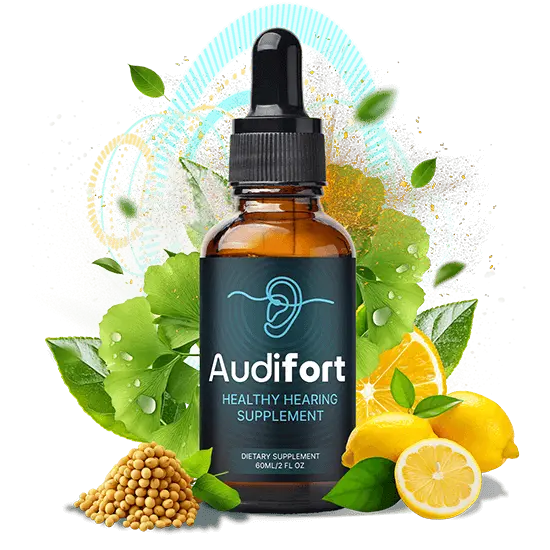
Audifort side effects: quick safety verdict
We cannot establish Audifort’s side-effect frequency or confirm that it is safe for a particular reader from the information reviewed. The supplied formula contains 22 components in a shared 200 mg blend, without individual amounts. Ingredient-level cautions justify questions before use, but do not prove that Audifort causes a particular reaction or tell us how often it occurs.
This page is an editorial safety review, not a diagnosis, prescribing service or clinical clearance. We have not tested a physical bottle, conducted a safety trial or had a clinician review this article. The supplier label inspected is REV 04/24; a current shipment has not been checked against it.
The practical verdict is suitability unresolved. People taking medicines or managing a medical condition should have the actual full label reviewed by a pharmacist or clinician before use. A seller’s “natural” description and a money-back promise cannot resolve compatibility.
For the broader product decision, see our Audifort review. This cluster owns the safety question: what is known, what cannot be inferred, and what information a health professional needs.
What we know about the formula—and what we do not
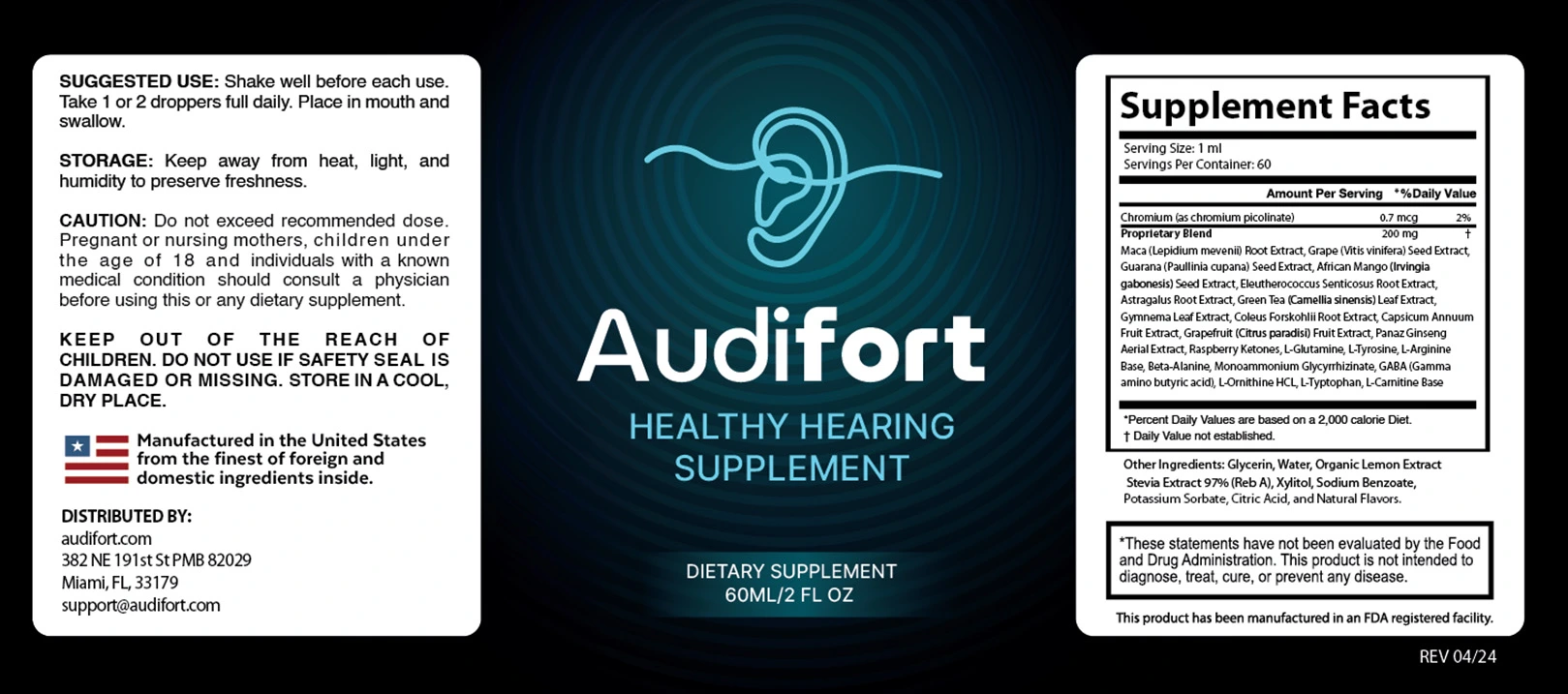
The supplied panel declares a 1 mL serving, 60 servings per container, chromium at 0.7 mcg and a 200 mg combined blend. Components include green tea leaf extract, grapefruit fruit extract and Panax ginseng aerial extract, alongside other botanicals, amino acids and compounds. Other ingredients include sweeteners, preservatives and flavourings.
The complete transcription and image are in our Audifort ingredients guide (file prepared; live publication unverified). A highlighted six-ingredient marketing list is insufficient for a full medication review.
| Evidence category | What it supports | What it cannot establish here |
|---|---|---|
| Supplier label | Printed names, shared quantities and cautions | Actual purity or condition of a delivered bottle |
| Ingredient safety guidance | Questions about particular preparations and medicines | Audifort-specific reaction rates |
| A personal report | A reported sequence of events | Proof that the supplement caused the event |
| Product safety study | Could describe harms under defined conditions | No matching controlled safety dataset was identified in our focused research |
| Absence of a published complaint | No complaint located in that search | Proof that nobody experienced harm |
Unknown exposure matters in both directions. We should not assume an ingredient reaches a concerning dose, and we should not assume it is too small to matter. Dividing the blend total equally among its components cannot resolve the individual amounts.
Ingredient cautions that deserve professional review
The examples below are selected screening questions, not a complete interaction database. They are grounded in primary health-agency material and keep its preparation limits visible. A pharmacist may identify additional issues from the complete formula and your medicines.
Green tea extract: digestive effects, liver reports and interactions
NCCIH lists nausea, constipation, abdominal discomfort and increased blood pressure among reported effects of green tea extract supplements. Uncommon liver injury has been reported mainly with extract tablets or capsules. Audifort is a liquid mixture with an undisclosed green-tea amount; we cannot transfer a frequency or severity estimate from those preparations. NCCIH green tea guidance.
NCCIH also discusses interactions involving nadolol, atorvastatin and raloxifene. These examples warrant a medicine-specific review; they do not mean every blood-pressure, cholesterol or osteoporosis medicine has the same interaction. Ask about the exact drug, preparation and exposure, rather than changing treatment yourself.
Grapefruit extract: a reason to check the medicine’s warning
FDA explains that grapefruit and its juice affect some medicines, including certain statins and other drugs. Effects differ by the medicine and can increase or decrease exposure. Its guidance concerns grapefruit/juice, while this panel lists a fruit extract with no individual quantity or constituent specification. FDA grapefruit and medicine guidance.
If your medicine carries a grapefruit warning, bring this ingredient to your pharmacist’s attention before use. Do not assume an extract is equivalent to a glass of juice, or that a different form eliminates the issue. This is an unresolved product-composition question, not a confirmed Audifort interaction.
Panax ginseng: keep the plant-part distinction
NCCIH discusses insomnia, possible blood-sugar lowering, interference with blood clotting and medication interactions for Asian ginseng. The root is the part most commonly used; the Audifort panel instead specifies aerial extract. That preparation mismatch prevents a simple transfer of the guidance into a product-specific risk estimate. NCCIH Asian ginseng overview.
A reader using diabetes medicines or treatment affecting clotting should raise the listed ginseng with their clinician or pharmacist. This article does not establish which dose is present, whether a clinically significant interaction occurs in this bottle, or that monitoring makes its use appropriate.
The remaining blend and other ingredients
We have not cleared every listed component for every medicine or medical condition. The named amino acids, other compounds and flavour ingredients should remain in the professional review, even when they are absent from a short promotional summary.
A familiar ingredient is not automatically harmless in a mixture. Equally, an unfamiliar chemical name is not proof of toxicity. The useful next question is specific: what is its actual amount and preparation, and how does that relate to this person’s treatment? If those details are unavailable, the uncertainty should remain visible.
Affiliate link for independent offer comparison after suitability questions are resolved. It is not advice to purchase or use a product during a suspected reaction.
Who should resolve suitability before considering use?
The supplied label calls for physician consultation for pregnancy or nursing, children under 18 and people with a known medical condition. It warns against exceeding its directions and using a damaged or missing safety seal. These are supplier cautions; they do not establish that consultation automatically makes the product appropriate.
A medication review is especially useful when the list is complex, when treatment has recently changed, or when several supplements are being combined. Include prescribed drugs, over-the-counter medicines, occasional products and supplements. Omitting an “only sometimes” product can leave the review incomplete.
| Your situation | Useful next step | What this page cannot provide |
|---|---|---|
| Prescription or over-the-counter medicines | Bring exact names and the full current label to a pharmacist | Personalized compatibility clearance |
| Diabetes treatment | Ask about listed components and blood-sugar considerations | A medicine or supplement dose adjustment |
| Medicines affecting clotting | Ask about the full blend and any linked procedures | A safe interval for starting or stopping products |
| Liver disease or previous supplement reaction | Discuss history and the actual formula before use | Confirmation that this blend is safe |
| Pregnancy, breastfeeding or a child | Consult an appropriate clinician; do not rely on adult marketing | A recommendation for these groups |
| Known ingredient sensitivity | Review both blend and other ingredients; clarify unspecified flavours | An allergen-free certification |
This table organizes questions. It is not a list of conditions in which Audifort has been proven harmful, nor a complete list of people needing caution. Suitability depends on the individual and information beyond this article.
Can you take Audifort with your medication?
There is no universal yes-or-no answer we can responsibly provide. A precise review requires the actual medicine, daily dose, other products, relevant conditions and the formula you would take. The shared blend leaves component exposure unresolved even after the medicine list is known.
Do not interpret a medicine’s absence from this article as a compatibility check. This is a selected-source editorial review, not an exhaustive database search or a pharmacist’s assessment. A supplier’s general statement about natural ingredients cannot substitute for that assessment.
Avoid changing a prescription, spacing doses by an invented interval or reducing medicine intake to accommodate a supplement. This page establishes no timing workaround. Ask the pharmacist whether the available composition information is sufficient to advise you; if it is not, additional supplier information may be required.
The dose discrepancy is also a safety question
The supplier label says one or two full droppers daily; the inspected seller FAQ says one. The Supplement Facts amounts use a 1 mL serving, but a full dropper’s measured volume has not been independently confirmed. These are unresolved directions, not two recommendations from this publication.
Clarify the currently shipped bottle instructions and measured daily volume before use. Increasing the amount to seek a faster result would increase exposure without resolving safety or efficacy. A self-selected half dose is also not a validated compatibility strategy.
Do not use a research dose from a different ingredient preparation to set this mixture’s dose. Its components are not separately quantified. Keep dose and supply arithmetic with the ingredients page; the relevant point here is that a professional needs a consistent, measured exposure for the review.
What to do if you suspect a reaction
FDA advises immediately stopping a supplement when a serious reaction is suspected and reporting the event. Seek medical help appropriate to the symptoms; breathing difficulty, throat swelling, chest pain, fainting or stroke-like symptoms require emergency attention. Do not wait for a seller’s refund response. FDA supplement adverse-event guidance.
FDA also identifies warning symptoms such as persistent severe digestive illness, dark urine, unusual bleeding and yellowing of the eyes or skin. These symptoms need medical assessment; they are not an Audifort-specific list or proof of product causation. Do not dismiss an unexplained reaction as a normal adjustment or “detox.”
Keep the bottle, packaging and a clear label photograph available. Record when use began, the amount taken, symptom timing and other medicines or products. This information may help a clinician and an adverse-event report. Do not restart a suspected product to prove the cause without professional advice.
For non-emergency but concerning symptoms, contact a health professional rather than relying on a comment thread. Reporting provides information for investigation; it does not establish causation on its own. Commercial complaints and refund requests are separate from getting care.
Hearing changes should not be treated as a supplement experiment
Sudden hearing loss is a medical emergency according to NIDCD, including when someone mistakes it for a blocked ear or notices accompanying ringing. Seek immediate medical attention rather than waiting for a product response. NIDCD sudden deafness guidance.
A symptom that begins after starting a supplement can have several possible explanations. Determining whether it is related to the product requires assessment. Conversely, a hearing symptom that predates the supplement should not be assumed to need nutritional treatment.
Our linked tinnitus and hearing-support guide will cover the wider assessment pathway; publication is published. This safety page does not establish Audifort as treatment for hearing loss or tinnitus.
Prepare a useful pharmacist conversation
Bring the physical bottle or a legible photograph of every panel. Include revision, serving unit, blend total, complete names, other ingredients and actual daily directions. If you only have the supplier artwork, identify that limitation clearly.
Prepare your complete medicine and supplement list, including doses and when you use them. Note relevant conditions, previous reactions, pregnancy or breastfeeding, and any procedure being linked. Ask whether the undisclosed component amounts prevent a reliable interaction assessment.
Useful questions include: “Does any listed ingredient conflict with my treatment?”, “What missing composition information would you need?” and “Should I consider this product at all given my circumstances?” These are better questions than asking whether a liquid described as natural is generally safe.
Safety strengths and unresolved limitations
Useful information available
- A readable complete supplier label, rather than only marketing highlights.
- Independent ingredient guidance from public health agencies.
- Clear separation between screening concerns and verified product reactions.
- A practical record of what to bring to a health professional.
Material limitations
- No reliable Audifort-specific side-effect rate or personalized compatibility assessment.
- No individual quantities for the 22-component shared blend.
- A label/FAQ directions discrepancy and unverified dropper calibration.
- No physical-bottle assay, verified shipment match or clinician review of this article.
For someone requiring a demonstrated safety profile, these gaps remain important. For someone independently comparing an optional supplement, the next step is to resolve personal suitability and composition questions—not to interpret this article as clearance to buy or use it.
Return to the Audifort review for the overall product decision. A refund promise limits neither the chance nor the consequences of an adverse reaction; it is a commercial term, not a safety study.
Affiliate link for independent offer comparison after suitability questions are resolved. It is not advice to purchase or use a product during a suspected reaction.
Frequently asked questions
What are the common Audifort side effects?
We do not have a reliable finished-product dataset that establishes which effects are common or their frequency. Ingredient-level reports cannot be converted into an Audifort side-effect rate. The selected cautions above identify questions for a professional review.
Is Audifort safe because it is natural?
Natural origin does not establish suitability. The actual preparation, exposure, medicine list and medical circumstances matter. This article does not confirm the safety of the finished mixture.
Can Audifort interact with blood-pressure or cholesterol medicines?
Some relevant ingredient guidance describes interactions with specific medicines. That does not establish an interaction with every medicine in either category or quantify Audifort’s risk. Have your exact medicine and the full label reviewed before use.
Can I use Audifort with diabetes treatment?
Ask your clinician or pharmacist before use. The ginseng guidance raises blood-sugar questions, but the product’s preparation and individual amount remain unclear. Do not change diabetes treatment based on this article.
Is Audifort suitable during pregnancy or breastfeeding?
We do not recommend it for these groups. The label calls for physician consultation, and the available information does not establish suitability. Obtain advice from an appropriate clinician rather than relying on adult supplement marketing.
Should I continue if it causes an unusual reaction?
Do not treat an unexplained reaction as proof that the supplement is working. Seek professional advice; a suspected serious reaction warrants stopping the product and prompt care according to FDA guidance. Emergency symptoms require emergency attention.
Does the small total blend amount make interactions impossible?
No such conclusion follows from the shared total. Individual amounts and relevant constituents are not declared. The total alone neither proves a significant interaction nor rules one out.
Does the money-back guarantee make it risk-free?
No. A commercial refund condition does not establish safety, prevent reactions or replace medical care. Health decisions and transaction terms should be evaluated separately.
Method and sources
Research checked October 7, 2026 by Biraj Health Care. We mapped selected ingredient questions from the permitted REV 04/24 supplier label to current primary FDA/NCCIH guidance and NIDCD urgency information. This is a focused editorial assessment, not a complete interaction database, pharmacovigilance study, diagnosis or clinician-reviewed recommendation.
Primary reading: green tea, Asian ginseng, grapefruit and medicines, reporting supplement reactions and sudden hearing loss. Preparation mismatches and undisclosed quantities are retained rather than turned into product-specific claims.
Our editorial methodology and sources policy describe evidence standards. Commercial source addresses remain in the private research record. Related pages may remain unavailable until published; ahead links were requested and are not represented as live-verified destinations.