
01 / DIRECT ANSWER
Does NeuroPrime work for memory?
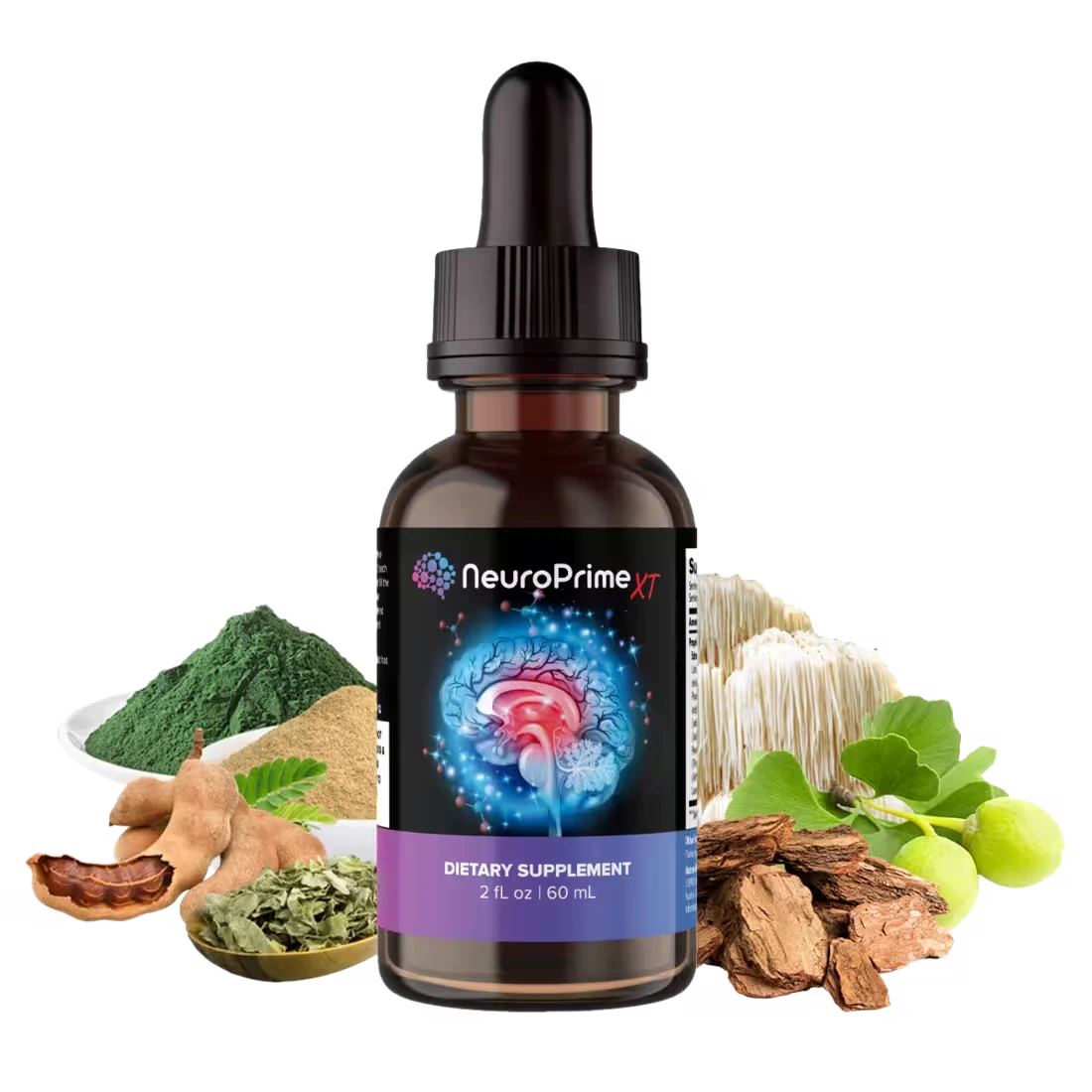
The available information does not establish that the finished NeuroPrime liquid improves memory. We found ingredient research worth reading, but did not identify a human trial that tested this exact nine-component drop formula in the scoped searches described below. The seller does not provide a complete, readable Supplement Facts panel that would allow a study-to-bottle dose comparison. A missing trial in this search is a limitation of the evidence we located, not proof that the product can never help anyone.
The distinction matters if your question is practical: “What should I expect after buying this bottle?” A study of bacopa extract tests a defined preparation in a defined group against an outcome measure. It does not test a different liquid blend simply because its ingredient list also says bacopa. The seller's current page calls NeuroPrime a memory-support product and names nine ingredients; it does not disclose each ingredient's amount in the version we inspected on 27 September 2026.
What we can assess
Seller claims, the identity of cited studies, human ingredient evidence, the status of a seller-cited tamarind paper, and the missing formulation details.
What we cannot infer
A probability of benefit, an expected improvement after one bottle, a safe personal dose, a cure, or a product-specific response rate.
For format, seller-listed components, safety and the full buying decision, read our NeuroPrime review. This guide concentrates on whether the evidence can answer the effectiveness question.
02 / EVIDENCE LEVELS
Which evidence would actually answer the question?
A matching randomized trial of the finished formula would be the most directly useful test. It would identify the product version and measured serving, compare it against placebo, report prespecified memory outcomes, describe participants and duration, and disclose adverse events and funding. A trial of one isolated ingredient answers a narrower question.
| Evidence level | What it can tell a buyer | Current NeuroPrime match |
|---|---|---|
| Seller statement | How a product is marketed, including intended use and ingredient names. | Available, but not independent efficacy evidence. |
| Mechanism or laboratory model | A biological hypothesis under controlled conditions. | Cannot establish a human memory outcome. |
| Single-ingredient human trial | Whether a specified preparation and dose changed outcomes in a study group. | Several research leads, without confirmed formula/dose match. |
| Comparable multi-ingredient formula | Potentially informative if ingredients, amounts, route and population are close. | No verified equivalence established. |
| Exact finished-product trial | Most relevant test of the actual bottle, if well conducted and reported. | Not identified in our scoped search. |
Quantity is the immediate bottleneck. Even if the complete bottle held the exact plants named on the sales page, a trial might have used a standardized extract with a known active-compound percentage. Without a current panel specifying form and amount, neither “same ingredient” nor “liquid delivery” establishes equivalent exposure. A hypothetical equal split among nine components would invent a dose; we do not make that calculation.
Our claim-to-study test asks five things in order: same substance, same preparation, comparable amount, relevant participants, relevant outcome. If any link is unknown, the study remains context, not validation of NeuroPrime.
03 / HUMAN STUDIES
What do bacopa, ginkgo and lion’s mane studies show?
Bacopa has human research, but results and study questions vary. A 2014 meta-analysis of nine randomized studies of standardized bacopa extracts reported a potential improvement, particularly in speed of attention, after studies generally lasting at least 12 weeks. That is a signal for the tested extracts, not proof of a memory benefit from NeuroPrime. Meta-analysis pools studies with differing methods and populations; its result cannot be transported to an unknown amount in a different blend.
A 2025 randomized, placebo-controlled bacopa study enrolled adults with self-reported memory and attention problems. It randomized 101 participants to a particular 300 mg extract or placebo for 12 weeks, with 87 completing. Primary cognitive measures did not show an advantage; some secondary stress and fatigue measures did. Headaches and digestive effects were reported more often with the extract. The authors disclosed nutraceutical industry relationships. That mixed result cautions against a blanket “bacopa improves memory” conclusion, while still testing neither NeuroPrime nor every bacopa preparation.
A newly published 2026 protocol plans to test standardized bacopa in people with amnestic mild cognitive impairment. A protocol describes a planned study, not an efficacy result. It also concerns a specific extract in a clinically selected population, not the drops sold here. Treating enrollment or study design as a positive outcome would turn research in progress into a false claim.
Ginkgo: intended use is not dementia prevention
NCCIH's ginkgo guidance says research has not shown that ginkgo prevents dementia and describes uncertain evidence for other cognitive outcomes. It also notes potential bleeding interactions, particularly with anticoagulant medicines. The material and amount in NeuroPrime are not documented well enough here to infer the same benefit or risk magnitude. Nevertheless, a person using medication should not assume a multi-ingredient liquid is harmless just because it is marketed as natural.
Lion’s mane: a small, defined tablet trial
A small 2009 trial tested a defined lion’s mane tablet regimen in 30 adults with mild cognitive impairment over 16 weeks. The reported signal is preliminary; the study does not establish broad disease treatment, and the tablet preparation, dose, population and duration cannot be assumed to match these drops. It is a reason to ask for the label, not to translate its reported result into a buyer timeline.
The verdict from these studies is bounded: individual plants may merit further trials, while the exact product question remains open. Researchers can reasonably pursue a hypothesis without buyers being promised an effect.
04 / CLAIM AUDIT
Does the pineal “detox” story explain real results?
The seller's long-form promotional page says the formula clears fluoride from the pineal gland and reverses memory loss. Those are substantially stronger claims than the root page's more limited memory-support language. The promotional mechanism is not a measured outcome from an identified trial of this finished formula. No evidence reviewed here verifies NeuroPrime-induced pineal changes, and a proposed biological pathway cannot substitute for a memory test in people.
Marketing may combine familiar neuroscience terms, traditional ingredient names and a dramatic before-and-after narrative. A reader should ask which outcome was measured, in whom, by whom, and using what exact product. The longer story gives no verified product-specific comparison that answers those questions. We therefore do not adopt claims of reversing cognitive decline, detoxification or disease prevention.
A seller-cited tamarind reference no longer supports the case
The root seller page still cites tamarind paper DOI 10.1039/D2RA01340A. The journal published a retraction notice in January 2025, describing unreliable image/data concerns. The publisher also marks the original article as retracted. Its reported results cannot responsibly be counted as supporting evidence for a tamarind memory claim.
This is a verifiable citation-status finding, not evidence that all tamarind research is invalid, that NeuroPrime is harmful, or that the seller deliberately misrepresented the paper. It does show why a scientific-reference list should be checked for both relevance and current publication status. More references cannot repair a retracted foundation.
05 / TRANSLATION TEST
How closely does each research example match this bottle?
The table applies the same test to selected studies. It is an evidence-matching tool, not an ingredient ranking or an assertion that every cited extract has a useful effect. The seller names nine ingredients, but current public information does not identify the exact form and amount for a full nine-way comparison.
| Example | Study question and exposure | Why it cannot prove NeuroPrime works |
|---|---|---|
| Bacopa meta-analysis | Standardized extracts, multiple adult groups, cognitive test outcomes. | Unknown amount and extract standardization in bottle; pooled study methods differ. |
| 2025 Bacopa RCT | Specified 300 mg extract, 12 weeks, adults reporting attention/memory problems. | Different finished product; primary outcomes did not outperform placebo. |
| Lion’s mane pilot | Tablet regimen, 30 adults with mild cognitive impairment, 16 weeks. | Small pilot, other route/preparation and unknown NeuroPrime quantity. |
| Ginkgo guidance | Body of evidence, including dementia-prevention and safety questions. | Does not establish this blend's effectiveness, and medication context matters. |
| Retracted tamarind study | Preclinical tamarind investigation whose findings were withdrawn. | No longer valid affirmative support; not a human trial of the bottle. |
Other named components such as moringa, pine bark, spirulina, chlorella and neem also need preparation-specific appraisal. Picking one encouraging result for each plant would still fail the finished-product question. Even a study with the same common name may use a different species, plant part, extraction method, route, dose or population. The absence of disclosed amounts prevents a serious crosswalk.
Inspect the current offer and label
If you are still considering the product, ask for the complete current Supplement Facts and use directions. The offer link is for checking those details; it does not validate a health claim. Avoid treating a checkout timer or bundle size as evidence.
View Current Product Offer ↗06 / EXPECTATIONS
How long would a memory benefit take to notice?
No NeuroPrime-specific response timeline can be estimated from the evidence reviewed. Some individual-ingredient studies measured cognitive tests after 12 or 16 weeks. Those are study schedules for specified preparations, not an instruction to buy three or six bottles of NeuroPrime or a promise of results after a set number of days. A seller description of a “one-month supply” does not resolve the serving-size ambiguity between seller pages.
Memory concerns are not one outcome. Trouble recalling a name, attention during a demanding task, verbal learning on a standardized test and progressive memory loss can reflect different causes and require different responses. A useful study states its prespecified primary outcome rather than presenting every favorable secondary finding as proof. It also accounts for sleep, mood, practice effects and concurrent treatments.
If you track a subjective change, note what you are trying to measure and what else changed: sleep hours, new medicines, illness, stress and routines. That record may improve a conversation with a clinician, but an uncontrolled personal diary does not establish that a supplement caused improvement. Seek professional evaluation for persistent, worsening or function-limiting memory problems instead of relying on a sales-page timeline.
What future evidence could change this answer?
A readable current label would permit form and dose comparison. A registered, independently reported trial of the exact formula could then test a predeclared memory endpoint against placebo while identifying adverse events. A clear explanation of version identity would help connect the tested product to the sold bottle. We would revise the assessment if those documents became available; updating the review date requires a substantive recheck, not simply a new year in the headline.
07 / RESEARCH SCOPE
What did our evidence search cover and miss?
We inspected the supplied seller domain and its long promotional page, searched the exact product and XT name with clinical-trial terms, checked selected human ingredient studies and clinical guidance, and followed the cited tamarind DOI to its retraction. We did not conduct a registered systematic review of all nine ingredients; full texts, label batches, seller laboratory records and physical bottles were not supplied. We did not personally use or test the supplement, conduct a clinical review or commission an independent clinician. By Biraj Health Care identifies the FitnessLifeMag editorial brand, not a medical qualification.
This page's original contribution is the explicit evidence ladder and a claim-to-study matching table tied to the current seller material. The retracted DOI check prevents an obsolete paper from inflating the case. This does not independently test the supplement's contents or verify the seller's manufacturing claims. For the commercial uncertainty around its guarantee, read the separate NeuroPrime price and refund guide, which compares the seller’s published terms.
Commercial facts and cited page status were rechecked on 27 September 2026. Seller pages are mutable. Material changes to formula, marketing, studies or safety advice should trigger a source-by-source editorial update.
Research sources and what they support
- Seller root page (
theneuroprime.com/) and long-form offer (theneuroprime.com/go/indexvs.php), accessed 27 September 2026: ingredient names and marketing claims, not efficacy proof. - Kongkeaw et al., 2014: meta-analysis of standardized bacopa trials.
- Lopresti and Smith, 2025: randomized bacopa extract trial, specific outcomes and limitations.
- Dwivedi et al., 2026 protocol: research plan; no positive outcome data.
- NCCIH ginkgo guidance: clinical evidence and interaction context.
- Mori et al., 2009: small lion’s mane study.
- RSC retraction, 2025: withdrawal of seller-cited tamarind paper DOI 10.1039/D2RA01340A.
08 / READER QUESTIONS
Does NeuroPrime work? Common questions
Has NeuroPrime itself been clinically tested?
Our scoped exact-product search did not identify a matching, adequately described human trial of this liquid formula. That is a search finding, not proof that no trial exists. Ask for the registered study, product version, dose and full report if the seller makes a clinical claim.
Does bacopa research prove these drops improve memory?
No. Studies assessed specified bacopa extracts at known doses, while the amount and preparation in this nine-ingredient liquid were not verified. A 2025 trial also had no advantage on its primary cognitive outcomes.
Can the product reverse age-related memory loss?
The evidence reviewed does not establish reversal of cognitive decline or treatment of a diagnosed condition. A progressive or worrying change deserves clinical evaluation.
Is the seller-cited tamarind study still usable?
No as affirmative evidence. The journal retracted the cited 2022 paper in January 2025 over data concerns; the retraction is specific to that paper.
Does a one-year refund offer mean it works?
A return policy concerns a transaction, not a clinical result. Published seller pages also disagree about return eligibility. Check the applicable written terms before ordering.
09 / FINAL DECISION
Our evidence verdict
The case for a measurable benefit from the finished NeuroPrime formula remains unproven in the sources we could verify. Bacopa research is mixed, ginkgo guidance is more cautious than sales narratives, a small lion’s mane trial cannot be transferred to drops, and a cited tamarind paper was retracted. Unknown label amounts make an exact match impossible. These limits support a request for documents, not a numerical verdict or a prediction about individual results.
Read the full NeuroPrime review for the broader decision. If you still want to compare the present seller offer, verify the exact product label, current price and terms first. The link below is commercial and supplies no evidence of effectiveness.
Check Current Offer ↗FitnessLifeMag may earn a commission from this purchase link.