
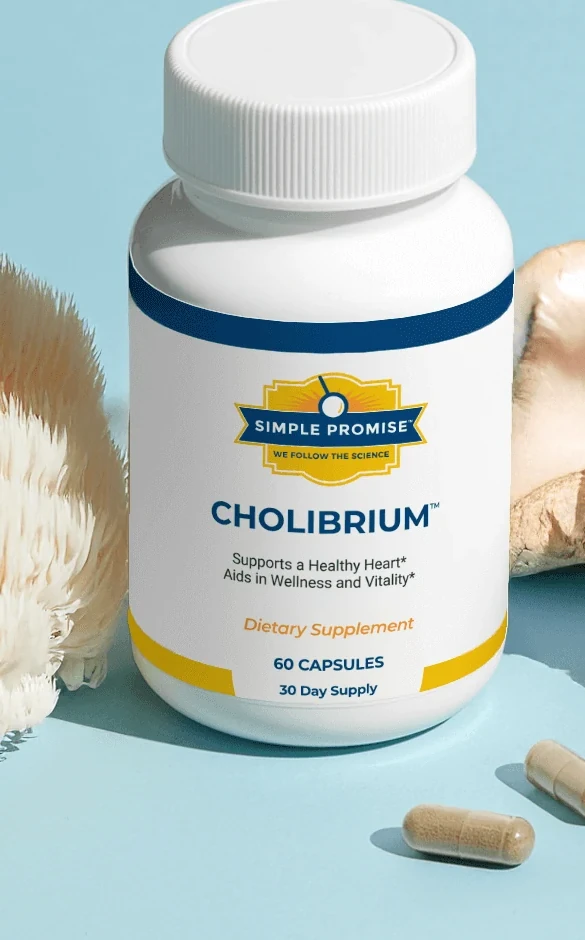
Are there clinical studies of the finished Cholibrium formula?
Our bounded product-name searches did not identify a matching published trial or registration; that is not proof that no study exists.
On October 14, 2026, a search for Cholibrium returned no records in PubMed and no studies in the ClinicalTrials.gov public database response. We also examined product-name clinical and benefit queries and checked identifiable ingredient references. No retrieved study could be matched to the supplied ten-mushroom formula. [1] [2]
This is a reproducible, limited name search—not an exhaustive registered systematic review of every possible product alias or unpublished report. Trials might use an ingredient preparation, an alternative formulation name or a manufacturer’s internal identifier. The useful conclusion is finished-product benefit was not established by the inspected evidence, rather than “science proves it cannot work.”
A matching trial would need to identify the actual formula and preparation, serving, comparator, population, duration, prespecified outcomes and harms. A trial registration alone would describe a planned study; it would not demonstrate a favorable completed result. We have not verified such a completed product trial here.
How does Cholibrium claim to work—and what would demonstrate a benefit?
The seller attributes benefits to mushroom compounds and combined effects; plausible mechanisms are not the same as measured human product outcomes.
Seller materials position the formula for heart and cholesterol support, healthy blood pressure, energy, immune strength, focus, clarity, calm and healthy weight. These are separate questions. A paper about antioxidant chemistry cannot substantiate all of them, and a change in one laboratory marker is not automatically a reduction in heart attacks or strokes.
| Advertised purpose | Relevant measured outcome | What this assessment establishes |
|---|---|---|
| Cholesterol support | LDL-C, total cholesterol, HDL-C and triglycerides measured against an appropriate comparator. | Human reishi findings do not establish reliable lipid benefit for this finished formula. |
| Heart and circulatory health | Validated cardiovascular outcomes or appropriately interpreted risk markers. | No matched finished-product cardiovascular-event evidence identified. |
| Healthy blood pressure | Repeated validated blood-pressure measurements with prespecified comparison. | Overall human reishi review results do not establish a dependable BP effect. |
| Focus, clarity and calm | Validated cognitive tasks, real-world function and stress/mood measures. | Some lion’s-mane pilot signals exist; they do not verify this preparation or broad product claims. |
| Daily energy / vitality | Relevant fatigue or functional outcomes, not only exercise tests in athletes or mice. | Ingredient exercise research cannot predict daily vitality from this bottle. |
| Immune support | Clearly defined clinical outcomes such as infection incidence or severity, not an unspecified “boost.” | Beta-glucan research uses characterized preparations; this label does not quantify them. |
| Healthy weight | Sustained weight/adiposity changes with diet and activity appropriately accounted for. | A small ingredient-review BMI signal is not a validated weight-loss result for Cholibrium. |
The sections below support those distinctions with specific studies and their limitations. We do not assign a numerical “effectiveness score” or invent a percentage of buyers likely to benefit. An appropriately conducted human trial of the actual product would be more informative than a larger number of unrelated references.
What does the human cholesterol and blood-pressure evidence show?
Human reishi research includes limited favorable signals and substantial null findings; it does not establish reliable cholesterol or blood-pressure benefit for Cholibrium.
The most decision-relevant evidence is clinical research, not the mushroom’s reputation or a mechanistic diagram. Read the following as related ingredient evidence, not three independent confirmations of the product.
How should the favorable 2012 crossover trial be interpreted?
The trial reported first-period triglyceride and HDL signals, but significant carryover prevented a complete analysis of those outcomes.
The randomized, double-blind study assigned 26 people with borderline blood pressure and/or cholesterol elevations to 1.44 g daily Lingzhi or matching placebo in 12-week periods; 23 were evaluable. The abstract describes lower triglycerides and higher HDL in the first treatment period, alongside no BMI or blood-pressure changes. Carryover means effects from one period can complicate interpretation of the next—it is not a minor detail to remove from a sales summary. [4]
The publisher full text reports that Vita-Green supplied the Lingzhi and placebo capsules free; the authors declared no other funding or conflicts. Provision of study products does not invalidate a trial, but is relevant context. Its preparation is not established as equivalent to Cholibrium’s 266 mg reishi extract or the complete blend. [19]
What do the Cochrane review and 2016 primary trial add?
They do not support a reliable cardiovascular-risk-factor benefit from the studied reishi regimens; the primary trial also has limits for secondary outcomes.
The 2015 Cochrane review found five eligible trials with 398 participants, but only three, involving 157 people, supplied usable comparison data. The analyzed interventions used 1.4–3 g daily for 12–16 weeks. In the pooled LDL analysis of 107 participants, the mean difference was 0.02 mmol/L, with a 95% confidence interval from −0.41 to 0.45. This did not establish an LDL reduction; the interval also illustrates uncertainty rather than an exact zero-effect estimate. Most included studies had unclear bias risk. [3]
The 2016 published Klupp trial randomized 84 people with type 2 diabetes and metabolic syndrome to Ganoderma, Ganoderma with Cordyceps, or placebo for 16 weeks. Its Ganoderma dose was 3 g/day. The two active groups were combined for analysis; primary glucose and secondary outcomes, including lipids and blood pressure, were not significantly improved. The authors caution that secondary outcomes might be underpowered. This was not the ten-mushroom Cholibrium formula. [5]
Allife supplied medications and financial support, alongside university, hospital and Cardiac Health Institute support. The authors report an investigator-led study and a contract excluding the sponsor from conduct, analysis and reporting. Several Cochrane authors also authored the included Klupp trial; the review reports an independent author’s bias evaluation. The 2016 publication represents data already considered in the earlier review, not another independent set of participants to add to its total. [3] [5]
Does the larger 2025 review change the product conclusion?
Its overall lipid and blood-pressure analyses were not significant, and the authors rated certainty very low across outcomes.
The 2025 systematic review included 17 randomized trials and 971 participants across multiple health outcomes. These were not 17 Cholibrium trials or 17 cholesterol trials. Preparations, populations, doses and durations varied, and some interventions combined other substances. Overall analyses did not show significant effects on total cholesterol, LDL, HDL, triglycerides or blood pressure. Sixteen trials were rated poor quality and one fair by the review’s assessment; none was rated good. [6]
The review did find modest signals in BMI, heart rate, creatinine and glutathione peroxidase. It would be inaccurate to call every result negative. However, all-outcome certainty was very low, and changing a biomarker does not establish a clinically meaningful benefit or safety advantage for this bottle. Subgroup and sensitivity signals are reasons for further research, not a validated Cholibrium response prediction. The authors reported no specific funding and no conflicts. [6]
The primary trials and reviews overlap. Do not add their participant counts or citation totals as if each were independent evidence. These studies are more informative than ingredient marketing, but differences in formulation and study quality remain central.
Does the labeled dose match the studied preparations?
No reliable equivalence was established: the label gives some ingredient masses but omits the preparation detail and blend doses needed for a precise match.
The supplied artwork lists four individual 266 mg entries and a 266 mg total blend of six mushrooms per two capsules. Cordyceps is labeled C. sinensis mycelium powder; reishi and shiitake are labeled fruiting-body extracts; lion’s mane’s extract form is not clear. Individual blend amounts and verified marker specifications remain unknown.
| Product entry / label | Studied intervention | Why equivalence is not established |
|---|---|---|
| Reishi extract: 266 mg per serving | Lingzhi 1.44 g/day crossover; Ganoderma 3 g/day in the 2016 trial. [4] [5] | Species name and mass are not complete specifications. Extraction, marker content and the full combination differ or remain unknown. |
| Lion’s mane: 266 mg; fruiting bodies | 1.8 g/day of a specific mushroom product in the 2023 cognition pilot. [7] | The study product, dose and population do not establish equivalence to this label. |
| Cordyceps sinensis mycelium powder: 266 mg | Athlete review used varying C. sinensis preparations; the seller-linked fatigue experiment used C. militaris polysaccharides in mice. [8] [11] | Different preparations, sometimes species, and different exercise/animal endpoints. |
| Six-member blend: 266 mg total | Individual ingredients appear in preclinical references, but current product amounts are undisclosed. | No six-way dose match or equal-share allocation can be calculated. |
| Unspecified beta-glucan content | Fungal beta-glucan trials used characterized fractions from yeast or mushrooms. [9] | No verified product beta-glucan quantity or structural equivalence was established. |
The labeled arithmetic total is 1,330 mg of mushroom entries—not an active-marker assay, complete capsule mass or clinically effective dose. We do not conclude that it is “underdosed” simply because a trial used more grams. Nor do we calculate a dry-mushroom equivalent from an unstated extract ratio.
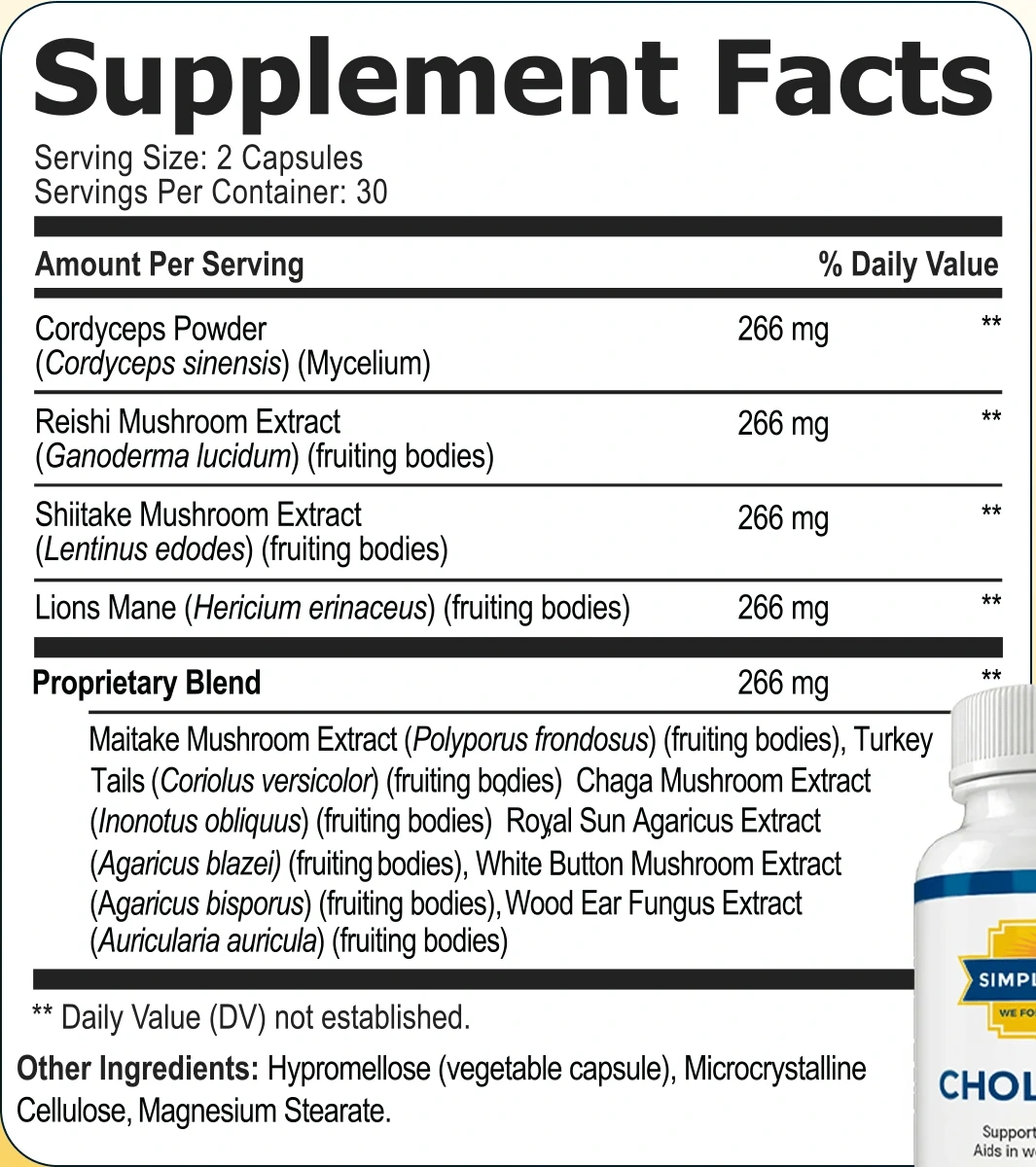
For exact names, other ingredients and the “9-in-1” versus ten-name discrepancy, read the Cholibrium Ingredients and Supplement Facts analysis. Our Supplement Label Guide explains the disclosure limits without inventing amounts.
What does human lion’s-mane research say about focus and calm?
A small human pilot found a favorable result on one cognitive task and a stress signal; it does not validate broad focus or calm claims for Cholibrium.
A 2023 randomized, double-blind, placebo-controlled pilot studied 41 healthy adults aged 18–45 using 1.8 g/day of a specific lion’s-mane product. It evaluated an acute dose at 60 minutes and 28-day supplementation. Participants were faster on the Stroop task after the acute dose, but the finding was confined to that task rather than global speed of performance. [7]
The study reported a trend in its chronic subjective-stress main effect (p = 0.051), alongside a favorable Day 29 comparison and null or limited negative findings on other measures. It is therefore misleading to simplify the paper into “proven mental clarity” or “works within an hour.” A pilot’s small sample, multiple measured tasks and narrow population limit how strongly its signals can be generalized. [7]
Sempera Organics supplied the investigational product; the researchers reported no additional external funding, no conflicts and no provider role in research or publication decisions. This helps assess transparency, but does not supply missing evidence for another formulation. The Cholibrium label’s 266 mg entry has not been matched to that studied product. [7]
This favorable ingredient research deserves acknowledgment. It is not proof of treatment for anxiety, cognitive impairment or any disease, and it cannot establish a reliable onset of focus or calm from the combined Cholibrium bottle.
What about energy, immune support and healthy weight?
Each claim requires its own evidence; selected ingredient studies offer signals but do not establish these outcomes for the finished Cholibrium formula.
Does Cordyceps research establish daily energy or vitality?
Some human exercise findings are favorable, but athlete performance and mouse fatigue are different from everyday fatigue in a general buyer.
A 2025 review of fungal supplements included 14 randomized trials with 528 athletes; eight trials involving 288 athletes entered quantitative synthesis. It reported favorable Cordyceps-related endurance, ventilatory-threshold and peak-oxygen-consumption results, alongside positive and null individual studies. The review included different fungi, doses and preparations—not 14 trials of this product. Two trials were rated low risk of bias, eleven had some concerns and one high risk; the authors also flagged predominantly positive findings and limited adverse-event reporting. [8]
The seller-linked Cordyceps experiment studied C. militaris polysaccharides in mice for 28 days, using forced-swimming outcomes. This differs from labeled C. sinensis mycelium powder. Neither an athlete performance result nor swimming endurance identifies a dependable effect on a buyer’s unexplained fatigue or their cholesterol. [11]
Can beta-glucan studies substantiate “immune strength”?
Characterized beta-glucan preparations have human research, but an unspecified mushroom blend cannot automatically inherit those infection-related findings.
A 2021 review included 34 randomized trials, of which 26 used yeast-derived and eight mushroom-derived beta-glucans. It described favorable respiratory-infection and symptom findings, with differing sources, doses, durations, populations and endpoints; heterogeneity prevented a meta-analysis. The reviewed fractions are not interchangeable with every mushroom capsule. Cholibrium’s inspected label does not quantify or characterize the relevant beta-glucans. [9]
“Immune support” needs a defined endpoint. Changes in cells, enzymes or a laboratory assay do not automatically mean fewer clinically diagnosed infections. We did not identify a matched Cholibrium trial measuring that outcome, and do not present it as infection prevention or a substitute for medical care.
Does the evidence establish healthy-weight results?
A modest reishi-review BMI signal does not establish sustained weight loss or body-fat reduction from Cholibrium.
The 2025 reishi review reported a small pooled BMI reduction, but not significant overall effects on body fat, waist circumference or body weight, with very-low-certainty evidence. These distinctions matter: one favorable anthropometric measure is not a demonstrated practical weight-loss program, and the interventions were not this ten-mushroom formula. [6]
A review of dietary mushroom consumption likewise found suggestive associations and limited experimental evidence, constrained by small study numbers and dietary context. Mushroom foods can change what people eat; their results cannot be converted into an equivalent capsule outcome. [16]
Do the seller’s supporting references actually match the claims?
Several identifiable references concern animal models or chemical composition, and some sales-page references concern substances not listed in the supplied formula.
Our reference audit classified the intervention and outcome rather than counting links. A legitimate publication can still be irrelevant to the claim beside it. Supplier materials and the inspected offer are commercial evidence of what is claimed, not independent clinical substantiation.
| Reference type | What was actually examined | What it cannot establish here |
|---|---|---|
| Lion’s-mane lipid experiment | Ethanolic Hericium/Artemisia preparations in high-fat-fed rats; favorable lipid findings. [10] | Human Cholibrium LDL reduction, statin equivalence or a cardiovascular-event benefit. |
| Shiitake-linked food-composition reference | Vitamin D and sterols in ten retail mushroom types. [12] | Therapeutic cholesterol lowering from this shiitake extract. |
| Maitake / wood-ear lipid papers | Cholesterol-fed mice with defined dietary powder or ethanol-extract exposure. [13] [15] | Human effects or a dose match to unknown individual blend amounts. |
| Turkey-tail chemistry paper | Antiradical and acetylcholinesterase-inhibition assays of extracts. [14] | Improved human memory, mental clarity or fewer cardiovascular events. |
| Other offer reference destinations | Identifiable references included aloe, bentonite and silymarin—substances absent from the supplied mushroom list. | Evidence for an ingredient that the inspected formula does not contain. |
These examples do not prove that every cited reference is worthless or that all possible mushroom evidence has been reviewed. They show why intervention identity, measured endpoint and research design must be checked. A host’s reputation also does not establish the accuracy or authorship of an externally uploaded “review” describing a different formula.
How long does Cholibrium take to work?
A reliable Cholibrium results timeline cannot be established from the inspected evidence; seller duration advice is not a demonstrated response schedule.
The sales material suggests early changes and at least 90 days of use. We did not locate formulation-matched evidence validating those timings, the probability of benefit or its expected size. A money-back window would describe a purchasing condition, not the time needed to lower LDL or improve focus.
Ingredient study timepoints are not interchangeable: a 60-minute cognition task, a 28-day pilot, a 12-week crossover period and a 16-week metabolic trial answer different questions in different people. None establishes “Cholibrium works after X days,” and waiting longer does not convert an unsubstantiated expectation into a proven effect. [4] [5] [7]
Do not increase the serving, copy a higher trial dose or delay clinical follow-up to pursue an advertised timeline. For cholesterol management, agree on appropriate lipid measurement and follow-up with your clinician rather than relying on perceived energy, calm or the seller’s course length.
How should perceived results and laboratory changes be interpreted?
Feeling better does not establish an LDL change, and a before-and-after change alone cannot isolate the supplement’s contribution.
- Match the measurement to the goal. Focus, fatigue, body weight, LDL and cardiovascular events are not interchangeable endpoints.
- Record other changes. Diet, physical activity, medicines, other supplements, sleep and illness can influence what is observed.
- Use comparable clinical testing. Discuss test conditions and follow-up with a professional rather than diagnosing an effect from one uncontrolled result.
- Distinguish magnitude from a statistical signal. A small measured change or a favorable subgroup can be uncertain or impractical for the relevant decision.
- Keep expectations separate from causation. Testimonials and perceived improvement can suggest questions but do not replace a controlled comparison.
If LDL management is the goal, Cholibrium should not be treated as a demonstrated replacement for prescribed therapy. The 2026 ACC/AHA guidance emphasizes lifestyle and risk-based treatment, with statins remaining the foundation of lipid-lowering risk reduction. This is clinical context, not a head-to-head trial showing Cholibrium inferior or equivalent to any particular medicine. [17]
A potential benefit also needs an acceptable risk profile for the user. Supplement suitability depends on the actual preparation and regimen; “natural” is not universal safety. Our Cholibrium Side Effects and Safety analysis owns the detailed interaction and risk assessment. [18]
What would increase confidence in Cholibrium effectiveness?
A well-reported trial of the actual formulation, with meaningful prespecified outcomes and adequate comparison, would be more useful than additional unmatched citations.
The existing evidence has useful features: published ingredient trials allow methods and mixed findings to be examined; systematic reviews expose study-quality limits; and the label discloses several quantities. These are better inputs than an unsupported testimonial alone. They remain insufficient for a strong finished-product recommendation.
The main limitations are distinct: formulation indirectness prevents dose/preparation matching, study uncertainty limits confidence in ingredient effects, and endpoint substitution turns narrow findings into broader claims. Addressing only one would not resolve the others.
- Identify the trial product and current formula, including preparation specifications and individual amounts.
- Register the trial and prespecify clinically relevant outcomes, appropriate duration and analysis.
- Use adequate sample size, credible randomization, blinding where feasible and an appropriate comparator.
- Report missing data, mixed/null results, harms, funding and conflicts, not just the most favorable endpoints.
- Confirm relevance to the buyer’s population and seek independent replication before making dependable expectations.
This is a confidence checklist, not an invented numeric rating or a promise that a future trial will be positive. The Supplement Evidence Guide explains how to assess these features in a study report.
Frequently asked questions about Cholibrium effectiveness
These answers distinguish demonstrated product results from ingredient signals and unresolved evidence questions.
Does Cholibrium work for lowering LDL cholesterol?
The inspected evidence does not establish reliable LDL lowering from the finished product. Human reishi findings and study limitations do not justify transferring a dependable effect to this formula.
Is Cholibrium clinically proven?
We did not identify a matching published finished-formula trial or registration in the bounded product-name searches. Ingredient studies are not proof of this product; unlocated research is not proof that none exists.
Does the 2012 reishi study show that it works?
It reported first-period triglyceride and HDL signals but had significant carryover. It used a different preparation and dose, not the combined Cholibrium formula.
Can lion’s mane or Cordyceps studies support the benefits?
They provide ingredient-level questions and some favorable signals. They do not establish this combination, serving, target population or an expected individual response.
How long does Cholibrium take to work?
No reliable product-specific onset or duration can be stated from the inspected evidence. Seller 90-day advice and ingredient trial timepoints are not a validated response schedule.
Does missing clinical evidence mean Cholibrium cannot work?
No. It means the inspected evidence cannot substantiate a dependable benefit. The correct conclusion is uncertainty, not proof of ineffectiveness or a guarantee that it will work.
Can Cholibrium replace cholesterol medication?
The evidence reviewed here does not establish it as a substitute for prescribed treatment. Discuss treatment concerns, supplements and appropriate monitoring with your clinician rather than stopping medication yourself.
How was this Cholibrium scientific-evidence assessment prepared?
We compared the supplied formula and commercial claims with targeted database searches, primary studies and reviews; this is not hands-on testing or clinical review.
Checks on October 14, 2026 included the exact brand term “Cholibrium” in PubMed and ClinicalTrials.gov, targeted web queries, and retrievable study methods, findings, preparation details and funding declarations. General search results with unrelated product names or a nonmatching formula were excluded. PubMed and registry interface extraction was unavailable, so their public read-only database responses were used for the recorded counts.
We examined favorable and null ingredient findings, differentiated human trials from animal/composition/assay research, and noted overlapping studies rather than adding participant counts. We report the 2025 reishi review’s own GRADE judgments, not a new formal GRADE rating for Cholibrium. Some component-study funding details and unpublished or alternative-name research remain outside this bounded assessment.
AI assisted research, synthesis and writing. Biraj Health Care is the responsible editorial brand, not a medical credential. No independent human fact-check, clinical review, product purchase, personal-use experience or laboratory assay is claimed. Current-lot correspondence, full preparation specifications and individual blend doses remain unverified.
Return to the main Cholibrium Review for the broader product and buying assessment. Read our review methodology, sources policy and affiliate disclosure policy. The Biraj Health Care editorial profile explains the brand identity; contact FitnessLifeMag.com for a correction. New product trials, corrected papers or formulation changes should trigger reassessment before changing the reviewed date.
Sources and checked commercial documents
Independent references support nearby claims; seller materials identify advertised purposes and the comparison formula, not independent efficacy evidence.
Commercial inputs checked October 14, 2026: Simple Promise’s Cholibrium offer, affiliate resource sheet and storefront description; supplied Supplement Facts, product and benefit graphics. Their claim wording and identifiable reference destinations were compared with the named studies. We did not purchase a current lot. Public purchase actions use only the marked affiliate destination.
- PubMed: Cholibrium product-name search
- ClinicalTrials.gov: Cholibrium product-name search
- Cochrane review: Ganoderma lucidum for cardiovascular risk factors, 2015
- Controlled human Lingzhi crossover trial, 2012
- Klupp et al.: Ganoderma cardiovascular-risk randomized trial, 2016
- Ganoderma supplementation: GRADE-assessed systematic review, 2025
- Lion’s mane cognition, stress and mood: human pilot trial, 2023
- Fungal supplementation in adult athletes: systematic review, 2025
- Fungal beta-glucans and health: systematic review of randomized trials, 2021
- Hericium/Artemisia extracts and lipids in rats, 2013
- Cordyceps militaris polysaccharides and fatigue in mice, 2016
- Vitamin D and sterol composition of retail mushrooms, 2011
- Maitake in cholesterol-fed mice, 2013
- Turkey-tail extracts: antiradical and AChE assays, 2018
- Wood-ear ethanol extract in cholesterol-fed mice
- Mushroom food consumption and cardiometabolic health: systematic review
- American Heart Association: updated ACC/AHA lipid guideline, March 2026
- NCCIH: Using Dietary Supplements Wisely
- Publisher full text: Lingzhi crossover preparation, funding and carryover
What is the evidence-based conclusion?
The inspected evidence does not justify dependable benefit or timing claims for Cholibrium; favorable ingredient findings remain preparation- and outcome-specific.
There is research worth examining, including human mushroom studies with both positive and null results. The unresolved step is connecting that research to this exact formula at its labeled serving in a relevant population. Neither a long reference list nor the absence of a matched brand-name record establishes a guaranteed personal outcome.
If cholesterol or another medical concern motivates the purchase, discuss the current label, medicines and appropriate measurements with a qualified professional. Do not replace prescribed care or treat a seller guarantee as evidence of effectiveness.