
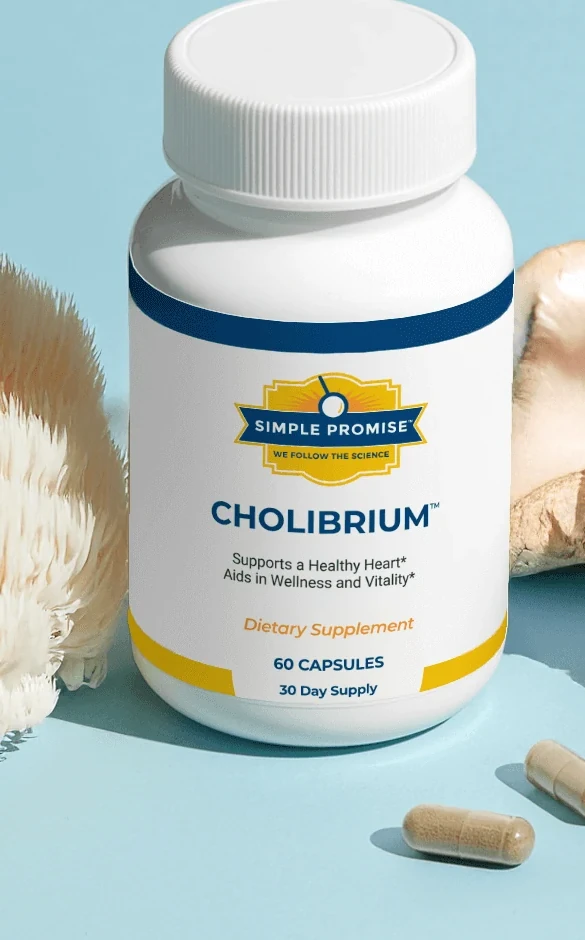
Are Cholibrium side effects established for the finished product?
The inspected evidence does not establish a reliable side-effect rate, medication-interaction profile or long-term safety record for this exact finished formula.
Cholibrium is a multi-mushroom dietary supplement, not a prescription cholesterol medicine. A paper about reishi, a chaga case report or a seller statement that ingredients are “generally well tolerated” cannot supply the percentage of people who will experience a reaction to this bottle.
In the bounded exact-brand PubMed and ClinicalTrials.gov inquiry recorded October 14, 2026, no matching publication or study registration was identified. This does not exclude unpublished, differently named or subsequently added research. We did not identify a formulation-matched controlled safety study in the inspected materials; a registry listing alone would not establish a completed safety result. [19] [20]
The seller describes everyday and long-term use as safe, but also advises consultation for pregnancy, nursing, medical conditions, medicines and known allergies, and says not to exceed the serving. These are commercial statements and warnings, not independent proof of universal safety. Their practical consequence is to check your actual bottle and regimen, not rely on a slogan.
For the broader purchase assessment, see our Cholibrium Review. Efficacy is a separate question: the Effectiveness & Evidence analysis explains why ingredient findings do not establish finished-product benefits. Neither a weak benefit case nor a lack of matched safety data proves that a reaction will occur.
Which potential side effects are supported by ingredient evidence?
Reported constituent effects include digestive discomfort, insomnia, skin reactions and uncommon serious organ-injury reports; they are not confirmed Cholibrium event rates.
Reishi: MSK lists nausea and insomnia, with professional references also describing dry mouth, constipation, itching and dizziness. Liver-injury reports need separate evaluation rather than being presented as a routine expected effect of this product. [2] [8]
Lion’s mane: LiverTox describes mild abdominal discomfort, nausea or diarrhea in some clinical trials and at least one reported acute hypersensitivity reaction. Its liver assessment is relatively reassuring, but limited safety research is not clearance for every combination or person. [10]
Cordyceps: LiverTox describes generally good tolerability with possible mild abdominal discomfort, diarrhea, dry mouth, nausea, poor appetite or rash. MSK’s professional section separately records a bleeding case after a dental extraction. These different types of evidence should not be collapsed into either “no side effects” or a product-specific bleeding frequency. [4] [9]
Shiitake and other blend members: MSK describes dermatitis and gastrointestinal symptoms after some shiitake exposures, including prolonged powder consumption. It also reports maitake-associated asymptomatic eosinophilia and Agaricus-associated lip inflammation and abnormal liver function. The preparations and populations differ from this blend; a listed event does not establish that Cholibrium caused it. [5] [6] [7]
Do reassuring ingredient trials settle the safety question?
No. They provide useful tolerability information for studied preparations and participants, but cannot rule out uncommon events or establish this product’s safety in excluded groups.
The 2016 Klupp randomized trial enrolled 84 adults with type 2 diabetes and metabolic syndrome, using Ganoderma at 3 g/day with or without Cordyceps for 16 weeks. It reported no overall increased adverse-event risk; most events were mild, and two serious events were judged unrelated to the intervention. That is meaningful reassuring evidence, not a ten-mushroom Cholibrium study. [16]
The trial excluded important groups, including people with known mushroom allergy, pregnancy or breastfeeding, recent insulin treatment, renal impairment or hepatitis, abnormal bleeding history and recent anticoagulant use. Its sample was smaller than planned. Allife supplied medicines and financial support; the authors described an investigator-led study with contractual restrictions on sponsor involvement. These details limit how widely the result can be generalized. [16]
Can Cholibrium interact with medicines?
Potential constituent interactions warrant a medication review, but evidence ranges from individual human reports to laboratory-only signals rather than product-specific interaction trials.
A useful interaction assessment identifies the substance, preparation, medicine, evidence level and consequence. “Natural” does not mean non-interacting, while an in-vitro experiment does not demonstrate what happens at the exposure from two capsules. Our Supplement Interactions Guide explains that distinction. [1]
On a narrow screen, swipe or scroll sideways within the table. Keyboard users can focus the table region and use the arrow keys.
| Medicine / context | Relevant constituent | Evidence and limitations | Practical question |
|---|---|---|---|
| Anticoagulants / antiplatelets | Reishi, chaga, Cordyceps and maitake. | MSK cautions about bleeding; chaga and Cordyceps mechanisms include preclinical platelet findings. A maitake–warfarin case reported elevated INR; Cordyceps has a dental-bleeding case. [2] [3] [4] [5] [13] | Ask the prescriber or pharmacist to assess the exact anticoagulant/antiplatelet and supplement. No validated safe combination, event rate or timing workaround for Cholibrium. |
| Insulin / glucose-lowering medicines | Cordyceps, chaga and maitake. | Cordyceps and chaga additive glucose effects are largely laboratory-based with uncertain clinical relevance; MSK also cautions about maitake with glucose-lowering medicines. [3] [4] [5] | Regimen review matters, particularly where low blood sugar is a concern. Do not reduce or stop diabetes medicine yourself. |
| Immunosuppressants / transplant care | Reishi and a multi-mushroom “immune support” formula. | MSK warns about reishi’s immune effects with immunosuppressants; mechanistic immune activity does not measure rejection risk or establish a product interaction. [2] | Seek approval from the treating transplant or immune-condition team, not a universal compatibility assurance. |
| Cancer treatments | Reishi, Agaricus and Cordyceps. | MSK describes theoretical antioxidant-related chemotherapy interactions for reishi and other preclinical concerns. Its Cordyceps monograph advises against use in myelogenous-type cancers based on animal findings. [2] [4] [7] | Ask the oncology team about the actual treatment and diagnosis before use. These cautions are not evidence that Cholibrium treats cancer or inevitably worsens it. |
| Medicines metabolized through CYP enzymes | Reishi and Agaricus. | In-vitro inhibition is reported for reishi CYP2E1/CYP1A2/CYP3A and Agaricus CYP3A4; clinical relevance is not established. [2] [7] | A laboratory pathway is a screening question, not proof of a clinically important interaction with every substrate drug. |
| Statins / blood-pressure medicines | Whole formula plus individual regimen. | The seller advises consultation, but the inspected sources do not establish a Cholibrium-specific interaction magnitude or a universal contraindication. General supplement–medicine review still applies. [1] | Bring exact drug names, doses and the label to a pharmacist or clinician. Do not stop prescribed cardiovascular care or assume spacing capsules makes the combination safe. |
A higher INR in one maitake–warfarin report is not a measured interaction rate. Its PubMed record has no abstract; we use MSK’s account for the specific caution and do not invent the extract dose or a numerical INR change. Similarly, MSK’s Cordyceps dental-bleeding report supports disclosure before procedures, not a prediction that every user will bleed. [4] [5] [13]
No validated separation interval was found for this formula. Taking the capsule two hours away from a medicine is not an established solution for platelet, immune or enzyme-related concerns. Your care team should decide whether to avoid it or use an appropriate monitoring plan.
What do liver and kidney reports mean for Cholibrium?
Some constituent reports justify caution, especially with existing organ disease, but they cannot establish that this product causes injury or quantify an individual risk.
How should reishi and Agaricus liver reports be interpreted?
They are safety signals with preparation and causality limitations, not evidence that routine Cholibrium use inevitably damages the liver.
LiverTox describes reishi as generally well tolerated in small short-term trials without consistent liver-enzyme elevations, while recognizing rare single reports of acute liver injury. It rates reishi as a possible rare cause; in several reports other explanations, medicines, other herbs or contaminants were not adequately excluded. That is more balanced than treating all reishi exposures as harmless or hepatotoxic. [8]
The supplied blend names Royal Sun Agaricus as Agaricus blazei; white button is a separate Agaricus bisporus entry. MSK’s Agaricus blazei monograph and a 2006 report describe severe liver dysfunction in advanced-cancer patients using Agaricus extracts, including two deaths among three reported cases. The authors could not exclude other causes. Another report involved combinations with reishi or fucoidan, which further complicates assigning the injury to one component. These were not Cholibrium cases, and the reports do not provide an incidence denominator. [7] [14] [15]
Not all mushrooms share the same liver signal. LiverTox’s lion’s-mane review does not link it to clinically apparent liver injury; its 2025 Cordyceps review describes an unlikely acute liver-injury association but also notes an isolated chronic hepatoportal-sclerosis report after long-term use. Relatively reassuring single-ingredient assessments cannot certify this mixture or a particular lot. [9] [10]
Does chaga’s kidney signal apply directly to this blend?
It is a reason for kidney-risk review, but different high powder exposures and unknown product oxalate content prevent direct risk or dose equivalence.
A primary case report describes a 69-year-old man taking 10–15 g of chaga powder daily plus 500 mg/day of vitamin C for three months. Biopsy showed oxalate deposits and kidney injury; dialysis and medical treatment were required. Concurrent vitamin C and the specific high exposure matter when interpreting causality. The report was supported by a Korean government research grant and declared no conflicts; it remains a single case, not a controlled trial. [11]
A 2026 experimental paper reports kidney injury in a high-dose chaga rat model using a calcium-free diet. This adds mechanistic concern about oxalate-rich exposure, not a human Cholibrium safety threshold. Species, diet and powder exposure differ from this capsule formula. [12]
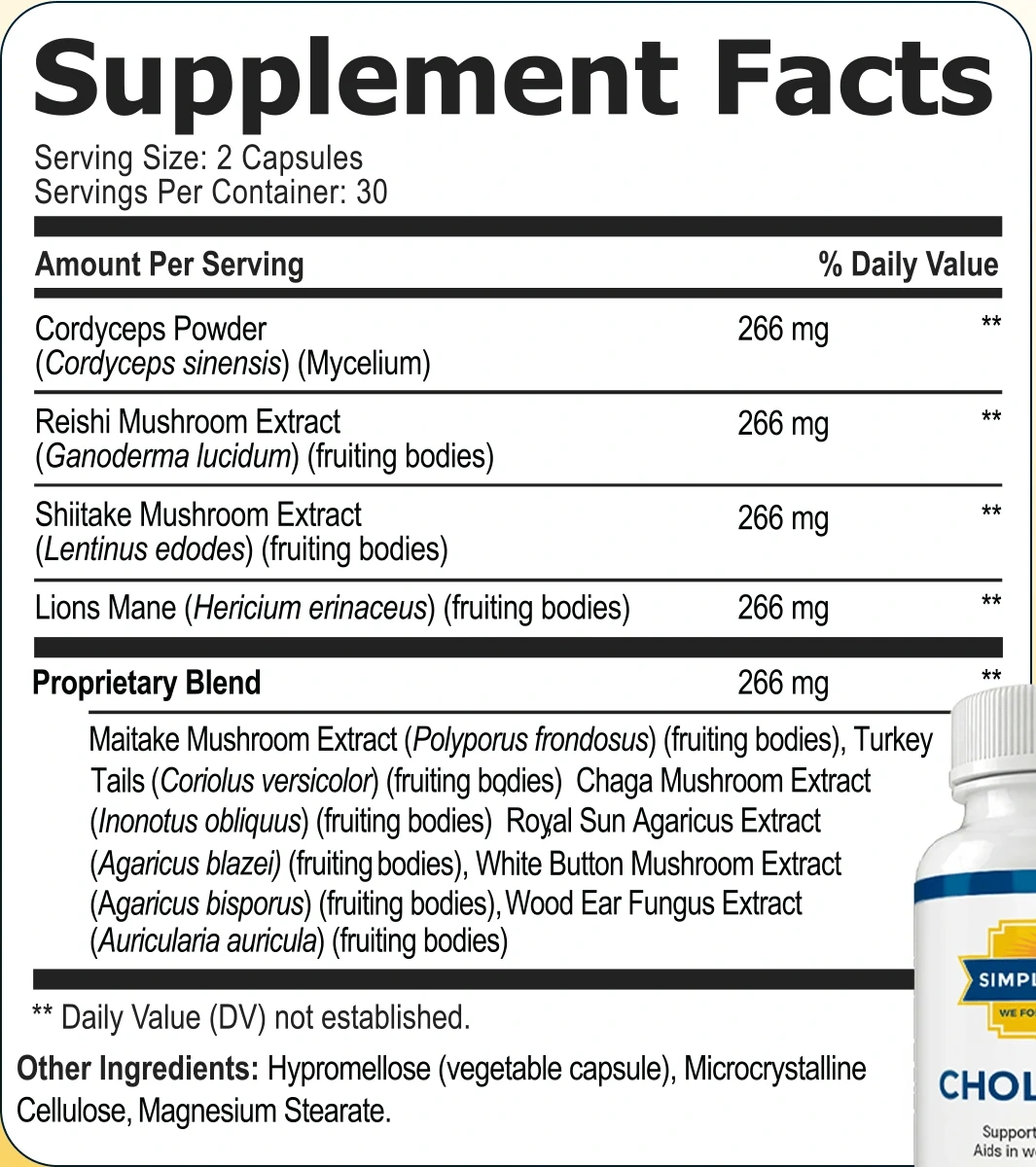
Chaga is one of six entries in the product’s 266 mg total proprietary blend; its individual dose, extraction details and oxalate content are undisclosed in the supplied Facts. We cannot translate powder-case grams into an equivalent extract amount, infer a zero-oxalate capsule or prescribe a “safe” cutoff. Existing kidney disease or a history of oxalate-related problems warrants clinician review before use. [1] [3]
Does “allergen-free” or quality wording establish safety?
No. Seller dietary and manufacturing claims do not independently establish allergy clearance, batch composition or freedom from contaminants.
The inspected storefront advertises “Allergen-Free,” “Gluten-Free” and vegan-friendly positioning. Those are attributed seller claims. We have not verified independent finished-product certifications, current-lot testing or restriction-specific cross-contact controls. MSK explicitly cautions against Agaricus use with mushroom allergy, and ingredient reports include hypersensitivity or skin reactions. [7] [10]
Exposure route matters. Shiitake spore-inhalation pneumonitis and obstruction after swallowing a whole mushroom should not be relabeled as typical capsule risks. However, MSK also documents digestive and skin reactions after some oral powder exposures, which are more relevant questions to discuss. A mushroom dinner, inhaled spores and a concentrated extract are not interchangeable exposures. [6]
The label-to-risk assessment uses the supplied Facts artwork, not a purchased-lot photograph or assay. Open the full-size image and compare it with the bottle you receive. The Cholibrium Ingredients analysis provides all ten names, disclosed quantities and other ingredients; our Supplement Label Guide explains what a proprietary blend can and cannot reveal.
FDA explains that firms are responsible for evaluating supplement safety and labeling before marketing, and the agency can act against adulterated or misbranded products after they reach the market. A manufacturing claim, attractive badge or money-back offer is not an independent clinical assessment of this formula. [18]
Ask for lot-specific, relevant documentation if a certification or testing claim affects your decision. We have not established that this lot is contaminated, counterfeit or independently certified. A missing record is an uncertainty, not evidence of either perfect quality or a defect.
Who should seek professional advice before using Cholibrium?
People with pregnancy or nursing considerations, mushroom allergy, relevant organ or immune conditions, cancer treatment or medication use need individualized assessment; the seller excludes use under 18.
What about pregnancy, breastfeeding and children?
The inspected seller warnings call for consultation during pregnancy or nursing and state that the product is not for individuals under 18; matched safety data were not established here.
NCCIH notes that many supplements have not been tested in pregnant women, nursing mothers or children. Adult ingredient studies cannot fill that gap. Do not interpret “vegan,” a food-use history or a small adult tolerability trial as fetal, infant or pediatric safety evidence. [1]
What about transplant, autoimmune or cancer care?
The treating specialist should assess the formula before use because immune-related constituents and treatment-specific concerns cannot be reduced to a general “immune boost” assurance.
Reishi carries an MSK immunosuppressant caution, and its professional monograph describes possible immune-related concerns while noting uncertain causation for autoimmune skin disease. This does not mean every autoimmune condition is a proven contraindication. It does mean that a blanket seller safety claim cannot substitute for the team managing your condition. [2]
People receiving cancer treatment should disclose the full formula, not only the headline reishi ingredient. MSK’s Cordyceps caution for myelogenous-type cancers is based on animal findings; reishi and Agaricus have additional theoretical or laboratory treatment-interaction concerns. None establishes a benefit for treating cancer, nor a confirmed adverse interaction magnitude for Cholibrium. [2] [4] [7]
Existing liver or kidney disease, prior mushroom reactions, multiple medicines and a bleeding history also deserve review in light of the ingredient signals above. “Ask first” is not a diagnosis or a universally confirmed contraindication; it reflects an evidence gap where the consequences may be important. [1] [2] [3]
Can Cholibrium be used before surgery or with alcohol?
Disclose it before surgery or dental procedures, and do not assume there is a verified product-specific stopping interval or safe alcohol allowance.
NCCIH warns that certain supplements can increase bleeding risk or affect anesthesia and recommends speaking with the surgical team well in advance. Cordyceps’ reported bleeding after a dental extraction makes disclosure relevant to dental care too. Bring the bottle or readable label and tell the team when you last took it. [1] [4]
The evidence inspected here does not establish “stop exactly two weeks before” as a validated Cholibrium protocol. The procedural team should give the timing for your situation. Do not cancel a procedure or stop prescribed anticoagulants based on a supplement article.
For alcohol, a reishi liver-injury report discussed by LiverTox involved substantial alcohol exposure alongside mushroom use. Such a confounded report does not establish a precise interaction or permissible drinking amount for this product. We found no validated Cholibrium alcohol threshold in the inspected materials; ask your clinician, especially with liver disease, medicines or substantial alcohol use. [8]
Is daily or long-term Cholibrium use proven safe?
No dependable long-term safety conclusion or individualized safe dose can be drawn for this formula from the inspected seller claims and constituent studies.
The seller describes a two-capsule serving, warns against exceeding it and advertises long-term use. Staying within a label direction avoids treating a marketing serving as permission to escalate, but it does not guarantee safety with your medicines or health conditions.
Short ingredient trials may be reassuring for the populations they studied, yet cannot rule out uncommon delayed reactions, cumulative exposures or effects in excluded groups. A longer single-ingredient study would still not characterize all ten mushrooms, their mixture or batch consistency. Lack of symptoms so far is not proof that organ or interaction risks are absent. [1] [8] [9] [10] [16]
There is no verified safety advantage here from doubling capsules, cycling them, taking a lower “test dose” or adding another mushroom product. These strategies were not established by matched trials. Extra supplements can also duplicate exposures and make a reaction harder to interpret. Discuss whether the potential benefit justifies the uncertainty rather than assuming indefinite use is necessary.
What information should a pharmacist or clinician review?
Provide your actual product label, complete medication and supplement list, relevant conditions and intended benefit so the review can address a specific regimen.
- Exact product: label photographs, lot number, expiry, serving and all active/other ingredients. Explain that the six-member blend does not disclose individual doses.
- Complete regimen: prescriptions, over-the-counter medicines, other supplements and actual doses. Flag anticoagulants/antiplatelets, diabetes treatment, transplant/immune and cancer therapies without assuming those are the only concerns.
- Relevant circumstances: pregnancy/nursing, allergies, liver or kidney conditions, prior reactions, upcoming procedures and alcohol use.
- Benefit and monitoring: why you want it, what evidence supports that goal and whether any individualized monitoring is appropriate. Do not invent a universal lab schedule.
- If symptoms have occurred: start/stop dates, amount taken, symptom timing, other changes and any care received. Keep the packaging available.
This is a handoff checklist, not a personalized clearance protocol. NCCIH recommends discussing supplements and medications with healthcare professionals; our Supplement Evidence Guide helps distinguish studied tolerability from broad safety claims. [1]
What should you do if you suspect a reaction?
Stop the suspected supplement and contact a healthcare professional; severe allergic symptoms or other urgent warning signs require immediate medical care rather than waiting for a report or refund.
NCCIH advises stopping a supplement and contacting your healthcare provider if side effects occur. FDA similarly advises immediately stopping a product suspected of causing a serious reaction or illness and submitting a safety report. [1] [17]
Emergency symptoms: trouble breathing, throat/lip/tongue swelling, collapse or severe chest symptoms warrant emergency help—call 911 in the United States. Significant bleeding, severe persistent abdominal symptoms, yellowing eyes/skin, dark urine or markedly decreased urination also need prompt medical assessment, with emergency care if severe. These signs can have multiple causes; they are not a diagnosis of Cholibrium injury. [17]
Do not take another capsule to “push through,” dismiss worsening symptoms as detoxification or restart after a serious reaction without medical advice. Stopping the suspected supplement is different from stopping prescribed medicines; the clinician should direct medication decisions.
Keep the bottle, lot number and a brief timeline. FDA’s dietary-supplement problem-reporting guidance explains reporting to the agency. Reporting an event helps surveillance but does not establish causation; the report is not an emergency service, and contacting the seller is not a substitute for care. [17]
Frequently asked questions about Cholibrium safety
These answers distinguish reported ingredient concerns from established product risks and do not provide personalized medication or dosing instructions.
Is Cholibrium safe for everyone?
No universal safety conclusion is supported by the inspected evidence. Ingredient tolerability findings, case reports and laboratory interactions do not establish a matched finished-product safety profile. Your medicines, conditions and actual label matter. [1] [2] [3]
What are the most common Cholibrium side effects?
A reliable frequency ranking for this exact product was not established. Some constituent studies or monographs describe digestive discomfort, nausea, sleep or skin effects; those cannot be converted into Cholibrium percentages. [2] [9] [10]
Can I take Cholibrium with a blood thinner?
Ask the prescribing clinician or pharmacist before adding it. Reishi, chaga, Cordyceps and maitake have ingredient-level bleeding or interaction cautions; the evidence varies. Do not stop the prescribed drug or rely on capsule timing as a safety workaround. [2] [3] [4] [5]
Can Cholibrium damage the liver or kidneys?
Some constituents have liver-injury or chaga-associated kidney-injury reports, with important preparation, exposure and causality limits. They do not establish a Cholibrium event rate or diagnose an individual reaction. Existing organ disease deserves assessment before use. [8] [11] [14]
Is Cholibrium suitable during pregnancy, breastfeeding or under age 18?
The inspected seller warnings advise consultation for pregnancy or nursing and say not for use under 18. Many supplements lack testing in these groups; adult ingredient evidence is not a substitute. [1]
Does an allergen-free claim mean mushroom allergy is not a concern?
No. We have not independently verified restriction-specific certification or current-lot cross-contact controls. A known mushroom reaction needs professional review; MSK specifically cautions against Agaricus with mushroom allergy. [7]
How was this Cholibrium safety assessment prepared?
We compared supplied product warnings and formula information with authoritative monographs, clinical evidence and selected primary reports; this is not clinical review or laboratory testing.
Sources checked October 14, 2026 include MSK’s patient and professional mushroom sections, LiverTox assessments, NCCIH/FDA guidance, relevant primary-study records and the seller storefront. We retained preparation, species, exposure, population and causality limitations. Reviews and the primary cases they cite were not counted as independent new events.
Bounded product-name and safety/recall searches produced unrelated drug names and formula mismatches as well as ingredient evidence; these were excluded. Search coverage is not a complete pharmacovigilance, recall-history or unpublished-literature audit. We do not claim “no warnings,” “no recalls” or zero adverse events. The product-name database responses are preserved with the earlier evidence record.
MSK patient summaries sometimes simplify tolerability, while professional sections describe case reports; we considered both. PubMed’s maitake–warfarin letter has no abstract, so we do not invent unverified details. Some case-study full texts, funding details and component-specific long-term safety remain unverified. A theoretical mechanism was not upgraded to a confirmed clinical interaction.
AI assisted research, synthesis and writing. Biraj Health Care is the responsible editorial brand, not a medical credential. No independent human fact-check, clinical review, product purchase, personal-use experience or current-batch assay is claimed. New evidence, corrected sources or formulation changes should trigger reassessment rather than an automatic fresh review date.
Return to the main Cholibrium Review for the broader assessment. Our review methodology, sources policy and affiliate disclosure policy describe editorial boundaries. See the Biraj Health Care editorial profile or contact FitnessLifeMag.com for a correction.
Sources and checked commercial documents
Independent references support nearby statements; seller materials supply the advertised formula and warnings rather than independent safety evidence.
Commercial inputs checked October 14, 2026: Simple Promise’s Cholibrium offer and storefront warnings/FAQs, supplied Supplement Facts and product artwork. The bottle was not purchased and the current lot was not tested. Public purchase actions use only the marked authorized affiliate destination.
- NCCIH: Using Dietary Supplements Wisely
- MSK: Reishi Mushroom — patient and professional monograph
- MSK: Chaga Mushroom — patient and professional monograph
- MSK: Cordyceps — patient and professional monograph
- MSK: Maitake — medication and laboratory cautions
- MSK: Shiitake Mushroom — preparation-specific adverse reports
- MSK: Agaricus blazei — safety and interaction monograph
- LiverTox: Lingzhi, Reishi — liver-safety assessment
- LiverTox: Cordyceps — liver-safety assessment, updated June 2025
- LiverTox: Lion’s Mane — liver-safety assessment, updated January 2024
- Chaga-associated oxalate nephropathy: human case report
- High-dose chaga kidney injury: experimental rat model, 2026
- Maitake extract with warfarin: INR-elevation case-report record
- Agaricus extract and severe hepatic dysfunction in cancer patients, 2006
- Agaricus-containing combinations and liver injury: case reports
- Klupp et al.: randomized Ganoderma trial with safety reporting, 2016
- FDA: How to Report a Problem with Dietary Supplements
- FDA: Dietary Supplements — regulatory responsibilities
- PubMed: Cholibrium product-name search
- ClinicalTrials.gov: Cholibrium product-name search
What is the practical safety conclusion?
The evidence supports individualized caution and transparent uncertainty—not a blanket “safe” label or an assertion that Cholibrium will cause serious harm.
Constituent tolerability studies provide some reassurance, while specific case reports and laboratory findings raise questions worth reviewing. The unresolved step is matching them to this finished formula, your medicines and conditions, and the actual batch. A small study or an alarming case alone cannot answer that entire question.
If considering Cholibrium, take the current label and complete regimen to a qualified professional, especially in the higher-risk circumstances above. Do not replace prescribed care. If symptoms arise, address the suspected reaction and medical need first—not the next purchase or a seller guarantee.