
Does Body Reset Sound Formula Work? Weight-Loss Evidence
Affiliate disclosure: FitnessLifeMag may earn a commission if you buy through the offer links on this page, at no extra cost to you.
A focused does it work? assessment of the advertised digital listening program.
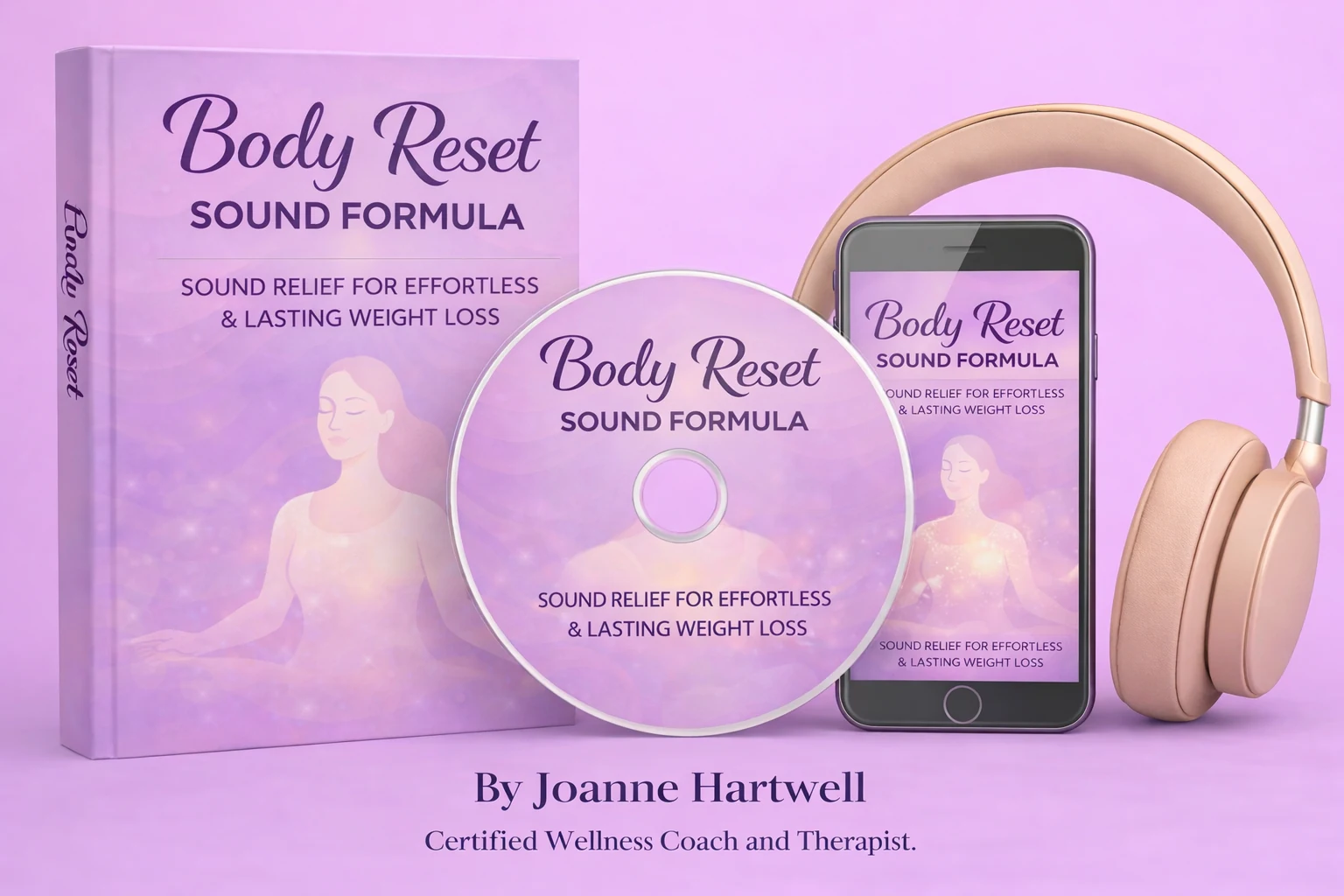
This focused assessment asks whether Body Reset Sound Formula has evidence for its advertised outcomes. For the contents, score and purchase terms, see the full review. The key distinction is between a pleasant listening experience, changes in eating behavior and sustained weight change; research on one cannot establish all three.
| Claim | Evidence inspected | Match to this program | Practical conclusion |
|---|---|---|---|
| Quieter food preoccupation | Research on emotional-eating interventions. Smith et al. (2023), PMID 36768088 [2] | The review includes varied structured approaches, not these six songs. | A relevant topic with uncertain product effect. |
| Weight release | A lifestyle-plus-hypnosis RCT. Bo et al. (2018), PMID 30226009 [1] | Different protocol and participants. | Do not promise a clinically meaningful branded effect. |
| Permanent change | No matching maintenance study identified. | Long-term listening outcomes are unestablished. | No reliable personal time-to-result or permanence estimate. |
| Calm or self-compassion | Hypnosis research varies by condition. NCCIH hypnosis overview [3] | A familiar mechanism label does not authenticate recording quality. | Evaluate comfort separately from clinical benefit. |
Does the proposed mechanism explain body weight?
The seller describes emotional blocks and subconscious beliefs as a reason weight persists. These ideas may resonate with someone’s experience, but resonance is not a test of a biological mechanism. Body Reset Sound Formula has not been shown here to identify an individual cause of weight change or to correct hormones, metabolism or trauma.
Emotional triggers can be a worthwhile subject for behavioral support. That does not establish that every adult retains fat for protection, or that resolving an upsetting memory will cause fat loss. A program-specific claim needs a measured outcome and an appropriate comparison, rather than a story that explains every possible result.
The word “food noise” in marketing is a lay description, not a diagnosis or a standardized trial endpoint for these songs. Clarify whether your concern is hunger, repetitive food thoughts, loss-of-control episodes or another symptom before choosing help. The Diets & Weight Loss guide provides broader context.
What the related studies actually establish
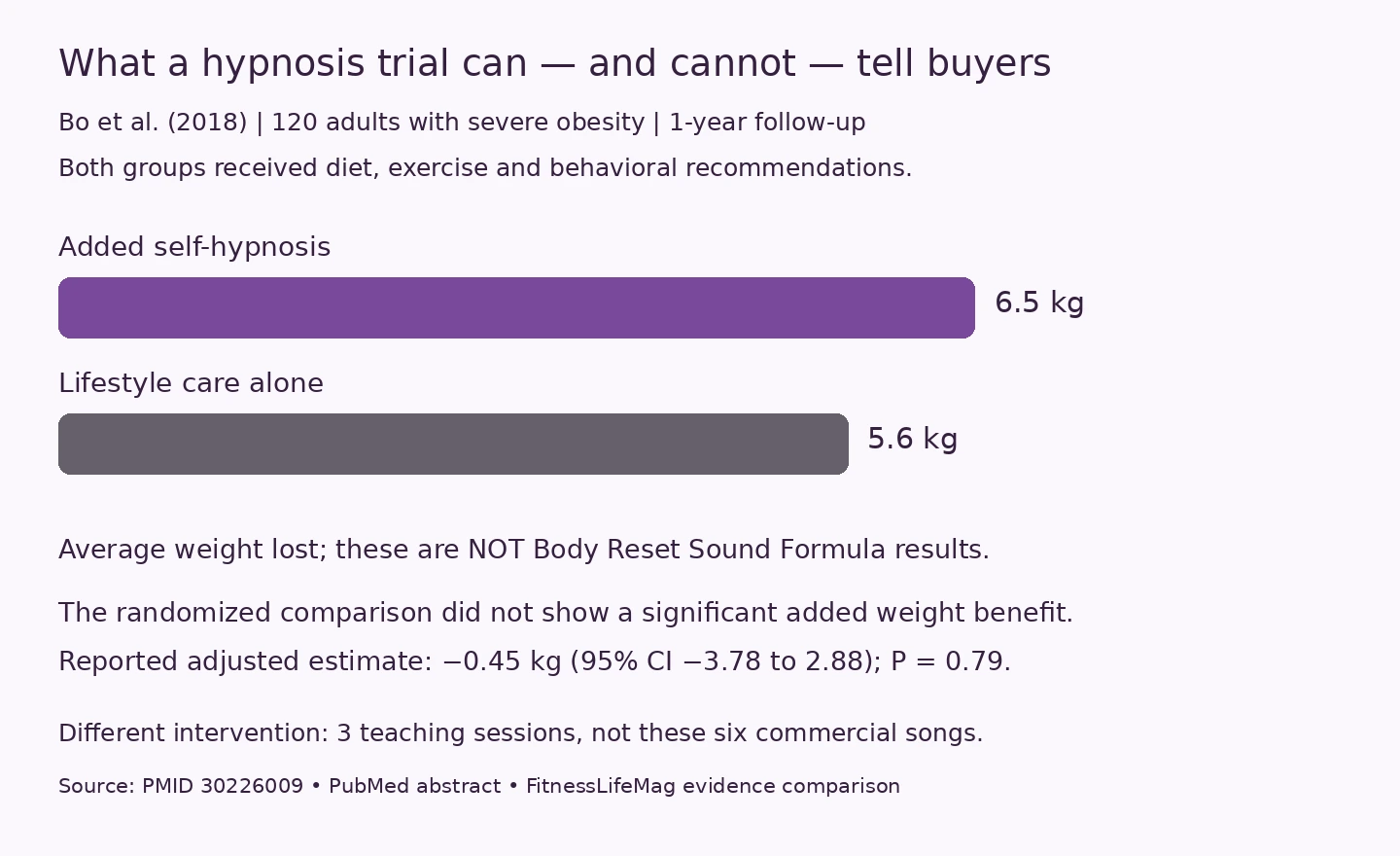
A related trial can test the general idea of hypnosis without validating Body Reset Sound Formula. Bo and colleagues studied self-hypnosis taught alongside lifestyle care, not a stand-alone recording purchase. The primary randomized weight comparison did not show added benefit, while some secondary outcomes improved; this mixed result deserves more weight than selected success stories.
In Bo et al., 120 adults received lifestyle advice, with three hypnosis teaching sessions added for one group. At one year, mean losses were 6.5 and 5.6 kg. The adjusted comparison was not statistically significant (P = 0.79). More favorable habitual-user findings do not preserve the original randomized comparison. Bo et al. (2018), PMID 30226009 [1]
Smith et al. pooled 34 studies of emotional-eating interventions. The reported average weight change was small, with substantial heterogeneity; the designs, content and support varied. That supports further study of behavioral care, not a transfer of the pooled result to this bundle. Abstract-level inspection limits detailed risk-of-bias assessment. Smith et al. (2023), PMID 36768088 [2]
How quickly should a listener expect results?
There is no reliable program-specific timetable for weight loss from Body Reset Sound Formula in the evidence inspected. The seller’s early-response narrative should not become a clinical forecast. Enjoying a recording immediately and observing a sustained change in eating or weight over time are different observations with different explanations and evidence requirements.
| Observation | What it may tell you | What it cannot establish |
|---|---|---|
| You enjoy or dislike the voice and music. | The format fits or does not fit your preference. | That the program changes body fat. |
| Your eating pattern changes after purchase. | Something in your routine changed. | That the audio caused the change rather than other influences. |
| Weight changes over several weeks. | A trend may merit contextual discussion. | A permanent effect or validated treatment schedule. |
Avoid using the advertised morning schedule as a reason to continue through distress. A useful self-check can focus on whether listening is comfortable and worthwhile, while health outcomes belong in the broader care plan.
What could change the interpretation of an apparent benefit?
Body Reset Sound Formula is used within a life that is already changing. Meals, medicines, sleep, expectations and support can affect what someone notices after starting audio. Without a comparison group and documented co-interventions, an improvement cannot be assigned confidently to the recordings, and a disappointing response does not reveal a listener’s motivation or worth.
- Ask whether another treatment or daily routine changed at the same time.
- Separate enjoyment and adherence from weight or eating-disorder outcomes.
- Treat advertised age-group suitability as marketing, not a tested subgroup result.
- Look for a registered protocol, the exact audio version, a meaningful comparator and follow-up before accepting a future trial claim.
A different study examined regain after stopping semaglutide and lifestyle intervention. It did not test this program or show that unresolved emotional wounds caused regain. Wilding et al. (2022), PMID 35441470 [5] Medication decisions remain with the prescriber.
Questions about proof and expectations
The central evidence question is whether a study tests the same recordings and the same outcome being promised. These answers clarify the difference between indirect plausibility and program-specific support. They also explain why neither a testimonial nor a null result from a different intervention settles every question about an individual listening experience.
Are the six songs clinically proven?
Does a calm feeling prove fat is being released?
Do expert names establish endorsement?
Does the null trial prove the program cannot help?
What evidence would most improve confidence?
References
- Bo et al. (2018). Self-hypnosis adjunct to lifestyle treatment; PubMed abstract. PMID 30226009.
- Smith et al. (2023). Emotional eating interventions systematic review; PubMed abstract. PMID 36768088.
- NCCIH. Hypnosis: condition-specific evidence overview.
- Wilding et al. (2022). STEP 1 withdrawal extension; PubMed abstract. PMID 35441470.
Educational information only; not medical advice, diagnosis or treatment. For significant eating-related or psychological concerns, seek qualified care.
Affiliate disclaimer: the commercial offer links may earn FitnessLifeMag a commission at no additional cost to you. Read the affiliate disclosure.