
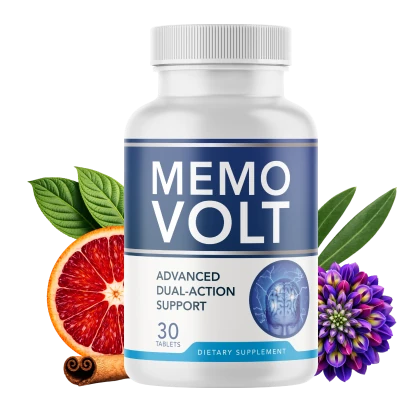
Does MemoVolt Work? Claim-by-Claim Summary
Does MemoVolt work for everyday memory? The useful answer depends on which benefit you mean: recall, perceived clarity, metabolic support or microplastic removal. This page separates those outcomes and checks the relevant research. For package choices, the overall score and broad fit, see our complete MemoVolt review.
| Seller positioning | Relevant evidence | Product applicability | Realistic buyer meaning |
|---|---|---|---|
| Memory / recall | Small human saffron trials in diagnosed patient populations. Akhondzadeh (2010) [1] | Exact extract and serving match require confirmation. | Promising ingredient context rather than a predicted individual result. |
| Metabolic / brain-fuel support | Berberine has metabolic research. NCCIH [4] | Blood-glucose outcomes do not measure daily memory. | Do not replace prescribed glucose management. |
| Moro orange support | A randomized weight-management trial. Briskey (2022) [3] | Different outcome and standardized preparation. | Relevant formulation background, not a memory result. |
| Microplastic defense | Human postmortem tissue research. Nihart (2025) [5] | Observational research did not test this supplement. | Does not establish microplastic removal or recovery of neurons. |
Mechanism: Metabolic Rationale vs. Measured Outcomes
Brain energy metabolism and antioxidant pathways are legitimate research topics, but the seller’s group names are a formulation explanation rather than a demonstrated treatment pathway.
The formula combines saffron and marine extracts with berberine, cinnamon and banaba-related components. That is a coherent reason to investigate both cognitive and metabolic questions. It is not enough to show that this combination improves glucose delivery to a person’s neurons or explains why that person forgets names.
Can it remove microplastics from the brain?
Nihart et al. (2025) [5] reported particles in postmortem tissues and an association with dementia cases. The study did not administer MemoVolt, test a clearance treatment or establish that particles caused the observed disease. Therefore, “flushes brain shards” and comparable recovery claims are not supported buyer conclusions.
Clinical Research: What the Studies Actually Tested
The most directly relevant human finding inspected concerns saffron, not a trial of the complete MemoVolt formula.
Akhondzadeh et al. (2010) [1] randomized 46 adults with mild-to-moderate Alzheimer’s disease to saffron 30 mg/day or placebo for 16 weeks. The abstract reports better cognitive and severity-scale outcomes with saffron and calls for larger confirmatory trials. This patient group, preparation and duration differ from an otherwise healthy adult buying a multi-ingredient daily supplement.
Ayati et al. (2020) [2] reviewed a small group of trials with differing comparators and patient populations. Its evidence does not supply a universal dose or establish prevention of dementia. Shared trial populations also mean that citing the review and the original trial does not create two independent replications.
Briskey et al. (2022) [3] randomized 180 overweight adults to standardized Moro extract or placebo over six months, alongside diet and exercise. The tested extract was 400 mg daily; the primary question was body mass and composition. The paper reports industry involvement/funding, which belongs in the interpretation. It did not test recall, daily cognition or the MemoVolt combination.
Focused indexed searches for “MemoVolt” in PubMed and ClinicalTrials.gov did not locate a standalone finished-formula trial at this check. This describes the search performed, not proof that every possible unpublished study is absent. Ingredient identity and product-specific outcomes remain separate questions.
How Long Would a Change Take?
The seller’s “few weeks” expectation is not a verified response schedule for this formula.
A 16-week saffron study and a six-month Moro study cannot be combined into a MemoVolt calendar. Supply length is also not a treatment recommendation. If you try a compatible supplement, define the everyday goal you care about and review whether anything meaningfully changes, rather than assume that buying more bottles guarantees a stronger effect.
Why Perceived Clarity Can Change
Sleep, stress, routine and the reason for a memory concern can influence what a person notices.
A useful assessment distinguishes easier concentration from better recall and both from changes in daily independence. Changing several supplements at once makes attribution harder. Keep a simple note of what matters to you without delaying assessment of new, worsening or function-limiting symptoms; the Brain & Memory Guide provides broader context.
The ingredient and label page explains preparation matching, while medicine and safety guidance addresses suitability.
Our Topic Conclusion
MemoVolt has a plausible ingredient-based wellness rationale and a convenient daily routine. A fair decision gives saffron’s research its proper credit while keeping memory, metabolic and microplastic outcomes distinct. Consider it as optional wellness support when appropriate, with expectations tied to your actual goal.
We may earn a commission if you purchase through the offer links.
Explore the MemoVolt OfferTopic Questions
Does a saffron study prove MemoVolt improves memory?
No. A saffron trial tests the preparation, amount, population and duration used in that trial. MemoVolt combines several components, and the inspected presentation does not establish an exact match to that study. The finding can inform interest in the ingredient without proving the finished supplement.
Is brain fog the same as dementia?
No. Brain fog is a description people use for difficulties such as concentration or mental fatigue; dementia is a clinical syndrome affecting cognition and daily function. A supplement review cannot diagnose the cause. New, persistent or worsening changes deserve an appropriate professional assessment.
Does blood-sugar improvement mean memory improvement?
Not automatically. A glucose measurement and a memory outcome are different endpoints. A study must measure the relevant cognitive result before it can support that claim. Keep prescribed metabolic treatment in place and discuss whether any supplement fits your own clinical situation.
Do three ingredient groups mean three proven mechanisms?
No. The three group names organize the seller’s formulation rationale. They do not establish that each pathway occurs in people taking the product, or that the combined effect exceeds the separate components. A mechanism becomes more decision-useful when preparation, exposure and human outcomes are measured.
Should I buy six bottles to test the evidence?
A six-pack lowers the advertised per-bottle cost but does not create a proven response duration. Decide based on suitability, total commitment and return terms. The main review explains package arithmetic; supply length should not be confused with either a guarantee period or a clinical protocol.
Explore the MemoVolt Review Series
Author, Method & References
References
- Akhondzadeh et al. (2010). Saffron: 16-week placebo-controlled trial in mild-to-moderate Alzheimer’s disease. PMID 20831681.
- Ayati et al. (2020). Saffron for mild cognitive impairment and dementia: systematic review and meta-analysis.
- Briskey et al. (2022). Moro blood-orange standardized extract: randomized weight-management trial. PMID 35276783.
- NCCIH. Berberine: evidence, gastrointestinal effects, interactions and pregnancy precautions.
- Nihart et al. (2025). Bioaccumulation of microplastics in decedent human brains. Observational tissue research.
Affiliate disclosure: FitnessLifeMag may earn a commission from purchases through the commercial links on this page, at no extra cost to you. Scientific and editorial links are separate.
Educational information, not personal medical advice. Dietary supplements are not intended to diagnose, treat, cure or prevent disease. Review symptoms and supplement decisions with a qualified healthcare professional.