
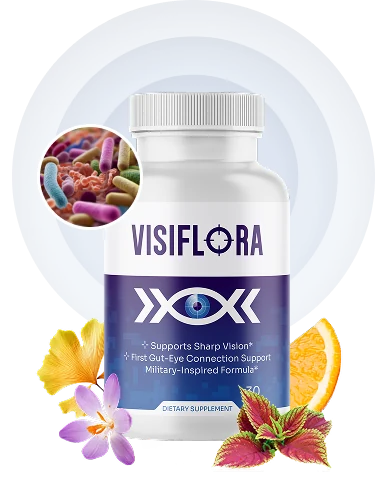
Has the finished VisiFlora formula been clinically tested?
We did not identify an attributable published trial of the finished formula in the sources searched; its clinical effectiveness remains unestablished.
The main VisiFlora review addresses the whole purchase. This analysis focuses on whether evidence supports the advertised outcomes. We searched product-name variants and clinical-research sources and separated VisiFlora-specific findings from studies of other supplements or ingredients. A limited search cannot prove no study exists.
To change that assessment, useful evidence would identify the exact formulation and daily serving, compare it with an appropriate control, recruit the relevant users and report meaningful visual outcomes and adverse events. A bibliography of unrelated antioxidant papers does not establish those conditions. Nor does an affiliate page describing the product as “clinically dosed” verify the bottle.
Missing product evidence is not a diagnosis of ineffectiveness. It means we cannot give a defensible response rate, predictable improvement or result timeline for this preparation. That uncertainty should remain visible in any buying recommendation.
Do the AREDS studies prove VisiFlora works?
No. AREDS evidence concerns defined nutrient preparations and AMD populations; it cannot be transferred to a differently disclosed commercial formula.
NEI’s formulation guidance lists lutein and zeaxanthin with specified vitamins and minerals and explains the relevant disease stages. That is a different proposition from improving ordinary eyesight in anyone who buys a multi-ingredient capsule. Read NEI’s AREDS/AREDS2 explanation.
For the broader distinction between a nutritional need and an enhancement claim, use our Dietary Supplements Guide.
VisiFlora names some overlapping ingredients, but amounts, forms and complete serving details were not verified. Its label-to-study match is therefore unresolved. Counting more ingredients does not establish better outcomes; combining familiar compounds also does not reproduce the research formula.
For someone already under AMD care, the appropriate question is whether this product fits the clinician’s plan, not whether the advertisement mentions a well-known study. Do not replace indicated supplementation or treatment on that basis.
What does the saffron trial actually show?
A randomized AMD trial found a modest visual-function signal with saffron, but the preparation and patient group do not establish a VisiFlora benefit.
Broadhead and colleagues studied 100 adults over 50 with mild/moderate AMD in a double-blind crossover design. Participants received 20 mg daily or placebo for three months, then crossed over. Some continued AREDS supplements. The reported mean best-corrected acuity difference was 0.69 letters, alongside an electrophysiological measure. Read the primary trial abstract.
That small average change must not be marketed as restored eyesight. Statistical significance does not by itself establish a large practical improvement. Short duration, crossover interpretation and the selected clinical population limit extrapolation; the full report was not available for a complete funding and bias assessment.
VisiFlora’s saffron amount and standardized preparation were not verified. Consequently, even this ingredient-level signal cannot be assigned to the finished capsule. Its ingredient comparison shows the missing formulation information.
Does bilberry establish better night vision?
The inspected controlled bilberry study did not show better night acuity or contrast in its healthy young participants, so broad night-vision promises are unjustified.
The small double-blind crossover study included 15 young men with good vision and used 160 mg extract capsules, standardized to 25% anthocyanosides, three times daily for 21 days. It found no difference from placebo in the tested night-vision outcomes. Read the bilberry trial.
Its narrow sample and preparation prevent concluding that every bilberry use is ineffective. Equally, a favorable study on another eye outcome cannot reverse this result for night driving. The question is whether an actual preparation improves the actual outcome for a relevant population, not whether bilberry has antioxidant activity.
Is there human research on the gut–retina connection?
Yes, limited human research exists, but it has not demonstrated VisiFlora’s proposed benefit or established supplementation as a replacement for eye treatment.
A 2024 trial randomized 30 people with newly treated neovascular AMD to micronutrients plus anti-VEGF care or anti-VEGF care alone for six months. It reported visual and microbial findings; the study involved another preparation, a small sample and concurrent treatment. Read the randomized gut–retina study.
Those features make the research interesting but unsuitable as proof of this capsule. It cannot isolate the seller’s proposed toxin mechanism, establish the same benefit in people without AMD or justify stopping medical care. A microbiome change is also a different endpoint from a meaningful improvement in day-to-day vision.
An often-discussed inherited-eye-disease study involved mice and a CRB1 mutation, with antimicrobial intervention. It was not a VisiFlora trial or a general supplement treatment for aging eyes. Read UCL’s account of that research.
Which advertised outcomes are supported?
Named ingredients provide research leads, but product-specific benefits, rapid results, comparative superiority and a guaranteed success rate were not established.
| Outcome/claim | What can be said | What cannot be inferred |
|---|---|---|
| Nutritional eye support | Some named compounds are relevant to eye nutrition research | An assured benefit for a nutritionally adequate individual |
| Floaters or suddenly clearer vision | Symptoms need cause-specific assessment | Removal of floaters or treatment of retinal disease |
| Gut-eye mechanism | Research explores associations and interventions in selected settings | That this formula removes toxins and thereby improves sight |
| Better than drops or AREDS2 | Different approaches have different indications and endpoints | A superiority multiplier without a head-to-head trial |
| Results within weeks | Seller expectation only | A clinically validated VisiFlora timetable |
Mechanism descriptions should lead to testable questions: does the actual daily preparation affect the proposed pathway, and does that translate into a useful outcome? Without those answers, a confident causal story is stronger than the evidence.
How long should it take to notice results?
No reliable VisiFlora-specific timeline was identified, and the duration of an ingredient trial is not a forecast for this product.
Avoid translating a three-month study into “everyone should buy a three-month supply.” Trial duration describes how investigators measured a defined intervention, not a required purchase package. The advertised refund period is a commercial condition, not a biologically validated time-to-benefit.
If someone chooses optional supplementation after appropriate review, the intended outcome should be specified and assessed sensibly. A change in glasses, screen habits, medical treatment or natural symptom variability can explain an apparent improvement. An uncontrolled personal experience cannot isolate the capsule’s effect.
Do not wait for a supplement to work when there is a sudden or concerning visual change. NEI explains urgent retinal warning signs.
What conclusion should a buyer draw?
Treat VisiFlora’s effectiveness as uncertain and prioritize a clear diagnosis, transparent formulation and evidence matched to the intended outcome.
There are reasons to investigate particular eye nutrients; there is not enough verified product information to promote this formula as a proven vision treatment. The strongest next evidence would be a complete current label and a credible exact-formula trial reporting clinical outcomes and harms.
Compare the personal-risk questions in the safety analysis before acting on ingredient research. No specific dollar saving can compensate for using a preparation for an unsupported medical purpose. The benefit question and the transaction question should both be answered, separately.
Frequently asked questions
These answers address recurring topic-specific questions without replacing the analysis above.
Is biological plausibility proof?
No. A plausible pathway helps form a research question; it does not establish that a preparation improves a clinical outcome.
Does no located trial prove it cannot work?
No. It limits the strength of claims and recommendations, rather than proving universal ineffectiveness.
Can customer testimonials establish a success rate?
Not without an appropriate sample and verified outcome method. Seller-selected stories cannot provide a dependable response percentage.
Method and sources
We separate seller statements from research findings and make consequential gaps explicit.
Research checked October 17, 2026. This is an online document and evidence review prepared for the Biraj Health Care editorial identity, not a clinical review or hands-on product test. No independent clinician or laboratory reviewed this article. We inspected the seller presentation, policy wording and product artwork; ingredient studies are distinguished from finished-product evidence. Commercial facts can change.
Seller documents checked: VisiFlora presentation/FAQ, refund policy, shipping policy and terms. Those documents establish what the seller states, not independent efficacy or verified manufacturing quality. The analyses above identify their uncertainties and any reproducible calculations.
Editorial methodology · Sources policy · Affiliate disclosure · About Biraj Health Care
- National Eye Institute: AREDS/AREDS2 questions and formula guidance
- National Eye Institute: Floaters and urgent warning signs
- Broadhead et al.: Randomized saffron trial in AMD (2019)
- Muth et al.: Bilberry night-vision controlled trial (2000)
- Baldi et al.: Gut–retina micronutrient trial in nAMD (2024)
- UCL: CRB1 inherited-eye-disease mouse research (2024)