
Advanced Mitochondrial Formula Ingredients: All 11 Listed
Disclosure: FitnessLifeMag may earn a commission when you buy through our links.
Advanced Mitochondrial Formula lists eleven ingredients with individual amounts in its online label. This page compares selected quantities with human research and discusses questions for a clinician; the main review covers the full buying decision.
| Label item | Role | Amount | Panel detail | Buyer question |
|---|---|---|---|---|
| Niacinamide | Vitamin or mineral | 200 mg | The source panel specifies the amount per two capsules. | Discuss combined supplemental intake with a clinician. |
| Magnesium (magnesium malate) | Vitamin or mineral | 45 mg | The source panel specifies the amount per two capsules. | Check the bottle and relevant human evidence. |
| Curcumin extract (95% curcuminoids) | Listed active ingredient | 180 mg | The extract is listed as 95% curcuminoids. | Check the bottle and relevant human evidence. |
| Black pepper extract (Piper longum, BioPerine) | Listed active ingredient | 10 mg | The label states extract weight; it is not the amount of pure piperine. | Check the bottle and relevant human evidence. |
| Quercetin dihydrate | Listed active ingredient | 65 mg | The source panel specifies the amount per two capsules. | Check the bottle and relevant human evidence. |
| Acetyl L-carnitine | Listed active ingredient | 190 mg | The source panel specifies the amount per two capsules. | Check the bottle and relevant human evidence. |
| Coenzyme Q10 | Listed active ingredient | 50 mg | The source panel specifies the amount per two capsules. | Check the bottle and relevant human evidence. |
| R-alpha lipoic acid | Listed active ingredient | 50 mg | The source panel specifies the amount per two capsules. | Check the bottle and relevant human evidence. |
| D-ribose | Listed active ingredient | 250 mg | The source panel specifies the amount per two capsules. | Check the bottle and relevant human evidence. |
| Trans-resveratrol (Polygonum cuspidatum extract) | Listed active ingredient | 25 mg | The source panel specifies the amount per two capsules. | Check the bottle and relevant human evidence. |
| PQQ disodium salt | Listed active ingredient | 5 mg | The source panel specifies the amount per two capsules. | A study of a different 20 mg/day regimen did not show an aerobic advantage. |
| HPMC capsule | Inactive / shell | Not quantified | Listed among other ingredients. | Discuss relevant sensitivities with the seller or a clinician. |
| Cellulose, silica, calcium stearate | Other ingredients | Not quantified | These are listed as other ingredients. | Specific allergen and manufacturing details require separate confirmation. |
Are the Ingredients in a Proprietary Blend?
The inspected online panel lists individual amounts rather than one concealed blend total. For example, the panel specifies 50 mg CoQ10 and 5 mg PQQ per serving. Those numbers allow a direct label-to-study comparison, but they do not establish absorption, a minimum effective dose or the effects of the complete combination.
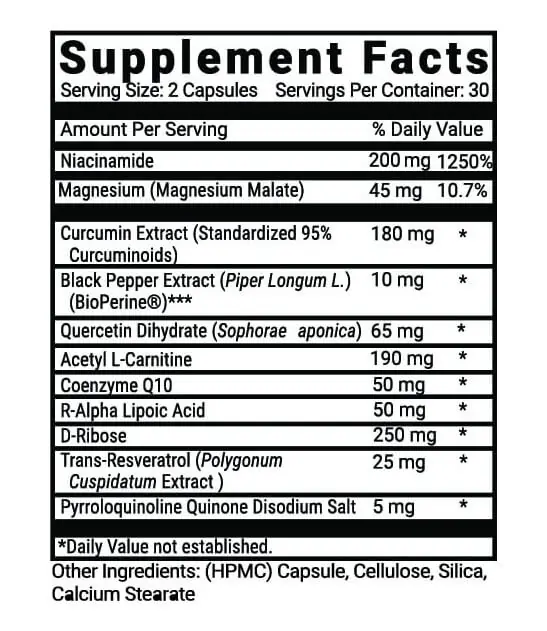
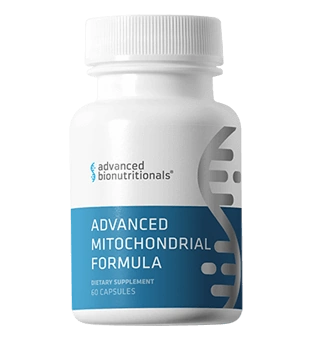
The seller-hosted artwork is not a physical inspection of the bottle a buyer will receive. Compare the actual package with the current product page before use, and ask the seller about any discrepancies.
How Do Selected Ingredients Compare With Studies?
Research on a single ingredient can help frame a question without proving the finished formula works. The right comparison includes preparation, dose, participants, duration and outcome. Three studies below illustrate why a number from a trial cannot be converted directly into a prediction about this particular eleven-ingredient product.
| Ingredient | Panel per serving | Study intervention | Interpretation |
|---|---|---|---|
| Coenzyme Q10 | 50 mg | 200 mg CoQ10 plus 20 mg NADH daily for eight weeks in an ME/CFS trial; 207 were randomized and 144 completed the protocol. Castro-Marrero et al. (2021) [PMID: 34444817] [1] | The trial used a different combination and population. |
| PQQ disodium salt | 5 mg | 20 mg/day PQQ vs placebo during six weeks of training in 23 men. Hwang et al. (2020) [PMID: 31860387] [2] | No between-group aerobic-performance benefit; a protein marker increased. |
| Quercetin dihydrate | 65 mg | 1,000 mg quercetin daily for two weeks versus placebo in 26 untrained young men. Nieman et al. (2010) [PMID: 19927026] [6] | Small treadmill performance difference; mitochondrial markers did not significantly increase. The study did not test this formula. |
Hwang et al. (2020) reported a difference in a mitochondrial-related protein marker, not an established performance benefit in the tested group. The fourfold amount difference is arithmetic, not a measure of relative effectiveness. Hwang et al. (2020) [PMID: 31860387] [2]
Other Ingredients and Sensitivities
The panel lists HPMC capsule, cellulose, silica and calcium stearate as other ingredients. These entries describe components in the seller-hosted artwork but do not independently establish a complete allergen, cross-contact or manufacturing assessment. People with a relevant sensitivity should ask the seller or a healthcare professional about the actual product.
Keep a record of the label version, and do not infer that a formula is suitable for every allergy or dietary requirement simply because the main ingredient list is visible.
Questions for Your Healthcare Professional
Take the full label and a list of your medicines and other supplements to the discussion. The panel lists 200 mg niacinamide, 180 mg standardized curcumin extract and 10 mg black pepper extract. These details can matter when considering overall supplement intake, medication interactions and whether this combination is appropriate for you.
- Does the niacinamide overlap with B3 in other products I take?
- Could CoQ10 affect my warfarin, insulin or cancer treatment?
- Do my liver history, pregnancy or breastfeeding change whether curcumin supplements are appropriate?
- Should ongoing fatigue be evaluated for other causes before adding a supplement?
NIH’s 35 mg adult upper limit for supplemental niacin applies to both nicotinic acid and niacinamide, although it is based on nicotinic-acid flushing. Exceeding it does not itself prove harm; it is a useful discussion point about total intake. [3]
NCCIH notes possible CoQ10 interactions with warfarin, insulin and some cancer treatments. Some high-bioavailability curcumin products have been linked to liver injury, but the rate for this particular formula is not established. [4] [5]
Ingredients FAQs
The label can answer what is listed, but not every question about individual response. These answers distinguish the inspected artwork from clinical studies and preserve the limits of comparing products. If a label changes or you have a relevant health concern, rely on the current package and individualized professional advice.
Does the label show the dose of every listed active?
Does 5 mg of PQQ mean the formula will not work?
Is BioPerine the same amount as pure piperine?
How much CoQ10 is in a serving?
What should I know about the niacinamide amount?
Ingredient Takeaway
The inspected panel makes the individual serving amounts visible. That supports a more specific discussion of ingredients than an undisclosed blend would, while research in other populations and combinations remains indirect. Compare the label with your own health circumstances and discuss potential interactions before use.
Disclosure: FitnessLifeMag may receive a commission if you purchase through a commercial link.
Explore the Research Series
References
Affiliate disclosure: FitnessLifeMag may receive a commission from qualifying purchases. This educational content is not medical advice.