
For the overall purchase decision, start with our All Day Slimming Tea review. This page covers the detailed ingredient-transparency analysis.
What is in the advertised morning and evening formulas?
The seller gives two different ingredient lists; the evening blend—not the morning list—contains senna and licorice.
| Blend | Complete list in the inspected sales text |
|---|---|
| Morning Energy Tea | Green tea; oolong tea; orange peel; lemongrass; ginger; dandelion leaf; ginseng root; garcinia cambogia; monk fruit; natural mint and lemon flavor. |
| Evening Detox Tea | Senna leaves; licorice root; peppermint leaves; fennel fruit; orange peel; cinnamon bark; dandelion leaves; lemongrass; ginger; monk fruit for sweetness; natural honey and lemon flavor. |
Lists checked October 21, 2026. They describe what the seller advertises, not a verified transcription of a current back-label panel. Botanical identities, plant parts and processing are reproduced only to the extent the seller supplies them. For example, “ginseng root” does not establish a particular species or standardized ginsenoside amount.
Keeping the blends separate matters. A page that mixes them together can hide evening senna exposure or wrongly imply that both pouches have the same caffeine content. A familiar ingredient name may help identify a research question; it cannot establish how much reaches the brewed cup.
What does the accessible packaging actually verify?
Seller front artwork identifies the product and depicts 30 bags per pouch, but it does not establish a complete quantitative label or serving instructions.
| Information | Current verification | Why it matters |
|---|---|---|
| Two named pouches | Visible in actual seller images: Morning Energy Tea and Evening Detox Tea. | Confirms the offered format and prevents blending the two lists. |
| Bag count | Front artwork says 30 tea bags on each pouch. | A depicted count is not a verified extracted dose, maximum cup count or safe duration. |
| Ingredient amounts / total blend | No usable current quantitative back panel was inspected. | Cannot compare each botanical amount with a clinical study or calculate caffeine/sennoside exposure. |
| Net weight | The artwork appears to print “4.25 oz” alongside “60 gr.” These values do not agree. | Do not derive grams per bag from inconsistent artwork; ask for the current actual label. |
| Directions and restrictions | Readable complete current directions and warning panel unavailable. | Morning/evening marketing is not a brewing method or a safe long-term course. |
| Other ingredients / allergens | Full manufacturing and flavor/allergen disclosure not verified. | Cannot give definitive allergen, vegan or processing clearance. |
The net-weight observation is a document inconsistency, not a laboratory finding or proof that delivered packages are misfilled. Four and a quarter US avoirdupois ounces are about 120.5 g, not 60 g. A photograph of the current physical package would materially improve this assessment. We have not used either displayed weight to infer ingredient doses.
The lack of a readable current panel in the sources inspected does not prove the physical product lacks one. It means this review cannot independently resolve it. Likewise, an undisclosed amount does not prove that an ingredient is underdosed or that a proprietary blend has a particular legal label structure.
Do the advertised ingredients match the preparations studied?
Only at a broad ingredient-name level; the actual product amounts, extracted constituents and standardized preparations cannot be matched from the material available.
| Seller-listed ingredient / amount | Studied preparation / population | Relevant finding | Applicability limit |
|---|---|---|---|
| Green tea; amount and brewed catechins/caffeine unknown. | Oral green-tea preparations in adults with overweight/obesity; 12–13-week trials. NIH summary reports varying catechin doses. | A Cochrane review judged effects small and not likely clinically important; six non-Japan studies found no significant weight benefit. Jurgens et al., 2012. | Not All Day Slimming Tea. No verified catechin/caffeine match; heterogeneous preparations. |
| Garcinia cambogia; amount/HCA unspecified. | Garcinia extracts/HCA versus placebo in short-term randomized trials; NIH summary covers different HCA exposures. | A pooled review found a small effect with uncertain clinical relevance and methodological limits. Onakpoya et al., 2011; NIH ODS: weight-loss supplements. | An extract amount is not an unspecified brewed-herb exposure. No product weight-loss forecast follows. |
| Senna leaves; sennoside amount unknown. | Public medicinal senna guidance for constipation, not a weight-loss trial. | Stimulant laxative role and short-term-use precautions. MedlinePlus: senna. | A bowel effect does not establish fat loss or justify daily use over months. |
| Licorice root; glycyrrhizin amount unknown. | Ingredient-specific public safety guidance; glycyrrhizin status changes interpretation. | Potential serious effects and relevant susceptible groups. NCCIH: licorice root. | No quantified exposure or verified deglycyrrhizinated form; no product-specific risk rate. |
This is a comparison of source applicability, not a claim that the tea matches the trial doses. Green-tea research and garcinia research test different preparations and outcomes; adding the reported effects together would not estimate a blend effect. Even a verified total bag weight would not reveal how that weight is distributed among ingredients or what is extracted during brewing.
Detailed weight outcomes, study limitations and claimed mechanisms belong to the effectiveness and results review. Detailed interactions and high-risk situations belong to the safety assessment.
What roles can the other ingredients reasonably be assigned?
They identify flavor or botanical components in the seller’s recipe, not a set of independently established weight-loss effects for this product.
Orange peel, lemongrass, ginger, dandelion and monk fruit occur across the advertised blends. The morning text adds green/oolong teas, ginseng and garcinia; the evening text adds peppermint, fennel, cinnamon, licorice and senna. The seller describes monk fruit as a sweetening component and names mint/lemon or honey/lemon flavor. These descriptions identify formulation features; they do not measure taste, calorie content, sweetness intensity or clinical effect.
No hands-on tasting or preparation was performed. We cannot say the product tastes good, is easy on the stomach, is sugar-free in every formulation, or delivers a standardized herb dose. “Natural” flavor terminology does not by itself describe every carrier or manufacturing aid. Ingredient-specific benefits must still match preparation, amount, population and outcome rather than a general botanical reputation.
For general methods, the existing Dietary Supplements Guide explains why a mechanism, an ingredient trial and a complete product trial answer different questions.
Can vegan, gluten-free and other dietary labels be confirmed?
Not independently from the inspected information; a front icon or flavor name is not a complete allergen, sourcing or certification record.
Seller artwork displays several quality/dietary icons and the text calls the formula natural. We did not verify an identifiable certifier, current testing documentation, a complete allergen statement or the composition of the honey flavor. Therefore this review does not certify vegan, gluten-free, organic, non-GMO or allergen-free status. That is an unresolved verification question, not proof that any particular allergen is present.
- For a food allergy, ask for the full current ingredients, flavor carriers and cross-contact information; do not rely solely on the botanical list.
- For vegan suitability, clarify whether “natural honey flavor” contains a bee-derived ingredient rather than assuming either answer.
- For an organic or third-party-testing assertion, check the identifiable issuing body, product/batch scope and current documentation.
- Compare the delivered label with the version checked here; a change in formulation could change the safety assessment.
Seller product and blend images
These genuine seller images identify the two pouches and loose-blend appearance; they do not verify individual ingredient amounts or effectiveness.
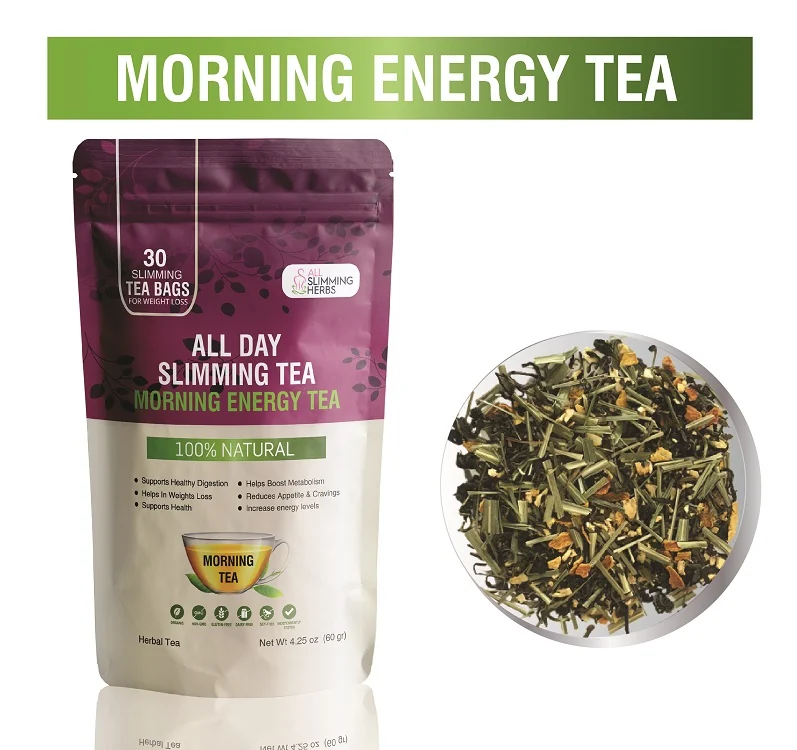
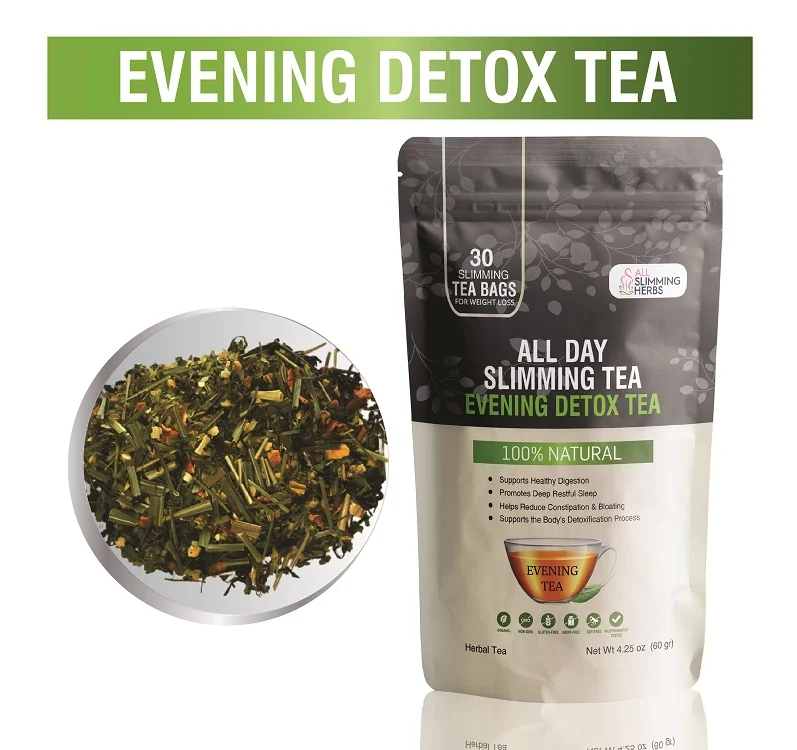
No readable back/side-label image or separate rights-verified photograph of each individual botanical was available. We have not filled those gaps with fabricated packaging, generated ingredient scenes or a simulated Supplement Facts label.
Ingredient questions buyers ask
The most useful unanswered questions concern the actual current label and exposure, not simply the number of herbs.
Is the complete Supplement Facts panel verified?
No readable current quantitative back panel was inspected. The seller ingredient lists and front-package images are a different level of evidence.
Is this a proprietary blend?
The inspected sales text does not provide enough label detail to establish a legal proprietary-blend declaration or a verified blend total. Missing quantities should not be filled with guesses.
Does the evening tea contain caffeine?
Its advertised list does not name green or oolong tea, but no verified caffeine assay or complete current caffeine-free statement was inspected.
Can the dose be calculated from 30 bags and the front weight?
No reliable ingredient-specific dose follows. The weight artwork is inconsistent, ingredient proportions are not disclosed, and brewing extraction is not measured.
Do ginger or green tea studies prove the blend works?
No. Ingredient research can frame plausibility or particular risks, but it does not establish outcomes for the unquantified finished tea.
What should you ask for before relying on this formula?
Request clear current front-and-back labels for both blends, ingredient quantities or relevant constituent amounts, directions, warnings and applicable testing details.
The advertised lists are useful because they expose a meaningful morning/evening difference and flag senna/licorice questions. Their limitation is quantitative: a name does not reveal brewed exposure or demonstrate a study-matched formula. A supplier response with the current label and identifiable batch information would be more useful than another list of general herb benefits.
Return to the main All Day Slimming Tea review for the overall buying assessment. The marked link below checks transaction information only; it does not resolve the missing-label questions or endorse use.
How was this review prepared?
This is a remote document and research review, not a test of the tea or an independent medical assessment.
We inspected the seller’s current sales text, front-package artwork, shipping and refund policies on October 21, 2026. We compared relevant claims with the public health sources and research abstracts linked beside those claims. We did not purchase, brew, taste or laboratory-test the product, verify a batch certificate, complete checkout, or obtain independent medical review. Product-specific ingredient amounts and complete directions remain unavailable.
Biraj Health Care is the publisher’s editorial brand, not a medical credential. This draft was prepared with AI-assisted research; no separate medical fact-checker is claimed. See our methodology, sources policy, affiliate disclosure and corrections route. Commercial facts can change; reconfirm before paying.
Sources and document checks
Independent sources below inform the evidence and safety assessment; seller documents establish advertised details, not clinical proof.
- MedlinePlus: senna
- NCCIH: licorice root
- NIH ODS: weight-loss supplements
- Jurgens et al., 2012
- Onakpoya et al., 2011
- NCCIH: detoxes and cleanses
- NIDDK: choosing weight-management support
Commercial documents checked October 21, 2026: All Slimming Herbs sales page (blend names and advertised package totals), Shipping Policy (inconsistent US charges), Refund Policy (physical-return conditions), and affiliate terms (commercial relationship). Seller documents are not independent scientific evidence.