
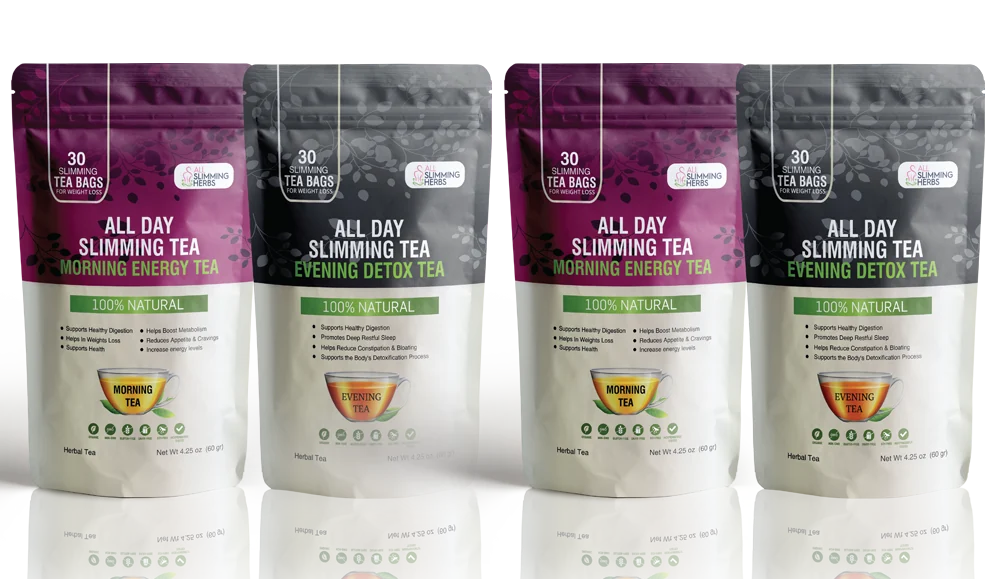
For the overall purchase decision, start with our All Day Slimming Tea review. This page covers the detailed effectiveness and outcomes assessment.
Which advertised benefits need separate evidence?
Fat loss, appetite, energy, bowel regularity, sleep and detoxification are different outcomes; evidence for one cannot validate them all.
| Seller claim / rationale | What would establish the consumer outcome | Current interpretation |
|---|---|---|
| Faster metabolism / reduced fat production | A controlled study of the finished formula measuring meaningful body-weight/fat outcomes, not only a pathway. | The seller’s mechanism is not independently established product effectiveness. |
| Energy / mitochondrial support | Relevant finished-product measures, formulation and an appropriate comparison. | Morning tea lists caffeine-containing teas, but exposure and the claimed mitochondrial effect were not verified. |
| Reduced cravings / appetite | Measured appetite and food-intake outcomes with a relevant preparation and comparison. | Garcinia extract research is not proof of the tea’s appetite effect. |
| Detox / less bloating | Defined toxin or relevant clinical outcome, distinguished from stool/fluid changes. | A laxative bowel effect is not evidence of toxin removal or body-fat loss. |
| Better sleep | A relevant finished-product sleep assessment; adverse effects and caffeine context matter. | Seller reports are not controlled sleep-treatment evidence. |
These are seller claims checked October 21, 2026, not benefits this review certifies. No matching finished-product controlled human trial was identified in our limited search. That search limit is important: it does not establish that a trial could not exist or that every subjective experience is impossible.
The ingredient-transparency analysis explains why a list of botanicals is not enough to establish the actual preparation or dose studied.
What human research is most relevant?
Green-tea and garcinia reviews provide context, but their preparations and small or uncertain findings do not support dramatic results from this blend.
| Research / access inspected | Population, preparation and duration | Finding and limitation |
|---|---|---|
| Jurgens et al., Cochrane 2012; PubMed abstract and NIH summary, not full paper. Jurgens et al., 2012. | Adults with overweight/obesity; green-tea preparations; 12–13 weeks. Six non-Japan weight-loss trials had 532 participants. | Outside Japan: −0.04 kg mean difference, 95% CI −0.5 to 0.4. Japan trials were heterogeneous; do not treat one pooled number as universal. |
| Onakpoya et al., 2011; PubMed abstract and NIH summary, not full paper. Onakpoya et al., 2011. | Garcinia extracts/HCA versus placebo; 12 trials included and nine pooled. NIH summary describes short durations and varying HCA exposure. | Pooled difference −0.88 kg, 95% CI −1.75 to −0.00. Small effect, uncertain clinical relevance and methodological concerns. |
| NIH ODS professional summary. NIH ODS: weight-loss supplements. | Multiple preparations and studies summarized, not a trial of this product. | Weight-loss effects of green tea, if present, are small; garcinia findings conflict. Extract safety and preparation distinctions matter. |
The green-tea review’s authors concluded that effects were not likely clinically important and found no significant maintenance benefit. The garcinia review’s apparent statistical significance does not itself establish a benefit a person would find worthwhile, especially given quality and preparation limitations. Neither trial group consumed a verified All Day Slimming Tea formula.
Amounts of tea catechins, caffeine and HCA in the brewed product were not verified. There is no defensible calculation that converts these research findings into pounds lost per pouch, per week or per bundle. An ingredient could be present without matching its researched preparation, and separate ingredient effects cannot simply be added to create a blend result.
These are older reviews used as documented context, not a claim that every current paper has been exhausted. We inspected the stated abstracts and NIH summary, not individual full trial reports; study funding and full per-trial risk-of-bias details were not independently extracted.
Was the exact finished product clinically tested?
A matching controlled finished-product human trial was not identified within the specific search scope used here.
We checked the seller’s scientific-reference list and public-web searches for the exact product name using PubMed and ClinicalTrials.gov site filters, plus a product-name clinical-trial query. This was a bounded English-language web search on October 21, 2026, not an exhaustive direct database review or manufacturer evidence request. Differently named, unpublished or poorly indexed studies could be missed.
The seller reference list also includes research descriptions involving actiponin/Gynostemma, hesperidin, berberine or chromium. Those names do not appear in the two advertised blend lists inspected here. That does not make the underlying research invalid, but it makes direct support for this formula unclear without a verified ingredient relationship and matching exposure.
A convincing product-specific submission would identify the exact formula, preparation and dose, registered or otherwise transparent methods, relevant participants, comparator, duration, prespecified outcomes, adverse events and conflicts/funding. A generic “scientifically tested” statement, facility claim, scientific logo or long bibliography cannot substitute for that record.
Why are bowel effects and detox claims not fat-loss proof?
Senna stimulates bowel activity; bowel contents and fluid-related scale changes are not a direct measure of sustained loss of body fat.
Senna is used as a short-term stimulant laxative for constipation. Its presence in the evening blend offers a reason to interpret bowel changes separately from weight-loss claims. The actual senna amount is unknown, so this review cannot predict the strength of that effect from a cup. MedlinePlus: senna.
NCCIH reports no compelling research supporting detox diets for weight management or eliminating toxins. It also warns that laxative-related diarrhea can lead to dehydration. A sensation of being “lighter,” reduced stool burden or an early scale change does not demonstrate a particular toxin was removed or that the tea increased sustained fat loss. NCCIH: detoxes and cleanses.
Other plausible explanations for an anecdotal result include changes in calories from replaced drinks, meal patterns, activity, concurrent products and selective reporting of successes. We did not measure these factors in customers, so they are alternative explanations rather than proven causes of any specific report. A controlled comparison is needed to separate them.
How long would it take to see worthwhile results?
The inspected evidence does not establish a product-specific timeline or an expected amount of fat loss.
A seller’s report of first-day energy is a different claim from sustained change in body fat. A short-term bowel response is also a different endpoint. The reviewed ingredient trials lasted weeks and used defined research preparations; neither their duration nor their average result is a schedule that can be assigned to this unknown blend exposure.
- Do not use a testimonial as a forecast: the underlying diet, activity, baseline and other treatments were not controlled.
- Do not equate early scale change with success: distinguish symptoms, fluid/bowel changes, sustained trends and health-related outcomes.
- Do not buy more because a promised deadline passed: an unmet marketing promise is not evidence that the dose should be increased.
- Do not wait out a safety problem: the seller’s months-long advice does not override senna precautions or a concerning reaction. MedlinePlus: senna.
The product may be experienced as a tea routine, but that is not evidence of a clinically meaningful weight-management intervention. A credible personal assessment should focus on the actual intended goal and an appropriate professional plan rather than a guaranteed pounds-per-week target.
Which alternative better fits the actual goal?
Choose the approach by the problem being solved: a beverage preference, persistent constipation, sustained weight management and sleep concerns need different decisions.
| Reader goal | Reasonable alternative to examine | Comparison with this tea / limitation |
|---|---|---|
| An enjoyable unsweetened drink | Ordinary tea or another personally suitable unsweetened beverage without a laxative ingredient. | A simpler ingredient screen; caffeine and tolerability still matter. No head-to-head weight-loss superiority is claimed. |
| Sustained weight management | A structured program with an appropriate eating plan, activity, behavioral support and maintenance. NIDDK: choosing weight-management support. | Addresses the actual long-term goal rather than relying on detox claims; costs and access vary. |
| Persistent constipation | A clinical/pharmacist assessment of the cause and appropriate management. MedlinePlus: senna. | A slimming-tea bundle is not a substitute for diagnosis or a supervised bowel-care plan. |
| Ongoing sleep difficulty | Assessment appropriate to the sleep problem rather than assuming an evening tea treats it. | Product-specific sleep efficacy was not established; no personalized sleep-treatment regimen is given. |
For sustained weight-management programs, NIDDK emphasizes healthy reduced-calorie eating/drinking, activity where appropriate, support for behavior change and a plan for keeping weight off. This is guidance about program features, not a trial showing a named program beats this tea. No verified branded-competitor price/dose dataset was available for a fair ranking. NIDDK: choosing weight-management support.
If the intended appeal is a low-commitment tea routine, compare ingredients and total outlay rather than a headline “per month” price. If the goal requires treatment, discuss the appropriate care pathway. The tea’s safety and duration review explains why simply choosing a six-month bundle is not an evidence-based plan.
Evidence questions buyers ask
These answers avoid both overstating favorable research and treating an incomplete search as proof of ineffectiveness.
Does All Day Slimming Tea work because green tea has studies?
Not established. Relevant green-tea preparations have been studied, but the finished blend’s amounts and preparation are not matched and the reviewed weight effects were small. Jurgens et al., 2012.
Does the tea burn fat all day and night?
The inspected evidence does not substantiate that product-specific promise. A plausible metabolic pathway and a bowel effect do not establish continuous meaningful fat loss.
Do the seller testimonials prove typical results?
No. Seller-selected individual experiences were not independently authenticated or controlled for other changes; they cannot establish a typical causal effect.
Does an unlocated trial mean the tea definitely cannot work?
No. It means a matching trial was not identified within the described limited search. Avoid both a proven-benefit claim and an absolute ineffectiveness conclusion.
Can extract-study doses be converted into tea cups?
Not from the available information. Ingredient proportions, extraction and brewed constituent amounts were not verified.
What conclusion does the current evidence justify?
Do not rely on All Day Slimming Tea as a proven fat-loss treatment; the available ingredient research and marketing do not establish its claimed results.
The useful finding is an evidence mismatch: the offer provides named botanicals and strong promises, while the human research concerns different preparations and modest or uncertain outcomes. Missing quantitative labels prevent dose matching, and senna’s role complicates interpretation of early changes. That is a reason to ask better questions, not to invent a result or label the seller fraudulent.
Return to the main review for the complete purchase assessment, and use the Dietary Supplements Guide to interpret formula and research claims. The following affiliate button checks current terms only; it is not a claim that buying the tea is the appropriate next health step.
How was this review prepared?
This is a remote document and research review, not a test of the tea or an independent medical assessment.
We inspected the seller’s current sales text, front-package artwork, shipping and refund policies on October 21, 2026. We compared relevant claims with the public health sources and research abstracts linked beside those claims. We did not purchase, brew, taste or laboratory-test the product, verify a batch certificate, complete checkout, or obtain independent medical review. Product-specific ingredient amounts and complete directions remain unavailable.
Biraj Health Care is the publisher’s editorial brand, not a medical credential. This draft was prepared with AI-assisted research; no separate medical fact-checker is claimed. See our methodology, sources policy, affiliate disclosure and corrections route. Commercial facts can change; reconfirm before paying.
Sources and document checks
Independent sources below inform the evidence and safety assessment; seller documents establish advertised details, not clinical proof.
- MedlinePlus: senna
- NCCIH: licorice root
- NIH ODS: weight-loss supplements
- Jurgens et al., 2012
- Onakpoya et al., 2011
- NCCIH: detoxes and cleanses
- NIDDK: choosing weight-management support
Commercial documents checked October 21, 2026: All Slimming Herbs sales page (blend names and advertised package totals), Shipping Policy (inconsistent US charges), Refund Policy (physical-return conditions), and affiliate terms (commercial relationship). Seller documents are not independent scientific evidence.