
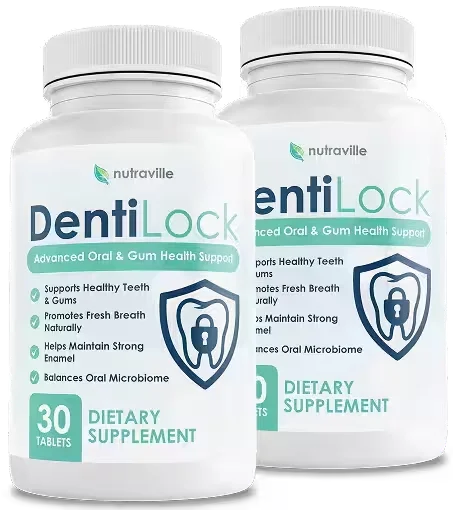
What is known about DentiLock side effects?
Product-specific side-effect frequencies are not established by the evidence we located; ingredient risks must not be converted into invented DentiLock event rates.
The seller lists zinc as zinc-L-carnosine, xylitol, cranberry powder, guava fruit powder, honey granules, fructooligosaccharides and magnesium stearate. We did not verify individual amounts, a full other-ingredient declaration or a complete allergen statement. Those missing details limit exposure and suitability checks.
For the product identity and overall assessment, see the DentiLock Review. This page concentrates on adverse effects, medicine interactions and the information needed before making an individual safety decision. It is not a clinical clearance or a diagnosis.
A seller statement about purity testing is not equivalent to a publicly verified lot report or a clinical safety study. Nor does the lack of a verified complaint pattern show that nobody has a reaction. We have not inspected a purchased bottle or commissioned qualified clinical review.
Which ingredient-related reactions deserve attention?
Excess zinc exposure and tolerance of xylitol or fermentable ingredients are relevant questions, but their presence does not establish that a particular reaction will occur.
| Ingredient or issue | Relevant concern | What this means for DentiLock |
|---|---|---|
| Zinc | High intake can cause nausea, gastric distress and other effects; sustained high intake can impair copper status. NIH ODS: zinc safety and interactions | Elemental zinc is not verified. Count other zinc products with a qualified professional rather than assuming one tablet is low exposure. |
| Xylitol | Some xylitol-product trials report gastrointestinal effects such as cramps, bloating or loose stool; evidence varies by product. Cochrane: xylitol products for caries prevention | Dose and preparation matter; these are not measured DentiLock frequencies. |
| FOS | A fermentable ingredient can raise tolerance questions. A reviewed synthesis did not find an overall significant difference in adverse GI symptoms versus comparators. FOS gut-microbiota systematic review | The result does not guarantee individual tolerance, and the product dose is unknown. |
| Ingredient sensitivity or allergy | The seller list includes fruit-derived ingredients and honey granules; complete other ingredients/allergen information is not verified. | Check actual packaging against known sensitivities; do not assume allergen-free or use an ingredient photograph as confirmation. |
| Unverified complete formulation | Additional ingredients and actual quantities are needed for a full review. | A short marketing list cannot establish that a product is safe for everyone. |
This is an evidence-led screening framework, not a prediction that DentiLock causes all of these problems. It deliberately avoids copying adverse effects from an unrelated supplement, inventing severe events or reporting unsupported percentages. A reaction temporally following use still needs assessment; timing alone does not prove causation.
Why does the elemental zinc amount matter?
Zinc compound weight and elemental zinc are different quantities; the latter is needed to assess total zinc exposure from the diet and supplements.
The seller’s phrase “zinc as zinc-L-carnosine” identifies a form, but the inspected list does not establish the daily elemental zinc amount. It would be wrong to fill that gap using a standard dose from a different brand or to treat the whole zinc-carnosine compound mass as pure zinc.
NIH ODS lists an adult tolerable upper intake level of 40 mg of zinc per day, with lower age-dependent limits for younger people. That limit concerns total intake and is not a recommended DentiLock dose, a target to approach or a way to determine safety without the label. Clinical situations can require qualified supervision rather than self-application of a limit. NIH ODS: zinc safety and interactions
NIH also notes that intake of 50 mg or more for weeks can inhibit copper absorption. That is context for why repeated high exposure matters; it does not establish that DentiLock supplies that amount. Check multivitamins, zinc supplements and relevant zinc-containing products rather than examining this bottle in isolation. NIH ODS: zinc safety and interactions
Do not increase the number of tablets to reproduce an ingredient-study amount. Without verified composition and directions, the arithmetic cannot establish an appropriate exposure or a safe research-equivalent regimen.
Which medication interactions need a pharmacist or clinician review?
Zinc can interfere with quinolone or tetracycline antibiotics and penicillamine; the actual medicine, supplement amount and timing need professional review.
| Medicine category | Why it matters | Practical decision |
|---|---|---|
| Quinolone antibiotics | Zinc and certain antibiotics can interact in the gastrointestinal tract and reduce absorption. | Show the actual bottle and medicine details to a pharmacist; do not create your own spacing schedule. |
| Tetracycline antibiotics | The same absorption concern applies to this antibiotic category. | Ask how the supplement should be handled during the prescribed course. |
| Penicillamine | Zinc can reduce its absorption and action. | Obtain specific advice rather than assuming a different time of day removes the concern. |
| Some diuretics | Some increase urinary zinc excretion; that is a different issue from adding extra zinc. | Review the complete medicine and supplement list; do not compensate with an unverified product amount. |
These interactions are described in NIH ODS: zinc safety and interactions. They do not mean every medicine interacts, and they are not an exhaustive clearance of the whole DentiLock formula. A full label and an up-to-date list of prescriptions, over-the-counter medicines and supplements are needed.
Do not stop or change prescribed treatment to make room for an oral-health supplement. A pharmacist can address the exact medicine and necessary spacing or avoidance without relying on a generic online schedule.
Affiliate link · Check current price, billing and return terms.
Who should seek individual advice before considering DentiLock?
Pregnancy, breastfeeding, child use, relevant medical conditions, medicines or a previous ingredient reaction require an actual-label review rather than a blanket online safety claim.
The seller advises consultation during pregnancy or nursing, when taking medication, or with a medical condition. We did not identify product-specific evidence that establishes safety for those circumstances or verify pediatric directions. Do not turn an adult-oriented advertisement into a child’s dose or infer a pregnancy safety guarantee from familiar food ingredients.
A known reaction to a listed item should be addressed before exposure. For a person with complex medical care or several supplements, the missing composition can be a practical reason to defer the decision until the label is available. FDA advises consumers to discuss supplement use with an appropriate healthcare professional. FDA: information for supplement consumers
We have not labeled this formula a sedative, assigned an alcohol interaction or created driving restrictions without an applicable evidence basis. Absence of such a warning here is not an individualized clearance: unusual symptoms or a medicine-specific concern should be discussed with a qualified professional.
The distinction between suitability and efficacy matters. Someone may have no identified contraindication yet still lack evidence of a useful benefit. For that separate question, read Does DentiLock Work? Evidence and Results.
Is long-term DentiLock use known to be safe?
Long-term product-specific safety was not established in the evidence identified; a long supply or refund window does not provide that assurance.
Safety evidence must match the actual formula, exposure and population. A paper about a topical zinc-carnosine mouthwash or a particular xylitol product cannot establish years of safety for a different tablet. The same principle applies to reassurance based only on the fact that an ingredient occurs in food.
The amount of zinc is particularly important when exposure is repeated or combined with other sources. For ingredients such as FOS, tolerance also depends on formulation and individual circumstances. A formula should not be assumed harmless simply because it is used daily or described as natural. NIH ODS: zinc safety and interactions; FOS gut-microbiota systematic review
If deciding whether to continue a supplement, review the intended purpose, any changes noticed, the complete label and other care or medicines with a suitable professional. A multi-bottle purchase does not create a medical obligation to finish the supply.
What should you do if you suspect a reaction?
Stop using a supplement if a serious reaction is suspected, obtain appropriate medical help and preserve the product details for assessment and reporting.
FDA lists potentially serious supplement-reaction signs including throat, lip or tongue swelling, wheezing, shortness of breath, fainting and severe persistent gastrointestinal symptoms. Trouble breathing, marked swelling or another severe or rapidly worsening reaction needs emergency help, not a wait for seller customer service. These are general warning signs, not events we are claiming occurred with DentiLock. FDA: reporting supplement problems
For a serious suspected supplement reaction, FDA advises immediately stopping the product and submitting a safety report. Medical care comes before paperwork. Keep the bottle, lot information, ingredient label, order details, start dates, symptoms and medicine list so a healthcare professional and reporting service have useful context. FDA: reporting supplement problems
Do not deliberately take another tablet to prove causation. A symptom can have another cause, but re-exposure is not a safe self-test. Seller refund and service procedures are separate from clinical evaluation and adverse-event reporting.
When is the bigger issue dental care rather than supplement tolerance?
Persistent bleeding, loose teeth, sensitivity or ongoing bad breath can require dental assessment even if no supplement reaction is suspected.
Gum disease involves tooth-supporting tissues and can require professional cleaning and treatment. Home care remains important, but a tablet is not a way to remove hardened calculus or determine disease severity. A pleasant taste or fresher breath cannot confirm that gum disease has resolved. NIDCR: periodontal disease and care
The published Oral Health Guide explains gum disease, common symptoms, plaque control and when professional care should take priority. Use it for wider context rather than interpreting every oral symptom as a DentiLock side effect.
What information makes a safety review more useful?
A complete label and a complete exposure history are more useful than a generic “safe” badge or an ingredient-name list.
- Current product: front and back label, serving directions, other ingredients, allergen information, lot and expiry details.
- Daily exposure: intended units, other zinc or overlapping supplements, and how long products have been used.
- Medicines and circumstances: prescriptions, nonprescription medicines, pregnancy or nursing, relevant conditions and known sensitivities.
- The decision: whether to begin, pause or continue—and whether symptoms already require dental or medical assessment.
A practical strength is that some ingredient concerns are documented in authoritative guidance. The main limitations are undisclosed product exposure and the lack of located long-term or special-population safety evidence for this exact tablet. These limits prevent a blanket safety conclusion; they are not a license to invent additional contraindications.
Questions readers ask before deciding
These answers address specific DentiLock questions; they do not replace the evidence and conditions explained above.
Does “natural” mean DentiLock has no side effects?
No. Safety depends on actual ingredients, amounts, other exposures and individual circumstances. Familiar ingredients do not establish a zero-risk finished product.
Can I take it with an antibiotic?
Zinc has relevant interactions with certain antibiotic categories. Ask a pharmacist using the actual antibiotic and bottle details; this page does not provide an individualized compatibility or timing decision.
Does the seller’s testing claim establish clinical safety?
No. We did not verify a lot-specific report, and contaminant testing and clinical safety are different questions. Neither is established merely by a marketing statement.
Are bloating or nausea proven DentiLock side effects?
We do not have verified product-specific rates or causation evidence. They are relevant ingredient-level concerns in certain contexts, not confirmed typical outcomes for this formula.
How was this page researched?
We checked documents and relevant research, separating what the seller displays from clinical evidence and from outcomes we have not tested.
Biraj Health Care is FitnessLifeMag’s editorial identity, not a medical qualification. This is a document-based review: seller pages and packaging artwork, publicly accessible checkout screens, and the independent sources linked beside relevant statements were inspected. We did not buy or physically test DentiLock, assay a bottle, conduct a clinical trial, obtain a refund or commission a qualified clinical review.
Research and commercial checks: . Ingredient studies are assessed separately from finished-product trials. Checkout observations were made without personal address or payment details and are not a completed order. Seller statements are attributed rather than treated as independent clinical findings.
Read our review methodology, sources policy and affiliate disclosure. The editorial profile explains the byline; use our contact page for a sourced correction.
- NIH ODS: zinc safety and interactions
- Cochrane: xylitol products for caries prevention
- FOS gut-microbiota systematic review
- FDA: information for supplement consumers
- FDA: reporting supplement problems
- NIDCR: periodontal disease and care
Commercial documents checked: DentiLock sales-page ingredient list and FAQ; seller Shipping & Return Policy and Terms and Conditions; the two-, four- and six-bottle checkout screens; and ClickBank’s Return and Subscription Cancellation Policy and Terms of Sale. They establish what was displayed or promised, not whether a health claim is true. Prices and terms can change.
What is the practical safety conclusion?
Do not treat DentiLock as universally safe; obtain the actual label, review relevant medicines and avoid using a supplement to postpone needed care.
The evidence supports specific questions about zinc exposure and ingredient tolerance, not a made-up adverse-event profile. If the information needed for your own circumstances remains unavailable, defer the choice and discuss a more transparent option with the appropriate professional.
A transaction-information link below is not a recommendation for a high-risk reader to take the product. The complete DentiLock review keeps safety, uncertain benefit and buying conditions in context.
Affiliate link · Check current price, billing and return terms.