
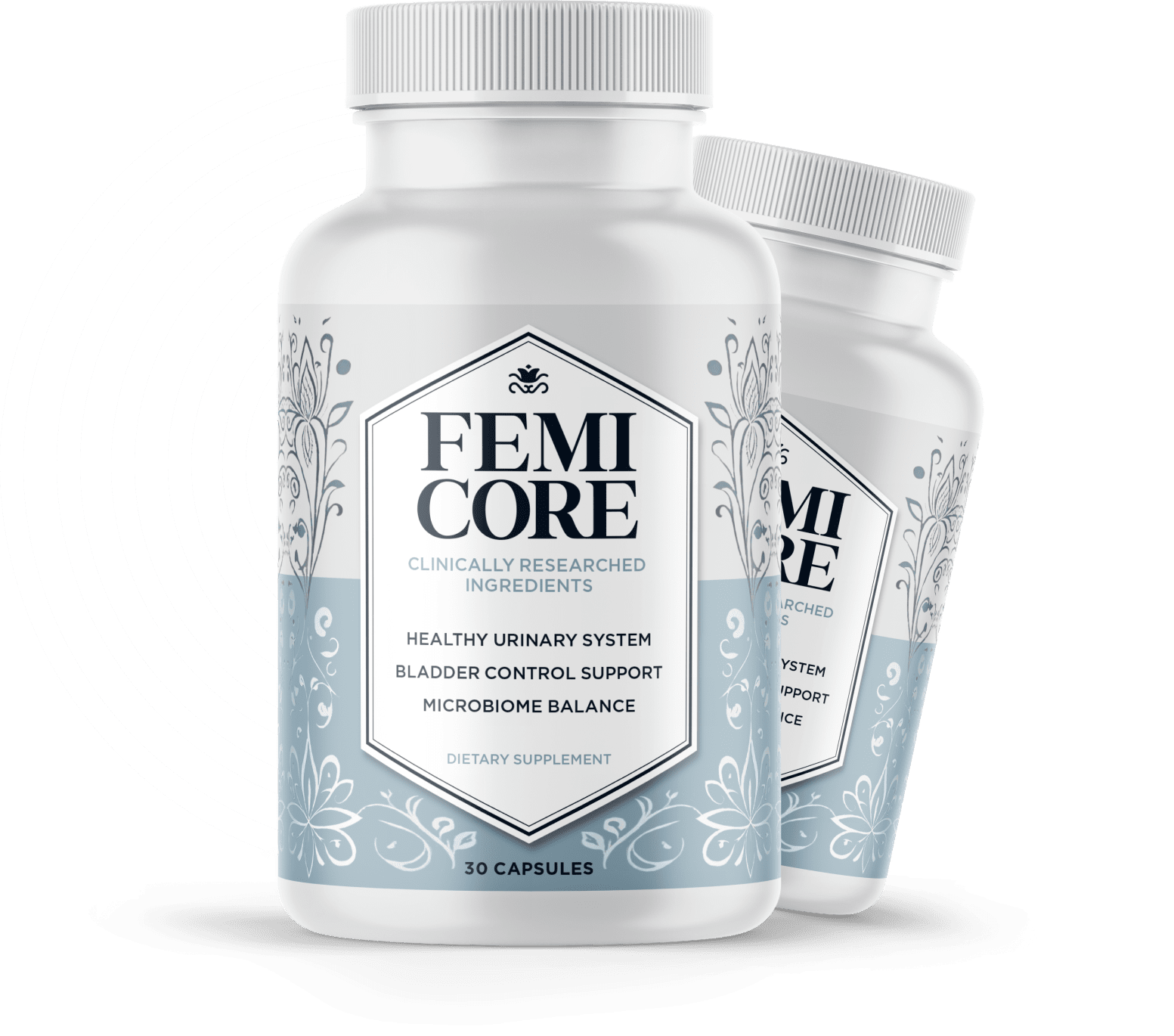
This focused Does FemiCore Work analysis belongs to the main FemiCore review. Its detailed decision is separated from the other owners to keep the evidence and transaction questions clear.
Five Evidence Levels That Should Not Be Confused
Many supplement reviews blur together very different types of evidence. For FemiCore, keeping these levels separate is essential.
Biological plausibility
Research recognizes urinary and vaginal microbial communities and investigates their relationship with women’s urinary health. This supports studying microbiome-oriented approaches; it does not establish a treatment effect for FemiCore.
Ingredient-level evidence
Cranberry and certain Lactobacillus species have been studied in urinary or feminine-health contexts. Findings depend on the exact preparation, strain, dose, population and endpoint.
Comparable-formula evidence
A study of a different blend may show that a strategy deserves investigation, but different strains, viable counts, extracts and doses prevent automatic equivalence.
Finished-product evidence
Controlled human trials testing commercial FemiCore at the marketed dose against an appropriate comparator could establish product-level effects. Ingredient research cannot substitute for this level.
Independent replication and real-world safety
Replication by independent investigators, longer follow-up and transparent adverse-event reporting would show whether findings are consistent and clinically meaningful beyond one study.
For the broader preparation and safety method, use the Dietary Supplements Guide.
What does the cranberry urgency trial actually show?
A small dried-cranberry trial had favorable per-protocol results but nonsignificant intention-to-treat findings; it did not test FemiCore.
Cho and colleagues studied dried cranberry 500 mg daily for 24 weeks: 98 women were randomized, 77 completed visits and 60 entered the per-protocol analysis. That analysis favored cranberry on frequency, urgency and perceived bladder condition; the intention-to-treat analysis did not show statistically significant differences for those measures.
The analysis difference limits a confident extrapolation. FemiCore’s current cranberry preparation and amount are unknown and the mixture adds other components. A study dose is not an instruction to change capsule intake. A symptom endpoint must also match the reader’s goal; fewer toilet visits do not automatically mean fewer exercise-related leaks.
Which steps in the FemiCore mechanism remain unproven?
A complete efficacy claim would connect the actual oral formula to a relevant biological change and then to a meaningful symptom outcome.
| Step | Required evidence | Current boundary |
|---|---|---|
| Defined capsule exposure | Current quantities, strains and preparation | Not fully verified. |
| Relevant biological effect | Intervention evidence for the actual formulation | Cannot be inferred from a species list. |
| Meaningful symptom change | Appropriate controlled clinical outcome | No qualifying finished-formula trial established here. |
| Reproducible result and harms | Replication and transparent follow-up | A reliable product success or harm rate is unavailable. |
The seller’s dioxin narrative adds a causal claim but does not establish that an individual’s leakage is caused by a measured exposure. A study of a related microbiome association does not demonstrate removal of that exposure or symptom benefit from this capsule.
Why must UTI prevention stay separate from leakage?
They are different outcomes, and cranberry prevention findings cannot establish an incontinence treatment effect.
Cochrane’s 2023 cranberry review covered 50 randomized trials and 8,857 participants, with prevention benefit in selected groups including women with recurrent UTIs. It did not test FemiCore. Preparation and population matter, and it is not evidence for treating a current infection.
Identify the intended outcome before weighing a claim: stress leakage, urgency, night-time waking and confirmed infection recurrence should not be pooled into an undefined urinary score. The primary care and formula questions remain distinct.
FemiCore Claims vs What the Evidence Can Support
The comparison below separates what is described for FemiCore from the evidence or verification still needed.
| Area | Reasonable interpretation | Important limitation |
|---|---|---|
| Urinary wellness support | Some formula components have relevance to urinary-health research. | General relevance does not establish symptom improvement from this exact product. |
| Microbiome balance | Lactobacillus species are important in feminine microbiome research. | Species names alone do not tell us whether the marketed strains, dose and delivery produce a measurable change. |
| Bladder-control positioning | The product is marketed toward women concerned about bladder wellness. | Urinary leakage has multiple possible causes; ingredient evidence does not establish correction of those causes. |
| Botanical support | Cranberry has a recognizable urinary-health research footprint; other botanicals have broader traditional or biological rationales. | Evidence strength is uneven and should not be pooled into one blanket effectiveness claim. |
Which Ingredients Matter Most to the Effectiveness Question?
Cranberry and selected Lactobacillus species are particularly relevant when examining the product’s urinary and microbiome positioning. But even stronger ingredient-level research can be difficult to apply when a commercial formula does not provide all the study-matching details needed for comparison.
For probiotics, the exact strain and viable dose matter. For botanical extracts, preparation and amount matter. A label that names a species or plant does not necessarily establish equivalence with the intervention used in a positive study.
Key study-to-formula mismatches
The comparison below separates what is described for FemiCore from the evidence or verification still needed.
- Cranberry: trials can differ by extract, proanthocyanidin content, dose, population and whether the outcome is recurrent-UTI prevention rather than bladder control.
- Lactobacillus: effects may depend on exact strain, viable count, storage stability, route and baseline microbiota. Species-level naming is insufficient for equivalence.
- Berberine, bearberry and Mimosa pudica: wider antimicrobial, metabolic or traditional-use rationales do not establish improvement in female urgency or leakage.
- Combined formula: interactions among nine listed components cannot be predicted by adding separate study conclusions together.
Rather than repeating the full ingredient analysis here, see our dedicated FemiCore Ingredients & Evidence guide →.
Only inspect the commercial offer after considering symptoms, evidence and personal suitability. Confirm the current full label and terms before buying.
Verify Current Offer and Terms (affiliate link)What Evidence Would Make the Case Stronger?
A stronger product-level case would include randomized controlled human trials on the finished FemiCore formulation, clearly reported participant characteristics, predefined outcomes, transparent doses and probiotic strain identifiers, an appropriate control group, sufficient follow-up and publicly accessible methods and results.
Meaningful outcomes should be specified before data collection—for example, number of urgency or leakage episodes, nighttime bathroom visits, validated quality-of-life scores, treatment satisfaction and adverse events. A microbiome change alone would support a mechanism; it would not establish that users feel or function better.
Independent replication would strengthen confidence further. Testimonials, sales-page review counts, mechanistic explanations and studies on separate ingredients can provide context, but they do not perform the same evidentiary role as a controlled trial of the product itself.
What Results Are Realistic to Expect?
There is no evidence-based universal timeline that can guarantee when an individual will notice a FemiCore-related change. Response to supplements can vary with underlying causes, baseline microbiota, adherence, diet, medications and other health factors.
A larger bottle package should not be interpreted as evidence that results will occur after a particular number of weeks. If someone chooses to try the product, record baseline urgency, leakage episodes, nighttime waking, discomfort and quality-of-life impact, then track the same outcomes consistently. Change as few other variables as practical so diet, fluid intake, pelvic-floor work or medicines do not obscure interpretation.
A refund window is a transaction term—not evidence of when the product should work. Continued use should not be based on the assumption that improvement is inevitable, especially when symptoms remain unchanged or worsen.
When the “Does It Work?” Question Needs Medical Evaluation First
Bladder symptoms are not one single condition. Infection, pelvic-floor dysfunction, menopause-related changes, medication effects, neurological conditions and other factors can produce overlapping symptoms. A supplement cannot identify which cause is present.
Fever, visible blood in urine, severe pelvic or flank pain, vomiting, difficulty urinating or rapidly worsening symptoms require medical attention rather than waiting to see whether a supplement works.
For ingredient-specific cautions, see our FemiCore Side Effects & Safety guide →.
How to Judge FemiCore Without Overstating the Evidence
A useful evaluation asks separate questions: Is the biological concept plausible? Are individual ingredients relevant to the claimed area? Are the doses and strains transparent enough to match published research? Has the finished formulation itself demonstrated the advertised outcomes? And are the risks, costs and alternatives acceptable for the individual considering it?
| Decision question | Current assessment |
|---|---|
| Is the concept biologically plausible? | Yes, parts of it connect to urinary and feminine-microbiome research. |
| Are all study-matching details transparent? | No; individual amounts, strain IDs, viable counts and standardization remain insufficiently clear in reviewed promotion. |
| Is finished-product effectiveness established? | Not from a published randomized trial identified in the reviewed material. |
| Can testimonials resolve the uncertainty? | No; they can signal experiences but cannot establish causation or response rate. |
| Is a trial reasonable for everyone? | No; safety, medications, symptom cause, price and alternatives matter. |
On those questions, FemiCore has a research-relevant formula concept, but the evidence should be described more cautiously at the finished-product level than marketing language may imply.
How this effectiveness guide was prepared
Biraj Health Care, the FitnessLifeMag editorial team, reviewed seller-listed ingredients and effectiveness claims, then compared them with independent research and medical sources. Seller material was used for product identity—not as independent proof. We did not personally use FemiCore, inspect a current physical bottle, laboratory-test its contents, verify probiotic viability or obtain an independent clinical review.
Sources and editorial policies
The comparison below separates what is described for FemiCore from the evidence or verification still needed.
- Cochrane review of cranberry products for preventing urinary tract infections — relevant to defined cranberry interventions, not proof of FemiCore or treatment of active infection.
- Review of Lactobacillus strain research and evidence gaps — supports strain-, dose- and outcome-specific interpretation.
- NIDDK guidance on bladder-control problems — causes, diagnosis and treatment context.
- NIH Office of Dietary Supplements guidance — evidence, label and safety boundaries.
Read the FitnessLifeMag Editorial Methodology, Sources Policy and Affiliate Disclosure. New finished-product evidence, a changed label or a material claim change should trigger a substantive update.
Does FemiCore Work? FAQ
These questions summarize FemiCore’s product category, evidence limits, safety and purchase checks.
Is FemiCore clinically proven to work?
Research on individual ingredients or related microbiome concepts is not the same as clinical proof of the finished FemiCore formulation. Product-specific controlled trials would provide stronger evidence.
Was a clinical trial of the exact FemiCore formula found?
We did not identify a published randomized human trial of the exact finished formula in the material reviewed for this update. That is not proof that no study exists; it means product-specific proof should not be assumed.
Does cranberry prove FemiCore works?
No. Cranberry has research relevance in urinary-health contexts, but its presence in a multi-ingredient formula does not by itself establish the effectiveness of the complete product.
Do the probiotics in FemiCore support the urinary microbiome?
Lactobacillus species are relevant to feminine microbiome research, but effects are strain-, dose- and context-specific. Product-level outcomes cannot be inferred from species names alone.
How long does FemiCore take to work?
There is no reliable universal evidence-based timeline for the finished product. Individual responses can vary and a marketed supply duration should not be treated as a guaranteed results timeline.
Can FemiCore replace treatment for urinary symptoms?
No. Persistent, severe or infection-like urinary symptoms should be medically evaluated rather than managed solely with a supplement.
Evidence Conclusion: Does FemiCore Really Work?
FemiCore’s formula connects to legitimate areas of urinary and feminine-microbiome research, particularly through cranberry and Lactobacillus species. That gives the concept scientific plausibility. The key uncertainty is whether the exact commercial formulation, at its marketed doses and strains, reliably produces the specific outcomes promoted to consumers.
For that reason, the strongest conclusion supported by the evidence framework is not a guaranteed yes or no: the formula contains research-relevant components, while finished-product effectiveness remains unconfirmed. Missing strain, CFU, dose and standardization details make it difficult to reproduce positive ingredient studies on paper, and testimonials cannot close that gap.
How was this page prepared?
This is a document-based FitnessLifeMag editorial update, with inaccessible facts and unperformed tests explicitly recorded.
Research checked 12 October 2026. We inspected the existing page and seller presentation, reference and policy material, and relevant independent regulatory/clinical sources. We did not use the capsules, laboratory-test a bottle, complete checkout or perform a refund test. The current full label and exact payable total remain unavailable.
The Biraj Health Care byline is an editorial identity, not a medical qualification. No independent clinical reviewer is claimed. Read Editorial Methodology, Sources Policy and Affiliate Disclosure. Send corrections through Contact.
Only inspect the commercial offer after considering symptoms, evidence and personal suitability. Confirm the current full label and terms before buying.
Verify Current Offer and Terms (affiliate link)