
Women’s Wellness · Independent evidence review
Read our FemiCore review of bladder-leak claims, formula transparency, safety and purchase terms. Compare evidence and practical options before buying.
By Biraj Health Care · First published 11 September 2026 · Updated 12 October 2026 · Research checked 12 October 2026
FitnessLifeMag may earn a commission if you buy through marked affiliate links, at no additional cost to you. Compensation does not change our evidence standards or conclusions.
Quick Verdict
FemiCore is marketed as a daily botanical-probiotic capsule for women’s bladder support. The available material does not establish a reliable finished-formula effect on leakage. Unknown current ingredient amounts and payable prices make a confident buying verdict harder. Use this review to separate the symptom, evidence and transaction questions; obtain the complete label and seek appropriate assessment before treating a capsule as the solution.
Quick Specs & Evidence Summary
| Product / category | FemiCore; dietary supplement marketed for women’s bladder support. |
|---|---|
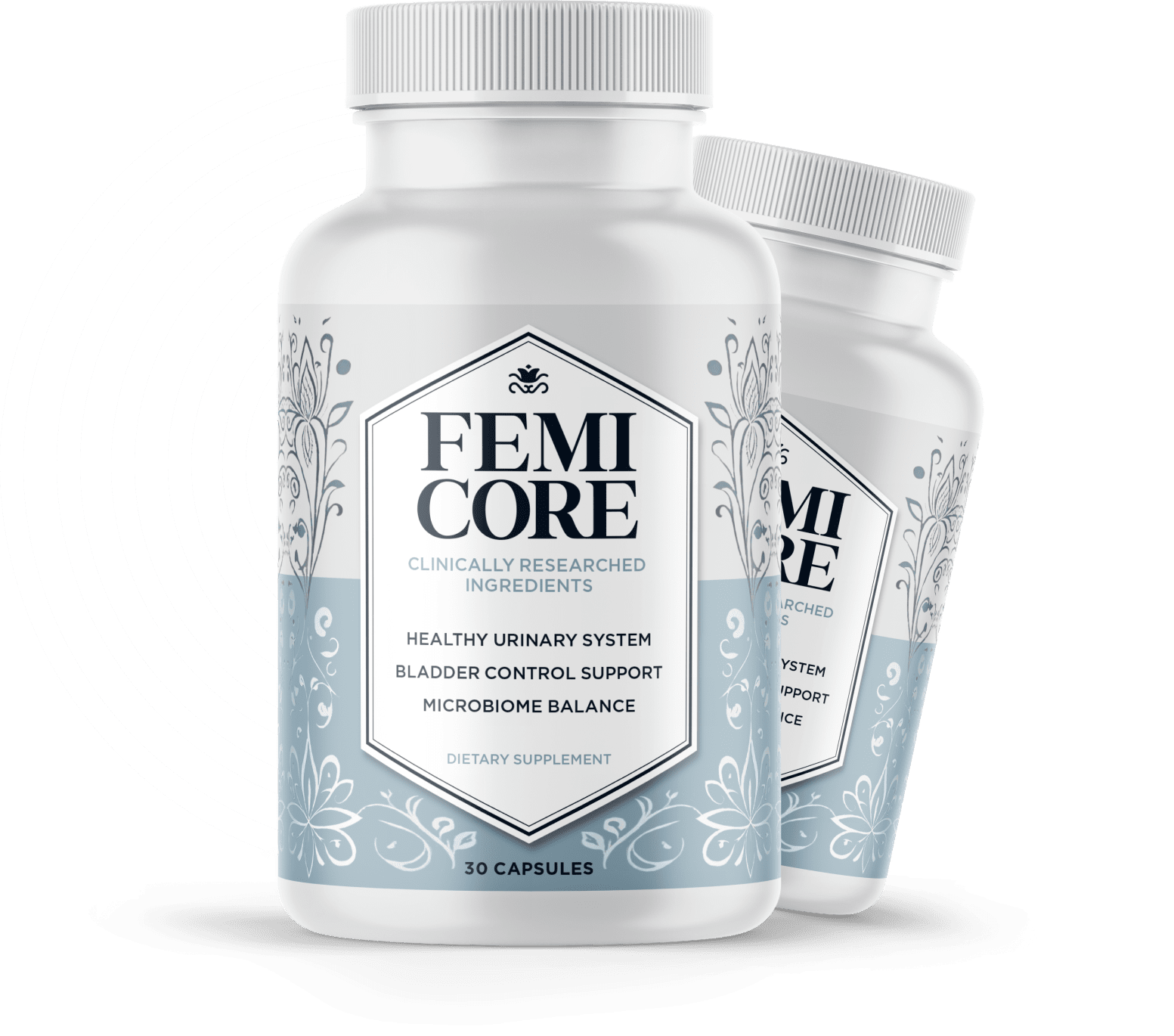
| Format / specification | Capsules; the illustrated front bottle states 30 capsules. Full current label remains unverified. |
| Price / currency / package | Current payable amount and named currency not verified. Seller displays 2-, 3- and 6-bottle arrangements. Checked 12 October 2026. |
| Current discount | No verified coupon, savings percentage or discounted order total. |
| Seller’s claimed benefit | Bladder control and urinary microbiome support; a marketing claim rather than demonstrated efficacy. |
| Evidence-supported finding | Relevant evidence depends on the preparation and outcome; no qualifying finished-FemiCore leakage trial was established in accessible material. |
| Audience / suitability | Seller addresses women, particularly over 45. Pregnancy, breastfeeding, medicine use, kidney disease or serious illness need individual review. |
| Seller-advertised refund | 60 days from delivery; return all bottles and packing slip; buyer pays return postage. Checked 12 October 2026. |
| Neutral evidence verdict | The current topic’s conclusion remains limited by unverified formula details and absent dependable product-level outcome data. |
Only inspect the commercial offer after considering symptoms, evidence and personal suitability. Confirm the current full label and terms before buying.
Verify Current Offer and Terms (affiliate link)What Is FemiCore?
FemiCore is a capsule-form dietary supplement promoted for adult women who want nutritional support for bladder comfort, urinary wellness and microbiome balance. The seller describes a once-daily formula that combines four plant-derived ingredients with five Lactobacillus species.
The manufacturer’s current text presentation highlights three areas: bladder control support, microbiome balance, and a healthy urinary system. These are marketing positions rather than a medical diagnosis or treatment claim. FemiCore is a supplement, not a prescription treatment for urinary tract infections, overactive bladder, pelvic-floor disorders, or other diagnosed conditions.
FemiCore product facts at a glance
The comparison below separates what is described for FemiCore from the evidence or verification still needed.
| Product type | Dietary supplement in capsule form |
|---|---|
| Positioned for | Women’s bladder, urinary and microbiome wellness support |
| Seller-listed actives | Four botanicals and five Lactobacillus species |
| Seller direction | One capsule in the morning with a large glass of water; follow the label received |
| Dose transparency | Names are listed, but promotional material does not provide enough individual-dose and strain-level detail for a complete study-to-formula match |
| Finished-product trials | We did not identify a published randomized human trial of the exact FemiCore formula in the reviewed material |
| Purchase model | Seller states one-time purchase with no hidden autoship; verify at checkout |
| Refund claim | Seller advertises 60 days; eligibility, return requirements and timing should be verified before ordering |
Which everyday difficulty are you trying to improve?
Define the symptom and its effect on daily life before deciding whether the advertised product addresses it.
A person avoiding exercise because of wet clothing has a different decision from someone with recurrent confirmed infections. Waking repeatedly at night is another outcome again. The word “urinary wellness” can hide those differences. A useful evaluation names what should change and what evidence would demonstrate it.
| Situation | Decision to discuss | What marketing cannot establish |
|---|---|---|
| Leaks with a cough or exercise | Which assessed care fits the leakage pattern? | Microbiome wording does not demonstrate improved support. |
| Urgency before reaching a toilet | What cause and management plan are appropriate? | A broad ingredient theory is not a diagnosis. |
| Recurrent infection history | What prevention evidence fits that history? | UTI prevention cannot be relabelled as leakage treatment. |
| Night-time waking | Which factors need evaluation? | A general bladder claim does not establish better sleep. |
Record the trigger, timing and practical limitation without diagnosing yourself. “I avoid a long walk because I leak when moving” gives a clinician more useful context than “I need bladder support.” It also makes a trial’s outcome easier to interpret.
FemiCore’s advertised audience is not a clinically demonstrated responder group. Being over 45 or being interested in probiotics does not establish that the formula addresses the cause. Fitness habits, menopause-related questions and medicines may be relevant context, but none supplies the missing finished-product evidence.
Who Might Consider FemiCore?
FemiCore is primarily positioned toward adult women interested in bladder and urinary wellness support. Someone might consider discussing it with a healthcare professional if she is looking for a supplement-based approach and understands that results are not guaranteed.
Potential fit
The comparison below separates what is described for FemiCore from the evidence or verification still needed.
- Adults seeking general urinary wellness support.
- Women interested in a formula combining botanicals and Lactobacillus probiotics.
- People who prefer a once-daily capsule routine.
Not a substitute for evaluation
The comparison below separates what is described for FemiCore from the evidence or verification still needed.
- New or worsening urinary leakage.
- Burning, fever, flank pain or suspected UTI.
- Blood in urine or unexplained pelvic pain.
- Symptoms that interfere significantly with daily life.
What is the marketed mechanism?
The seller proposes a microbiome pathway; the current combination has not established the required clinical outcome chain.
The product narrative links botanical activity and Lactobacillus species with bladder support. That is a hypothesis to investigate rather than an explanation of every reader’s leakage. The current formulation cannot be matched reliably to individual studies without doses, preparations, strain identity and viable counts.
The detailed effectiveness analysis examines why association, biological activity and symptom improvement need separate evidence.
What does the formula description establish?
It establishes seller-listed names, not a verified complete current label or appropriate ingredient exposure.
| Seller description | Unresolved specification |
|---|---|
| Mimosa pudica, bearberry, cranberry extract and granular berberine | Individual amount, botanical preparation and standardization. |
| Five Lactobacillus species | Exact strains, viable counts and expiry guarantee. |
| Capsule format | Complete shell, excipients, allergen and warning panels. |
The detailed FemiCore Ingredients analysis owns the label-transparency matrix. Species names should not be called verified strains.
Only inspect the commercial offer after considering symptoms, evidence and personal suitability. Confirm the current full label and terms before buying.
Verify Current Offer and Terms (affiliate link)What Does the Evidence Actually Support?
Two research questions—not one “bladder support” result
Recurrent UTI prevention: The Cochrane cranberry review included 50 trials overall. In the subgroup of women with recurrent UTIs, eight studies with 1,555 participants found fewer symptomatic, culture-verified UTIs (risk ratio 0.74; 95% confidence interval 0.55–0.99). This concerns prevention in a defined population, not treatment of an active infection, reduced urine leakage or a trial of FemiCore. Cranberry preparations also vary. Read the cranberry review.
Urinary incontinence: A separate Cochrane review of pelvic-floor muscle training included 31 trials and 1,817 women overall. Its self-reported cure finding for stress incontinence—56% with training versus 6% in controls—came from only four trials with 165 women, not the entire review population. It evaluated an assessed exercise intervention, not a capsule, and is not a head-to-head test against FemiCore. Read the pelvic-floor review.
Decision consequence: First identify whether the concern is leakage with activity, urgency, recurrent infection or another symptom with an appropriate healthcare professional. A trial measuring one outcome cannot be relabeled as evidence for another. Neither review establishes that the finished FemiCore blend improves bladder control.
Targeted evidence and link update: October 16, 2026. This is a source-specific desk review, not an exhaustive search, clinical approval, current-bottle verification or new checkout/refund test. The formula and commercial uncertainties below remain.
The strongest way to evaluate FemiCore is to separate three different evidence levels.
1. Evidence for the urinary and vaginal microbiome
Research increasingly recognizes that the urinary tract is not simply sterile and that microbial communities may be associated with urinary and feminine health. This makes microbiome-oriented products scientifically interesting.
2. Evidence for individual ingredients
Cranberry and selected Lactobacillus species have a more established research footprint than some of the other listed ingredients. Even so, study populations, doses, strains and endpoints vary widely.
3. Evidence for FemiCore as a finished formula
Ingredient studies do not automatically establish the effectiveness of the exact commercial formula. We did not identify a published randomized human trial of the finished FemiCore product in the material reviewed for this update. That is not proof that no study exists; it means the available evidence should be described as ingredient-level and mechanistic rather than product-specific clinical proof.
4. Important study-to-formula mismatches
Cranberry findings depend on preparation, proanthocyanidin content, population and outcome. Probiotic findings can depend on the exact strain, dose, viability, route and clinical context. FemiCore’s promotional ingredient list does not provide enough detail to assume that research on another cranberry preparation or another Lactobacillus strain predicts the same result from this capsule.
Our evidence standard: “Contains researched ingredients” is not the same claim as “this finished supplement is clinically proven.” That distinction matters especially for health-related products. For a focused analysis of effectiveness claims versus available evidence, Read: Does FemiCore Really Work? →The Cochrane cranberry review concerns selected UTI-prevention outcomes, not proof of the mixed formula’s leakage effect. The study-to-product comparison is maintained in Effectiveness.
What FemiCore Cannot Be Expected to Do
Even if the formula is well tolerated, FemiCore should not be expected to diagnose or treat a medical condition, cure urinary tract infections, correct pelvic-floor dysfunction, reverse neurological causes of incontinence, or replace professional evaluation for persistent bladder symptoms.
It is also unrealistic to assume that every user will notice an effect simply because the formula contains probiotics or cranberry. Supplement response is highly individual, and urinary symptoms can have many different underlying causes.
Red-flag symptoms: fever, blood in urine, severe pelvic or flank pain, vomiting, sudden inability to urinate, or rapidly worsening symptoms require medical attention rather than supplement experimentation. For a broader claim-by-claim effectiveness analysis, See What the FemiCore Evidence Shows →How can you make the decision reviewable?
Keep symptoms, product documents and commercial terms separate so one favorable signal cannot answer all three questions.
Use three short records. The health record describes the problem, prior care and what would count as an improvement. The product record contains the current label and any quality documentation. The transaction record contains quantity, payable total, billing authorization and return conditions. Each record resolves a different uncertainty.
For example, a well-described return process may support planning a transaction while leaving efficacy uncertain. A relevant ingredient study may justify reading further while leaving the current capsule dose unknown. A readable label may allow a pharmacist’s review while still leaving no product trial. Keeping these conclusions separate prevents a commercial detail from being interpreted as clinical reassurance.
This document review did not test the contents, order experience or a person’s response. Its original findings are the formula-transparency gap, the mismatch between infection and leakage outcomes, and the unresolved commercial contradictions. Those findings can guide a decision without inventing a numerical product score.
If you have already tried multiple blends, list each product and the outcome you expected. Lack of improvement should prompt review of the underlying question, not an automatic assumption that a larger package or more probiotic species is the next step. Do not stop prescribed care to isolate a supplement’s effect.
How Long Could FemiCore Take to Work?
There is no reliable universal timeline for FemiCore because individual response, diet, medications, underlying conditions, microbiome composition and adherence can all differ. The manufacturer promotes multi-bottle packages, but buying a larger supply does not guarantee a stronger response.
A practical approach is to evaluate tolerance first, follow the label exactly, and use the seller’s refund window as a purchasing consideration rather than assuming a specific number of days until results appear.
For realistic expectations and the evidence behind potential results, Read the FemiCore Effectiveness Guide →FemiCore Side Effects, Safety & Interactions
“Natural” does not automatically mean risk-free. Botanical extracts and probiotics can produce side effects or interact with medicines. Possible issues may include digestive discomfort, bloating, changes in bowel habits, or ingredient-specific reactions.
Extra caution is appropriate for people who are pregnant or breastfeeding, immunocompromised, taking prescription medication, managing a chronic condition, or considering products containing bearberry or berberine. A pharmacist or physician can help evaluate medication and ingredient interactions.Stop using the product and seek medical care if you experience a serious reaction. Urinary symptoms accompanied by fever, back/flank pain, visible blood, vomiting, or severe pain deserve prompt medical assessment.
For a more detailed look at risks, interactions and ingredient-specific cautions, Read the FemiCore Side Effects Guide →For authoritative ingredient context, NCCIH discusses berberine cautions and NCCIH discusses probiotic safety. These sources do not provide a FemiCore-specific adverse-event rate. The Safety analysis owns the detailed review.
Only inspect the commercial offer after considering symptoms, evidence and personal suitability. Confirm the current full label and terms before buying.
Verify Current Offer and Terms (affiliate link)FemiCore Pros and Cons
The comparison below separates what is described for FemiCore from the evidence or verification still needed.
Pros
The practical advantages are format and documentation signals, not established clinical benefit.
- Combines botanical and probiotic approaches.
- Includes several Lactobacillus species relevant to women’s microbiome research.
- Simple once-daily routine per manufacturer.
- Seller advertises a 60-day money-back guarantee.
- Manufacturer states orders are one-time purchases rather than hidden autoship.
Cons
The principal limitations are incomplete formula transparency, uncertain finished-product efficacy and individual safety questions.
- Proprietary-blend marketing can limit dose transparency.
- Ingredient research should not be mistaken for finished-product proof.
- Some botanicals may not be suitable for everyone.
- Available mainly through online direct-response marketing.
- Customer-review counts on sales pages are vendor-reported and should not be treated as independently verified evidence.
What can FemiCore reviews and complaints tell us?
No representative independent customer dataset was established, so a rating, response rate or common-complaint claim would be unjustified.
Seller-selected testimonials can explain what the offer emphasizes, but the collection method and missing dissatisfied buyers may be unknown. Search results also include similarly named commercial domains. Without reliable product and source identity, counting their posts can combine different offers or repeat affiliate copy.
| Feedback type | Useful question | Evidence limitation |
|---|---|---|
| Perceived symptom change | Which outcome changed and what else changed? | An uncontrolled account cannot establish causation. |
| Tolerability account | When did it start, and were medicines or other products involved? | One report cannot estimate the product’s risk. |
| Delivery or billing issue | Which seller and transaction are documented? | It is a transaction question, not an efficacy test. |
| Refund dispute | What terms, dates and final outcome are documented? | An unresolved account is not a verified refusal rate. |
We did not interview buyers, place a test order or audit a seller database. The honest finding is that attributable evidence is insufficient for population-level conclusions. Future updates should identify the source, purchase verification, date, exact product and resolution before describing a recurring pattern.
A dissatisfied person may have a valid experience without proving that every purchaser had the same experience. Positive and negative reports deserve the same identity and context checks. Do not discard a concerning symptom because a testimonial was favorable; clinical review and order support serve different purposes.
What is verified about the offer and refund?
Quantities and written conditions are partly readable, but current payable prices and some charge details remain unverified.
The seller displays two-, three- and six-bottle arrangements. The numeric totals were blank in the accessible current presentation. No coupon or savings percentage was validated. Shipping language conflicts, so the destination-specific order summary is necessary.
The dedicated return policy says 60 days from delivery, all bottles and the packing slip, with buyer-paid return postage. It also suggests three months of use, which does not explicitly extend the stated window. Original shipping and tax coverage remain unresolved. Checked 12 October 2026.
The Price and Refund analysis provides the delivered-cost method and concrete clarification questions. A commercial guarantee does not establish clinical results.
Which seller checks come before payment?
Verify the seller and transaction rather than trusting a product-name domain or marketplace brand.
The supplied presentation identifies ClickBank as retailer. That is not manufacturer verification or a clinical endorsement. A complete current label, business contact, lot/expiry information, transaction identity and actual return terms are important unresolved checks.
The seller-verification analysis owns marketplace, authenticity and legitimacy questions. No verified Amazon or Walmart distribution was established in this review.
Which alternatives fit the bladder problem?
Treatments, infection-prevention options and products that contain wetness address different outcomes.
| Option | Question it addresses | Limitation |
|---|---|---|
| Assessed pelvic floor rehabilitation | Can appropriate training reduce incontinence? | Technique and symptom fit matter; no universal outcome. |
| Bladder training and care plan | Can an assessed routine improve appropriate symptoms? | Needs individualized assessment and follow-through. |
| Clinician-selected medicine or device | Which diagnosed problem is being treated? | Risks, eligibility and monitoring differ. |
| Defined cranberry preparation | Can it reduce recurrent UTI risk in an appropriate group? | Not proof of treating infection or stopping stress leaks. |
| Pads or protective underwear | Can wetness be managed while care proceeds? | Containment does not resolve the cause. |
| Another supplement | Does its actual formula match evidence for the intended outcome? | Brand familiarity and ingredient count do not prove benefit. |
Cochrane’s pelvic floor training review evaluates an intervention for incontinence, not a capsule or exercise device. NIDDK care guidance describes options selected according to the type of bladder-control problem. Neither source tested FemiCore head to head.
If you leak with lifting or coughing, the research question differs from recurrent urinary infection. If an urgent feeling interrupts a commute, the relevant outcome might include urgent leakage and daily function. These examples are assessment questions, not diagnoses. Start with the outcome and then ask whether the proposed intervention was studied for it.
A transparent competing supplement label would make comparison easier but would not itself prove superiority. We have not verified a complete current AZO or Utiva label, relevant comparative trial and destination-specific cost sufficient to rank those brands. Earlier broad superiority framing is therefore removed.
Use the same comparison fields: intended outcome, population, preparation, evidence type, safety, total commitment and review point. Price per bottle cannot compare a rehabilitation session, pad supply and uncertain capsule fairly. Their units and purposes differ.
The Dietary Supplements Guide covers preparation-specific evidence and how to reassess a blend that has not helped. It is an established parent-site guide; this rebuild does not create a duplicate urinary hub.
Only inspect the commercial offer after considering symptoms, evidence and personal suitability. Confirm the current full label and terms before buying.
Verify Current Offer and Terms (affiliate link)How do the seller’s directions translate into bottle duration?
The seller says one morning capsule with water; a 30-capsule bottle would last 30 days only if the actual package and directions match.
This is arithmetic, not a personal dose recommendation. Follow the current delivered label and individual advice. No reliable product-specific food, missed-dose or storage instructions were established here; do not invent them from a general capsule routine.
Keep the lot, expiry and complete label. Ask about handling and viable-count storage requirements if those are not clear. Do not refrigerate, double a missed dose or split capsule contents based on an assumption. Detailed interaction and high-risk-group questions belong to Safety.
FemiCore Frequently Asked Questions
These questions summarize FemiCore’s product category, evidence limits, safety and purchase checks.
What is FemiCore?
FemiCore is a dietary supplement marketed for women’s bladder, urinary and microbiome wellness support. It combines four botanical ingredients with five Lactobacillus probiotic species.
What are the main FemiCore ingredients?
The manufacturer lists Mimosa pudica, bearberry, cranberry extract, granular berberine, Lactobacillus crispatus, L. acidophilus, L. plantarum, L. gasseri and L. casei.
Does FemiCore really work?
Some listed ingredients have research relevance, particularly cranberry and certain Lactobacillus species. However, ingredient-level evidence does not prove that the exact finished FemiCore formula will work for every user or produce all advertised outcomes.
How do you take FemiCore?
The manufacturer recommends one capsule each morning with a large glass of water. Follow the bottle label you receive.
Is FemiCore FDA approved?
Dietary supplements are not “FDA approved” in the same way prescription drugs are. A facility may be FDA-registered or operate under manufacturing requirements, but that is different from the FDA approving the supplement’s effectiveness.
Can FemiCore treat a UTI?
No supplement should be relied on to treat a suspected urinary tract infection. Symptoms such as burning, fever, flank pain or blood in urine warrant medical evaluation.
Does FemiCore have side effects?
Side effects are possible with any supplement. Probiotics can cause digestive changes, while botanicals such as bearberry and berberine may have ingredient-specific cautions and medication interactions.
Does FemiCore have a money-back guarantee?
The seller currently advertises a 60-day guarantee. The manufacturer FAQ says refund requests require returning all bottles, empty or not, plus the packing slip. Check the current terms before purchasing.
Is FemiCore a subscription?
The manufacturer’s current FAQ says purchases are one-off orders with no hidden autoship. Confirm this on the checkout page before submitting payment.
Where should I buy FemiCore?
If you choose to buy, use the current manufacturer-authorized checkout so you can verify package terms, seller details, shipping and refund eligibility.
Final Verdict: Is FemiCore Worth Considering?
FemiCore combines botanical and probiotic positioning, but a larger ingredient list does not establish superiority over a simpler formula. The strongest positive is the formula concept. The biggest limitation is evidence transparency: research on ingredients and microbiome concepts should not be presented as proof that this exact branded formula will deliver a specific clinical result.
If you are healthy, understand the limitations, have checked for ingredient interactions, and want to try a supplement-based wellness approach, FemiCore may be worth discussing with a healthcare professional. If you have persistent or concerning urinary symptoms, diagnosis should come before supplement experimentation.
Continue with the detailed evidence review before making a buying decision: Does FemiCore Really Work? →Editorial, Medical & Affiliate Disclosures
Independent review: This page is published by FitnessLifeMag as an independent informational review. It is not the official FemiCore manufacturer website.
Authorship and review scope: This page was prepared by Biraj Health Care, the editorial identity operated by Biraj K.. This is an editorial brand byline, not a medical credential. No doctor endorsement or independent clinical review is claimed.
What we inspected: available seller materials for the product description, listed ingredients, directions, package structure and advertised refund terms, plus independent medical and research sources for broader urinary-health, supplement-regulation and ingredient context.
What we did not do: We did not personally use FemiCore, laboratory-test its contents, verify probiotic viability, inspect a current physical bottle label, diagnose users, or independently audit every customer testimonial. Seller statements are treated as seller statements rather than proof of effectiveness.
Our original analysis: The key product-specific finding is the mismatch between a nine-component formula and the limited individual-dose, strain and viability information available in promotional material. That prevents a reliable study-to-formula comparison and supports a verdict of dose uncertainty rather than either proven efficacy or proven underdosing.
Affiliate relationship: Some links on this page are affiliate links. If you purchase through them, FitnessLifeMag may earn a commission at no extra cost to you. Compensation should not change our obligation to distinguish seller claims from independent evidence.
Medical information: Content on this page is educational and is not a diagnosis, treatment plan, or substitute for advice from a licensed healthcare professional.
Product changes: Ingredients, packaging, pricing, bonuses, shipping terms and refund procedures may change. Always verify the current label and checkout terms before purchasing.
Editorial policies: Read the FitnessLifeMag Editorial Methodology, Sources Policy and Affiliate Disclosure. Corrections or material changes to the label, formula, seller, safety evidence, pricing or refund terms should trigger a substantive update.
How was this page prepared?
This is a document-based FitnessLifeMag editorial update, with inaccessible facts and unperformed tests explicitly recorded.
Original research record: 12 October 2026. Targeted evidence and disclaimer-link update: 16 October 2026. Seller claims, the physical label, checkout total and refund process were not newly verified in this update. We inspected the existing page and seller presentation, reference and policy material, and relevant independent regulatory/clinical sources. We did not use the capsules, laboratory-test a bottle, complete checkout or perform a refund test. The current full label and exact payable total remain unavailable.
The Biraj Health Care byline is an editorial identity, not a medical qualification. No independent clinical reviewer is claimed. Read Editorial Methodology, Sources Policy and Affiliate Disclosure. Send corrections through Contact.
Only inspect the commercial offer after considering symptoms, evidence and personal suitability. Confirm the current full label and terms before buying.
Verify Current Offer and Terms (affiliate link)Research Library
Explore FemiCore by Topic
Use each analysis for a distinct decision, then use the published parent-site guides for broader evidence and safety context.
Swipe sideways to explore the cards →
FemiCore Ingredients
Check the serving, botanical preparations, other ingredients and probiotic specifications a complete label must establish.
Read this analysis →Does FemiCore Work
Trace the marketed mechanism and examine study relevance without turning ingredient findings into finished-product proof.
Read this analysis →FemiCore Side Effects
Review ingredient-specific cautions, medicine questions and action guidance for suspected reactions.
Read this analysis →FemiCore Price and Refund
Compare actual bottle quantities, delivered totals and the practical requirements behind a return.
Read this analysis →Where to Buy FemiCore
Separate offer identity, marketplace authorization, quality documentation and clinical evidence.
Read this analysis →Published research guides
These FitnessLifeMag guides explain the general method without replacing the product-specific answers.
Dietary Supplements Guide
Evaluate a defined need, formulation evidence, labels and reassessment before choosing a supplement.
Read the published guide →Herbal Supplements Guide
Check plant part, extract specifications and the limits of botanical benefit and safety claims.
Read the published guide →Supplement Interactions Guide
Prepare the actual medicine and supplement list for a pharmacist-led interaction review.
Read the published guide →Affiliate disclaimer: FitnessLifeMag may earn a commission through links marked “affiliate link,” at no extra cost to you. Scientific and ordinary editorial links are not purchase links. The seller handles orders, delivery and refunds.
Educational disclaimer: FemiCore is a dietary supplement. This information is not a substitute for professional evaluation, diagnosis or treatment of urinary, bladder or other health conditions.