
Does Lymph Flow Work?
Affiliate disclosure: purchase-information buttons may earn FitnessLifeMag a commission. Research citations are editorial links.
Benefits assessed claim by claim.
Internal editorial link—not a purchase button.
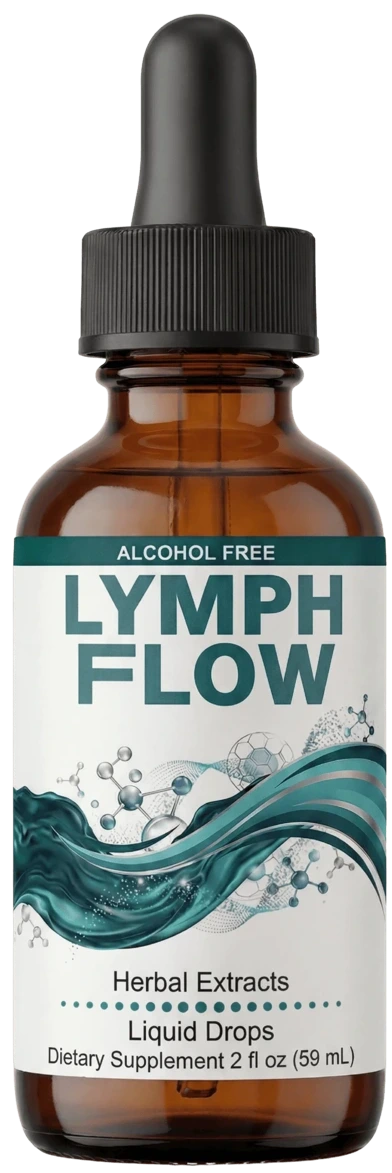
Does Lymph Flow work? This page evaluates the seller’s benefits against the inspected human evidence, keeping venous ingredient research separate from finished-formula outcomes. The Lymph Flow review owns the overall purchase decision. Here, the central question is whether the preparation, population and measured outcome actually match the advertised claim.
| Seller claim | Relevant inspected evidence | Match to Lymph Flow | Conclusion |
|---|---|---|---|
| Heavy-leg comfort | Horse chestnut and Centella research in venous insufficiency. Pittler & Ernst (2012) [PMID: 23152216] [1] Pointel et al. (1987) [PMID: 3544968] [2] | Different preparations and no verified blend equivalence. | A limited ingredient rationale, not demonstrated product relief. |
| Lymphatic flow / drainage | No matching finished-formula trial identified in the dated brand search. | A venous endpoint is not a lymphatic-flow measurement. | Product-specific benefit remains unestablished in the inspected evidence. |
| Facial puffiness / bloating | The cited venous studies do not test these advertised product outcomes. | Different symptoms and potentially different causes. | A reliable expected benefit cannot be assigned. |
| Brain fog / skin bounce | No applicable finished-mixture outcome study identified. | Biological stories and testimonials do not close the gap. | Treat these as seller claims, not expected results. |
| 2–3 week response / lasting regeneration | The cited research does not validate that product timeline. | Trial duration is not time-to-response for this blend. | No guaranteed onset or permanence is supported. |
Lymphatic claims are not the same as venous evidence
Lymph Flow’s marketing crosses several different physiological questions. Heavy legs, facial puffiness, abdominal bloating and cognitive complaints are not one diagnosis, and venous insufficiency is not synonymous with lymphedema. A plausible anti-inflammatory or vascular mechanism cannot establish that this mixture improves each advertised outcome in the intended buyer.
The relevant ingredient reviews examine chronic venous insufficiency, where leg heaviness and swelling may be measured. Moving from those studies to “lymphatic regeneration” requires direct evidence of the claimed process and meaningful patient outcomes. The inspected research does not supply that bridge for Lymph Flow. Pittler & Ernst (2012) [PMID: 23152216] [1] Chong & Aziz (2013) [PMID: 23533507] [3]
- “Drainage” is a marketing description unless the measurement and patient benefit are specified.
- A change in one swelling measure does not establish improved brain function or skin elasticity.
- Persistent symptoms should not be self-diagnosed from a sales-page checklist.
What the finished-product search actually found
The documented search identified no trial matching the reviewed Lymph Flow formula. PubMed queries included seller-domain and branded supplement variants; a registry search returned 28 records whose interventions were reviewed. None matched this commercial mixture. This is a bounded search result, not proof that the product cannot work.
Several registry records involved lymph imaging, exercises or other interventions; a “Lymph-Flow” breast-cancer exercise program was not this supplement. Matching words in a title cannot establish product evidence. We separated those name collisions before drawing the limited search conclusion.
| Human evidence | Design and duration | What it tells a buyer | What it cannot establish |
|---|---|---|---|
| Horse chestnut review | 17 randomized trials; short-term standardized oral extracts, generally 2–16 weeks. Pittler & Ernst (2012) [PMID: 23152216] [1] | Some improvement in venous symptoms warrants careful ingredient-level consideration. | The effect of Lymph Flow’s unspecified horse chestnut amount within a mixture. |
| Pointel Centella trial | 94 participants; 60 or 120 mg/day titrated extract; two months. Pointel et al. (1987) [PMID: 3544968] [2] | A defined extract, dose and clinical population can be investigated. | Equivalent concentration, absorption or effect from this liquid. |
| Centella systematic review | Eight trials; reporting and bias limitations. Chong & Aziz (2013) [PMID: 23533507] [3] | Favorable findings require qualification. | A strong certainty rating or broad lymphatic/cognitive benefit claim. |
No full finished-formula paper was inspected because no matching record was identified in these searches. That result differs from the ingredient papers, whose inspected levels were PubMed abstracts, a Cochrane summary and the full Centella review.
Can you expect a result in two or three weeks?
The seller’s two-to-three-week expectation is not a validated Lymph Flow response curve. A study lasting two months does not reveal when this different blend would work, or whether it would work at all. Changes in symptoms also require consideration of normal variation, activity, medications and other care.
The product’s long-term or permanent-result language is not supported by the cited ingredient trials. Neither a short testimonial nor an instruction to continue for six months supplies controlled follow-up for this mixture. Avoid treating a larger purchase as necessary to “complete” a proven biological phase.
- Define the symptom and its likely cause with a qualified clinician before evaluating any intervention.
- Record other changes in activity, medicines and treatment rather than attributing every improvement to the supplement.
- Do not wait for an advertised timeline when swelling has urgent features.
What could change the interpretation?
The most consequential Lymph Flow response factors are presently specification and diagnosis questions. A complete label could reveal extract strengths or additional actives that alter applicability and safety. An accurate explanation of the buyer’s swelling could change which evidence matters, while a matched product trial would be more informative than another testimonial.
- A readable current panel is needed to match form, concentration and serving amount.
- The buyer’s condition must resemble the trial population before even ingredient-level extrapolation is considered.
- A new product study should be assessed for comparator, duration, adverse events, funding and clinically meaningful effects—not merely whether it is indexed.
The ingredient assessment owns formulation questions; the safety assessment owns urgent symptoms and suitability.
Lymph Flow effectiveness FAQs
Confidence in Lymph Flow should track how directly the evidence matches the claim. The inspected sources are more informative about selected standardized extracts than this finished formula. These questions clarify why plausible mechanisms, trial durations and positive anecdotes cannot be combined into an unsupported product-level efficacy conclusion.
Does the absence of a matching trial prove Lymph Flow is ineffective?
No. The documented search did not identify a matching trial in the sources and variants assessed. That limits support for benefit claims but does not prove that no person could improve or that no study could exist elsewhere. Ingredient evidence remains a separate, qualified question.
Why do the horse chestnut studies not prove the blend works?
Those trials used standardized preparations in people with chronic venous insufficiency, often as single-ingredient treatment. Lymph Flow is a multi-ingredient liquid with unverified individual amounts and extract specifications. Differences in preparation, population and outcome prevent treating the trial result as product proof.
Can testimonials establish a two-week timeline?
A seller-selected account cannot separate product effects from other care, natural symptom changes or selection bias. The inspected testimonials also lack an independently verified representative denominator. They do not establish how quickly a typical Lymph Flow buyer will respond or whether a response will occur.
Is lymphatic regeneration an established result?
The inspected ingredient trials do not demonstrate that Lymph Flow regenerates the lymphatic system. Such a claim would require defined measurements and applicable finished-product evidence, not simply a physiological story. This assessment therefore does not endorse permanent repair, a required regeneration phase or a guaranteed result.
What evidence would most improve confidence?
A readable formula and a well-designed trial of that same finished product would be more informative than unrelated ingredient citations. Useful evidence would identify the population, comparator, dose, duration, meaningful outcomes, adverse events and funding, with effect sizes and uncertainty reported transparently.