
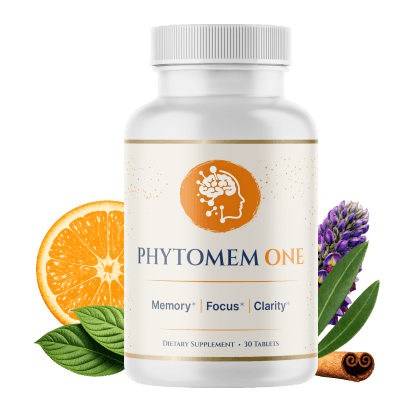
Does Phytomem One work for memory or brain fog?
We did not identify a clinical trial of the exact Phytomem One formula establishing improved everyday memory, brain fog or independent functioning.
The search included product-name variants, clinical-study questions and public research results. This is a focused evidence review, not a systematic review or proof that an unlocated study cannot exist. If the seller supplies a finished-product trial, the study must match the current formula, serving, population and claimed outcome before it changes this assessment.
For now, a reader cannot reliably estimate the probability or size of benefit from the materials reviewed. A testimonial describing clearer thinking is different from a blinded comparison. Changes in sleep, stress, other treatments or expectations can coincide with taking a supplement and complicate attribution.
“Brain fog” also describes a symptom experience rather than one diagnosis. An advertised brain-energy mechanism should not be assumed to identify the cause of an individual’s difficulty. Our Brain & Memory Guide explains how symptom patterns and daily functioning change the next step.
Does the microplastic research prove the advertised mechanism?
No. Research finding microplastics in brain tissue does not show that Phytomem One removes them or reverses their effects.
The 2025 Nature Medicine study of human brain tissue examined samples from deceased people. It reported particle accumulation and differences between sample groups, while explicitly limiting causal conclusions. It was not a supplement trial and did not test this product.
There are two separate evidentiary gaps: establishing what particle accumulation causes, and establishing that the marketed formula changes exposure, tissue levels or clinical outcomes. The study does not bridge either gap for Phytomem One. Its findings also do not substantiate the affiliate banner’s claim that drinking water speeds memory loss by 50%.
Does “Type 3 Diabetes” establish what this supplement treats?
The seller’s phrase does not establish a diagnosis, treatment indication or clinical benefit for Phytomem One.
Research into insulin signaling and brain function cannot be converted into a conclusion that a botanical blend restores someone’s brain fuel supply. Evidence that an ingredient changes blood glucose is also not evidence that it improves memory. Do not use this marketing terminology to self-diagnose or change diabetes treatment.
How long would results take?
A reliable Phytomem One time-to-results estimate was not established by the evidence reviewed.
An ingredient trial lasting weeks or months does not supply a response schedule for an unmatched blend. The 60-day refund period is a commercial deadline, not an efficacy timeline. If a clinician agrees a supplement is appropriate, define the relevant goal and follow-up plan without treating daily fluctuations as proof of recovery.
What do the human ingredient studies actually measure?
The relevant studies measure different outcomes in different participants; neither verifies the current Phytomem One blend or brain-particle removal.
| Evidence | Measured result | What a memory buyer can conclude |
|---|---|---|
| Saffron randomized trial, 2010 | A small 16-week study in mild-to-moderate Alzheimer's disease reported better cognitive/clinical scale outcomes than placebo and called for larger confirmation. | A research signal for that saffron preparation, not a demonstrated response to Phytomem One in adults with ordinary forgetfulness. |
| Moro orange extract trial, 2022 | The six-month trial in overweight adults examined weight and body composition alongside diet and exercise. | A favorable weight-management finding does not establish improved memory, repaired neurons or removal of microplastics. |
The ingredients page compares preparation and dose information. This page evaluates the outcomes: an authentic paper can support one narrow conclusion while leaving the seller's broader claim unanswered. The unknown formula amounts also prevent a reliable match to either intervention.
Which claims would require different kinds of evidence?
Memory improvement, brain-particle removal and glucose-related effects are separate claims; a favorable result for one does not establish the others.
| Claim | Relevant evidence needed | Why the current source does not settle it |
|---|---|---|
| Better everyday recall | Trial of the exact formulation with suitable participants, comparator and meaningful memory outcomes. | No matched finished-product trial was identified in this scoped search. |
| Removal of brain microplastics | A validated intervention study measuring relevant tissue or exposure changes and clinical implications. | Human tissue observations are not a removal trial. |
| Restored cognitive function through glucose metabolism | Clinical outcomes alongside appropriate mechanistic measurements in the intended users. | A metabolic finding elsewhere does not show this blend restores memory. |
| Enhanced absorption of every other ingredient | Combination-specific pharmacokinetic evidence for the marketed preparations. | The seller's broad bioavailability assertion was not established by the reviewed weight-management study. |
For example, lower body weight would not establish better recall unless the study also tested a relevant memory outcome. Ask for the result that matches the claim you are considering.
Check the exact preparation, participants, prespecified outcomes and comparison before relying on a study described as clinical proof.
For a study supplied later, record the label/version and daily serving used. Then ask whether the participants resemble the intended buyer: adults with occasional distraction, diagnosed cognitive impairment and people with metabolic conditions are different populations. Check whether memory was the primary outcome rather than one of many selectively favorable measures.
Allocation, blinding, sample size, withdrawals, adverse-event reporting and funding affect interpretation. A favorable p-value does not by itself describe the size or everyday usefulness of the result. A registered protocol shows that research was planned; it is not a completed positive result.
The ingredient transparency review explains why quantities and preparation specifications are needed for a meaningful match. The safety page covers a different decision: plausible benefit cannot substitute for suitability and interaction review.
What would count as a useful personal outcome?
A useful outcome relates to an actual daily task, but an individual's change still cannot establish that the supplement caused it.
Examples include following written instructions or reliably acting on appointment reminders. Choose a task that matters, record the support being used and avoid changing several products simultaneously. Better sleep, reduced workload or a calendar can affect the same task, so attribution remains uncertain without a controlled comparison.
Do not repeatedly test a relative or use a self-made score to diagnose disease. A change in safe driving, cooking, medicine management or navigation warrants assessment. The Brain & Memory Guide puts those functional concerns in context.
Evidence questions
The following distinctions help prevent ingredient or mechanism results being mistaken for product proof.
Does failure to locate a trial prove the formula cannot work?
No. It limits the strength of a positive recommendation; it does not establish ineffectiveness or prove that no unlocated research exists.
Does a customer feeling clearer establish brain repair?
No. A reported experience is not a measurement of repaired neurons, removed particles or reversal of cognitive disease.
Does a 60-day guarantee establish an expected response time?
No. It is a purchasing condition and should not be interpreted as a scientifically validated treatment duration.
Effectiveness decision
The available materials support cautious investigation of individual ingredients, but do not establish the advertised finished-product outcomes.
Do not choose Phytomem One on an assumption of verified microplastic removal or dementia reversal. For the overall buyer assessment and commercial terms, return to the main review.
The review separates finished-formula evidence, ingredient trial outcomes and human tissue observations. Selected abstracts and source pages were examined; this is not a systematic review, and failure to locate a trial is not proof that none exists.
Biraj Health Care is FitnessLifeMag's editorial brand. AI assisted this document review; no hands-on product test or independent clinician review was performed.
Read our Methodology, Sources Policy and Affiliate Disclosure. Scientific links near each claim identify its evidence source.