
Kerassentials Side Effects: 17 Ingredients, 4 Uses Daily
Educational information, not medical advice. Some links earn a commission at no extra cost to you. Read the affiliate disclosure.
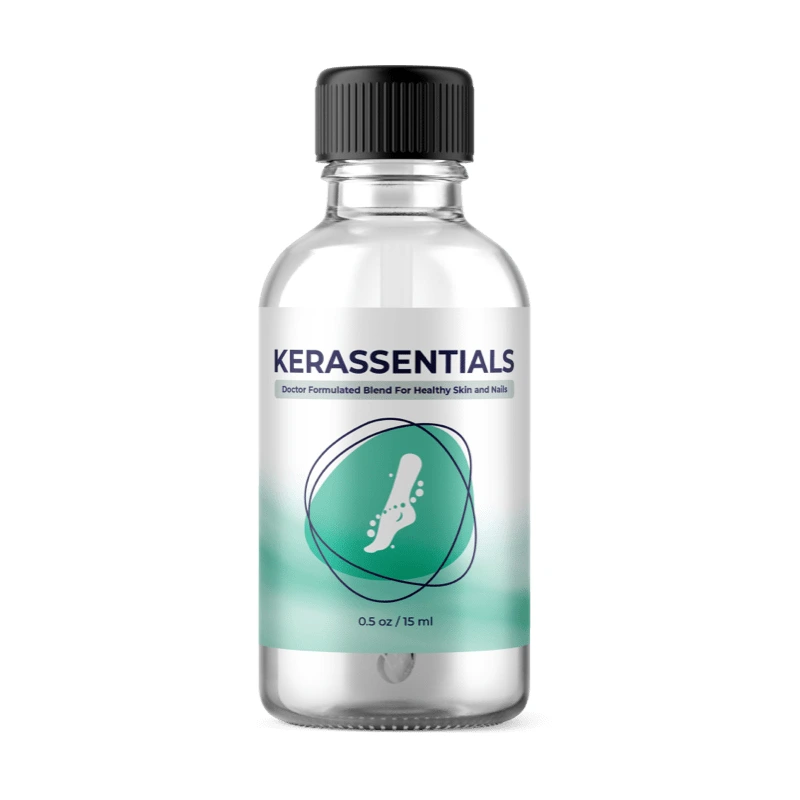
Kerassentials is applied externally to nails and surrounding skin. This article focuses on irritation, allergy, accidental ingestion and situations where self-treatment can delay appropriate care. It does not assume that risks from swallowing supplements apply to a topical oil. The main Kerassentials review holds the overall product assessment and buying information. Official label [1]
| Issue | Relevant source or label finding | What is established | Sensible next step |
|---|---|---|---|
| Redness or irritation | The label says to stop if irritation occurs; NCCIH describes reactions to topical tea tree. Official label [1] NCCIH (2025) [2] | A reaction is possible, but no Kerassentials-specific event rate was identified. | Stop the suspected product and obtain advice if symptoms are significant or persistent. |
| Allergy history | Sweet-almond and walnut oils are named among 17 ingredients. Official label [1] | The label identifies exposures, not an individualized allergy assessment. | Discuss the full formula with the professional managing the allergy before use. |
| Swallowing / eye exposure | The artwork specifies external use and avoiding eyes; tea-tree ingestion can be serious. Official label [1] NCCIH (2025) [2] | An external-use oil is not an oral remedy. | Keep it away from children and obtain urgent poison-service or medical advice after ingestion. |
| Other topicals | Most oil concentrations are undisclosed. Official label [1] | No formula-specific compatibility study was established in this audit. | Ask before layering it with prescription nail treatments or other irritating products. |
| High-risk feet | AAD tailors treatment to medical conditions, medicines and disease extent. AAD (2025) [3] | A generic application direction does not replace a foot-care plan. | Seek assessment for diabetes-related foot concerns, impaired circulation, wounds or pain. |
| Pregnancy / breastfeeding | NCCIH discusses topical tea tree, not this complete mixture. NCCIH (2025) [2] | Ingredient-level reassurance is not a product-specific pregnancy study. | Review the exact formula and the need for treatment with the relevant clinician. |
| Systemic interaction claims | No Kerassentials pharmacokinetic or interaction study was identified in exact-brand searches. PubMed brand search [4] ClinicalTrials.gov brand search [5] | Neither an interaction-free claim nor an oral-supplement risk profile is justified. | Bring the bottle and complete medicine list to the pharmacist or treating clinician. |
Skin reactions: what to watch for
For an external-use oil, the relevant short-term problems are local redness, burning, itching or worsening irritation, not an assumed oral-supplement digestive profile. The label instructs discontinuation for irritation. Tea-tree guidance supports that concern, but it does not establish the frequency or severity of reactions to this specific 17-ingredient blend.
NCCIH notes that topical tea-tree products are tolerated by many people, while some develop redness or irritation. Reactions may be more likely when the product is old or has been exposed to heat, light or air. That makes storage and bottle condition relevant, without proving a stability failure in any Kerassentials lot. NCCIH (2025) [2]
If skin becomes irritated, stop the suspected product instead of increasing exposure. Burning is not evidence of fungal killing. Official label [1]
- Seek prompt help for severe swelling, blistering, a spreading painful rash or other concerning symptoms. Trouble breathing or a severe generalized allergic reaction requires emergency care. A new reaction is a reason to review exposure, not a reason to keep applying an oil until a sales-page timeline has elapsed.
Why oral stimulant, laxative and liver screens do not transfer
This bottle is not an ingested stimulant or laxative supplement, so capsule-style safety assumptions would be inappropriate. No product-specific liver-safety conclusion can be drawn from its label. The immediate documented route warning is external use only; swallowing tea-tree oil can cause serious neurological symptoms and needs urgent medical or poison-service advice.
The seller’s “no stimulants” wording does not establish the absence of every risk. Skin reactions, allergy and accidental ingestion are different safety questions. Do not interpret marketing language about natural oils as permission to swallow the product, use it around the eyes or apply it to damaged tissue. Seller presentation [6] Official label [1] NCCIH (2025) [2]
LiverTox is relevant when comparing oral terbinafine, a prescription alternative, because that medicine has a recognized rare liver-injury risk. That warning belongs to the drug and its oral route; it should not be copied into the Kerassentials side-effect list as though it had been measured for the oil. NIH LiverTox [7]
Medicines, supplements and other nail products
No clinical interaction study of the finished Kerassentials formula was identified in the exact-brand searches. Its external-use route does not justify a blanket interaction-free claim. The practical review should include medicines, medical conditions and every product used on the same nail or skin, especially when treatment is already prescribed.
NCCIH advises discussing herbal-product use with health professionals when medicines are involved. That general precaution does not establish a specific interaction between this oil and a blood thinner, diabetes drug or antifungal. Such pairings should not be invented from an ingredient list without relevant evidence. NCCIH (2025) [2]
Bring a photograph of all 17 ingredients, the directions, your current prescriptions and any other foot products. Tell the clinician about previous reactions. Changing application times is not a demonstrated fix for an unknown compatibility question, and stopping a prescribed medicine to try the oil should be a clinical decision, not an affiliate suggestion.
Who should obtain advice before applying the oil?
A concerning nail or a high-risk foot deserves assessment before a new cosmetic oil. Diabetes, impaired circulation, wounds, significant pain or spreading inflammation can change the consequences of delayed care. Pregnancy, breastfeeding, childhood and important allergy histories also require a more specific assessment than an adult seller FAQ can supply.
The label’s filing advice is not permission to scrape deeply, cut attached tissue or debride a nail at home. AAD describes debridement and related procedures as clinical interventions. Readers with reduced sensation or circulation should be particularly cautious about causing an unnoticed injury and should follow their established foot-care plan. Official label [1] AAD (2025) [3]
The artwork says to keep the bottle away from children. If ingestion occurs, obtain immediate professional advice; do not improvise an oral “detox” or assume a small volume is harmless. If the seal is damaged or the product has deteriorated, do not treat that bottle as a suitable trial. Official label [1] NCCIH (2025) [2]
A better safety checklist for a topical product
A useful safety review starts with the correct route, a complete label and a reason for using the product. It then considers skin condition, allergy history, other treatments and a clear plan for adverse symptoms. Four daily applications on a seller label are not proof that the schedule is suitable for everyone.
Before use, confirm that the current bottle’s ingredient list and warnings match what you reviewed. Keep the container tightly closed and stored as directed. Do not use a retailer’s “natural” badge as a replacement for a readable caution label, and do not assume that a favorable testimonial included safety monitoring. Official label [1]
For context, see the ingredient-label audit and clinical-evidence analysis, along with the Research Guides, Ingredients hub and editorial methodology.
Questions about Kerassentials safety
These answers focus on application reactions, exposure errors and higher-risk situations. The product’s four-times-daily direction and 17-entry list do not establish universal suitability. Keep ingredient-level safety guidance separate from evidence about the finished blend, and use a clinician’s plan when a nail problem overlaps with a medical or foot-care concern.
Should burning be interpreted as the oil working?
No. Burning or worsening irritation is not evidence of fungal killing. The manufacturer label says to discontinue use if irritation occurs. A reaction should be assessed on its own terms rather than reframed as a beneficial sign or a reason to increase the amount applied. Official label [1]
Can this oil be swallowed for a stronger effect?
No. The label specifies external use only. Tea-tree oil can cause serious symptoms when swallowed, including confusion and difficulty with movement. If ingestion occurs, contact a poison service or seek urgent medical advice rather than trying to manage it with an improvised home remedy. Official label [1] NCCIH (2025) [2]
Is tea-tree pregnancy guidance enough to clear this mixture?
No. A source discussing topical tea tree does not evaluate every component of a 17-ingredient commercial oil. Most concentrations are undisclosed, and the finished mixture lacks a product-specific pregnancy study in the reviewed records. Discuss both the need for treatment and the exact formula with the relevant clinician. NCCIH (2025) [2] Official label [1]
Can I file a painful thick nail as the label suggests?
Do not use a generic seller instruction to override a clinical foot-care plan. AAD describes professional filing, trimming and debridement in selected treatment settings. Pain, wounds, diabetes-related concerns or poor circulation are reasons to seek advice rather than aggressively filing or cutting the nail yourself. Official label [1] AAD (2025) [3]
Does avoiding oral pills make the oil risk-free?
No. Topical and oral treatments have different risks, not a universal safe-versus-dangerous split. Local irritation, allergy and accidental ingestion remain relevant to oils. The efficacy and safety trade-offs should be discussed for the actual diagnosis rather than assuming a topical blend is an equivalent replacement for a prescription. NCCIH (2025) [2] AAD (2025) [3]
Explore the complete Kerassentials audit series
Use the series to separate the buying decision from its supporting questions. The main review holds package prices and the overall evaluation. Four focused articles examine the topical label, clinical relevance, skin safety and documented purchase friction, without treating seller claims as established treatment results.
Browse the broader product review library. That site category is navigation only; Kerassentials is reviewed here as a topical oil, not an ingestible dietary supplement.
References & seller records
Each numbered source supports the claim placed beside its citation. Manufacturer records document the offer, not independent proof of efficacy. Clinical sources concern their named preparations and populations; their results cannot be transferred to Kerassentials merely because an ingredient name overlaps with the product label.
- Manufacturer ingredient label and references
- NCCIH (2025). Tea Tree Oil: Usefulness and Safety. Updated April 2025.
- American Academy of Dermatology (2025). Nail fungus: Diagnosis and treatment. Updated June 26, 2025.
- PubMed exact-brand search: Kerassentials; zero indexed records on check date.
- ClinicalTrials.gov exact-brand search API: Kerassentials; totalCount 0 on check date.
- Manufacturer sales presentation
- NIH LiverTox. Terbinafine: clinical overview and hepatotoxicity.