
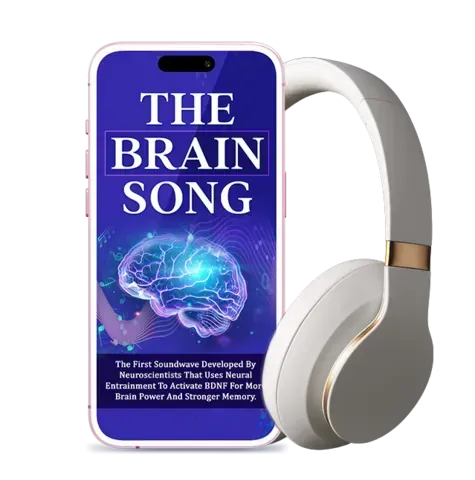
Does The Brain Song have side effects?
The Brain Song is a digital audio rather than an ingestible supplement, so it does not carry ingredient interactions in the usual sense. The realistic concerns are listening-related: excessive volume, ear fatigue, headache, dizziness, agitation, distraction, or worsening tinnitus in a sensitive listener.
No independent safety trial of the finished commercial track was identified. That means nobody can honestly promise that every listener will tolerate it. Risk depends not only on the file, but also on playback volume, headphones, session length, background noise, hearing health, migraine or neurological sensitivity, and what the listener is doing at the time.
Possible The Brain Song side effects and discomforts
Published binaural-beat studies often describe the method as non-invasive, but study protocols and adverse-event reporting vary. A controlled research session is also not automatically equivalent to an undisclosed commercial recording. The following are sensible possibilities to monitor, not a claim that the product causes each effect.
| Possible experience | What may contribute | Practical response |
|---|---|---|
| Headache or pressure | High volume, tight headphones, sound sensitivity, fatigue, or migraine susceptibility | Stop the session; retry only if symptoms fully settle and at lower volume |
| Dizziness or nausea | Individual response to repetitive sound, motion sensitivity, anxiety, or an unrelated condition | Remove headphones, sit safely, and do not drive |
| Ear discomfort or ringing | Volume or cumulative sound exposure, poorly fitting headphones, existing tinnitus | Stop immediately and allow quiet recovery; seek care if persistent |
| Agitation or unease | Sound preference, expectation, repetitive tones, or overstimulation | Do not force completion; choose silence or ordinary audio |
| Drowsiness or reduced awareness | Relaxation, fatigue, or the listening environment | Never use while driving, cycling, or operating machinery |
| No noticeable effect | The method may not match the listener or claimed mechanism | Do not raise the volume to “make it work” |
Feeling something unusual is not evidence of “brainwave activation,” detoxification, or BDNF change. A symptom is a reason to pause and assess safety—not proof that the program is working.
Can headphones or volume damage hearing?
Yes, any audio can contribute to hearing injury if it is loud enough or used long enough. The World Health Organization explains that both sound level and exposure time determine risk. Its safe-listening guidance uses 80 dB for up to 40 hours per week as an adult reference; at 90 dB, the comparable weekly time falls to about four hours. Most users cannot accurately estimate headphone output in decibels, so these figures are guardrails rather than a way to certify a particular setup.
WHO safe-listening guidance recommends keeping volume down, limiting exposure, and using well-fitted headphones. Noise-cancelling headphones may reduce the urge to overpower background noise, but they do not make loud playback harmless.
Signs that the volume may be too high
- You need to raise your voice after removing the headphones.
- Your ears feel full, painful, or unusually sensitive.
- You notice muffled hearing or ringing after the session.
- You keep increasing volume because the effect feels less noticeable.
- Someone nearby can clearly hear sound leaking from the headphones.
Still evaluating The Brain Song?
Check the current offer, delivered contents, billing type, and refund terms before paying. A refund promise does not replace safe listening.
Verify Current Price and TermsWho should be especially cautious?
Product-specific screening instructions are not clearly established by an independent trial. Extra caution is reasonable when a person already has symptoms or a condition that could make repetitive audio, headphones, or delayed medical assessment more consequential.
Ask a qualified clinician first
- A seizure disorder or unexplained episodes of altered awareness
- Recurring migraine triggered by sound
- Persistent tinnitus, hyperacusis, hearing loss, ear pain, or recent ear surgery
- Vertigo, balance problems, or unexplained dizziness
- A neurological or psychiatric condition that is currently unstable
- Symptoms being evaluated by a medical professional
Avoid unsafe situations
- Driving, cycling, crossing traffic, or operating machinery
- Bathing, swimming, climbing, or any setting where reduced awareness could cause injury
- Using loud playback to mask a noisy workplace
- Sharing headphones without cleaning them
- Using damaged cables or equipment
- Giving the track to a child without adult and clinical judgment
Evidence about ordinary auditory beats should not be confused with medical clearance for people with epilepsy or other neurological conditions. The conservative choice is to obtain individualized advice rather than relying on a marketing FAQ or a generalized online warning.
When should you stop listening?
Stop immediately if you develop ear pain, ringing, muffled hearing, dizziness, nausea, a new headache, visual disturbance, panic, confusion, unusual movements, or any symptom that feels concerning. Move to a safe, quiet environment and do not resume simply to complete the advertised session.
| Situation | Recommended action |
|---|---|
| Mild discomfort that resolves after stopping | Do not continue that day. Reassess volume, headphones, timing, and whether another attempt is worthwhile. |
| Repeated symptom on more than one attempt | Discontinue the audio; repeated exposure is not necessary to prove intolerance. |
| Persistent ringing, muffled hearing, ear pain, or balance change | Seek appropriate medical or hearing-care advice. |
| Loss of awareness, seizure-like activity, severe sudden headache, weakness, chest pain, or breathing difficulty | Seek urgent medical help according to local emergency guidance. |
Do not interpret worsening symptoms as an adjustment phase. “Push through it” is not a responsible safety instruction for an unproven consumer audio.
How to test The Brain Song more safely
- Choose a safe setting. Sit somewhere quiet where reduced attention will not put you or another person at risk.
- Inspect the equipment. Use comfortable, functioning headphones if the instructions require stereo separation.
- Start low. Set the volume below your usual listening level and never increase it to chase a stronger sensation.
- Use the stated session only. Do not loop the track or stack it with other brainwave recordings during an initial test.
- Track one response. Note comfort, headache, ringing, dizziness, agitation, and the practical outcome you expected.
- Stop when needed. Completion is not a safety goal. Stop at the first concerning symptom.
- Keep expectations separate. Relaxation or focus does not confirm gamma entrainment, BDNF change, or medical benefit.
If you remain comfortable but notice no useful benefit, increasing exposure or volume is not an evidence-based solution. Review the wider effectiveness evidence before extending the experiment.
Does it interact with medications or supplements?
Because The Brain Song is described as digital audio, it is not expected to create the chemical drug–ingredient interactions associated with capsules or powders. That narrow point does not mean it is suitable in every medical context.
Medication may affect alertness, balance, migraine threshold, seizure control, anxiety, or sleepiness. Do not change a prescription, delay treatment, or substitute this audio for care. If you are unsure whether listening fits your condition or treatment plan, ask the clinician or pharmacist who knows your history.
What is known—and not known—about product safety?
| Safety question | Current conclusion |
|---|---|
| Is it an ingestible formula? | No; it is marketed as digital audio. |
| Is listening automatically risk-free? | No. Volume, exposure and personal sensitivity still matter. |
| Was a finished-product adverse-event trial identified? | No independent product-specific safety trial was identified. |
| Are exact acoustic specifications publicly clear? | Not enough detail was identified to match the delivered track confidently to a specific research protocol. |
| Can broad binaural-beat research prove this track is safe for everyone? | No. Study populations, frequencies, controls and reporting differ. |
This is why our verdict is practical rather than absolute: lower-risk adults may choose a cautious, low-volume trial, but universal safety claims would go beyond the available evidence.
The Brain Song safety FAQ
Can The Brain Song cause headaches?
A sensitive listener may experience headache or discomfort during repetitive audio, although that does not prove the file is the sole cause. Stop listening and do not increase the volume.
Can it cause tinnitus?
Any overly loud or prolonged headphone use can contribute to temporary ringing or hearing injury. Stop if ringing, muffled hearing, or ear pain occurs, and seek care if symptoms persist.
Is The Brain Song safe for epilepsy?
No product-specific evidence establishes safety for people with epilepsy. A person with seizures or unexplained altered awareness should obtain individualized medical advice before using brainwave-oriented audio.
Can I listen while driving?
No. Do not use it while driving, cycling, operating machinery, or in any situation requiring full environmental awareness.
Should I use a louder volume for better results?
No. Louder playback increases sound exposure and does not establish stronger brainwave effects.
Is dizziness a sign that it is working?
No. Dizziness is a stopping signal, not evidence of effectiveness.
Method, sources, and disclosures
This guide separates documented product format from general audio-safety evidence and cautious clinical boundaries. We did not buy the product, inspect its waveform, test headphone output, run a listening trial, or perform a product-specific adverse-event study.
Key external sources include the WHO safe-listening guidance and the 2023 systematic review of binaural-beat entrainment research. See our Editorial Methodology, Sources Policy, and Affiliate Disclosure.
Affiliate disclosure: FitnessLifeMag may earn a commission through marked purchase links at no extra cost to you.
Medical disclaimer: Educational information only; not diagnosis, treatment, or personalized medical advice.