
Evidence-first research
Balmorex Complaints & Reviews: What Customers Are Saying
Balmorex customer reviews can offer useful insight into real-world experiences—but they need to be interpreted carefully. Here’s what complaints, testimonials, and customer feedback can actually tell you about the product.
Evidence Reviewed
Updated September 01, 2026
Sources Cited
Affiliate Transparent
Affiliate disclosure: some links on this page are affiliate links. We may earn a commission at no additional cost to you.
When researching a topical product like Balmorex Pro, customer reviews are often one of the first things people look for.
A few positive testimonials can make a product look highly promising. On the other hand, a negative complaint can immediately raise questions about whether the product works, whether it is worth the money, or whether something is wrong with the company.
The reality is more nuanced.
Customer feedback can provide useful information about things such as application, personal experience, ordering, expectations, and satisfaction. But reviews alone cannot establish whether a product is clinically effective or medically appropriate for everyone.
That distinction is especially important with Balmorex because the manufacturer’s website contains customer testimonials, while strong independent clinical evidence on the complete finished formula is more limited.
For the broader evidence-based assessment of the product, you can also read our Balmorex Reviews 2026: Ingredients, Side Effects & Results overview.
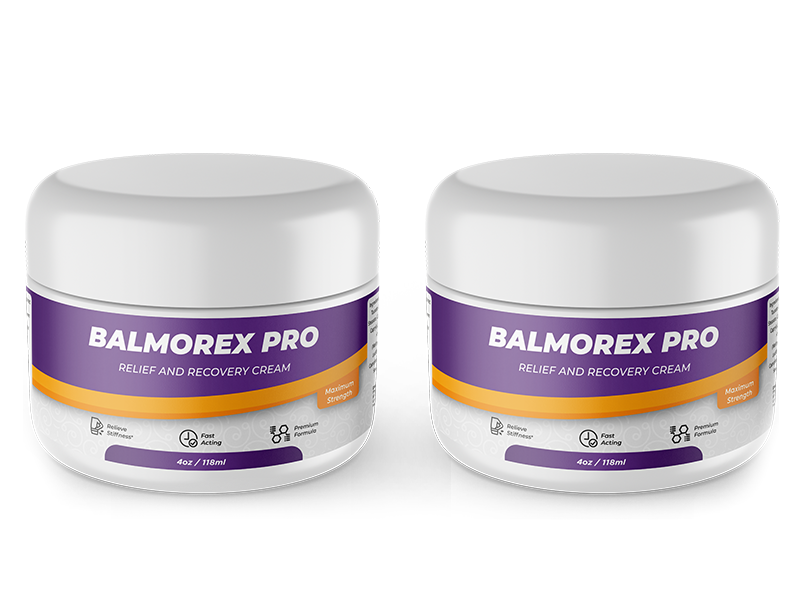
Balmorex Pro Relief & Recovery Cream
Product image is displayed for identification. Seller claims and clinical evidence are evaluated separately throughout this site.
Balmorex Complaints & Reviews at a Glance
Balmorex reviews appear to include both positive experiences and potential areas of dissatisfaction.
Some customers may report that they like the cream’s texture, application, convenience, or perceived relief. Others may find that the product did not meet their expectations or that the results were not as noticeable as they hoped.
Neither type of review should automatically be treated as definitive evidence.
A positive testimonial does not prove that Balmorex will work for everyone. Likewise, one negative experience does not prove that the product is ineffective or fraudulent.
The most useful approach is to look for patterns, specificity, independent confirmation, and the type of claim being made.
For example, a customer saying that they liked how easily the cream applied is a straightforward personal observation. A customer claiming that the product permanently fixed a medical condition is a much stronger claim that requires substantially stronger evidence.
What Are Customers Saying About Balmorex?
Positive Experiences Reported by Customers
The manufacturer’s website presents testimonials from customers who describe positive experiences with Balmorex.
These types of testimonials commonly focus on perceived benefits such as feeling more comfortable, enjoying the convenience of a topical application, or being satisfied with their overall experience using the product.
Such reports can be interesting because they show how individual customers describe their experiences in everyday use.
However, there is an important limitation: a testimonial represents the experience of an individual person, not a controlled experiment.
A person’s improvement may be influenced by many factors, including the natural course of their discomfort, activity levels, other treatments, expectations, or simply individual variation.
Therefore, positive customer experiences are best treated as anecdotal evidence rather than proof of effectiveness.
Negative Experiences and Complaints
Negative feedback can be equally informative, particularly when it contains specific details.
For example, a customer may feel that the product did not provide the expected level of relief, that results were not noticeable, or that the purchase did not provide enough value for the price.
Some complaints may also concern the ordering or customer-service experience rather than the formula itself.
This distinction matters.
A complaint about shipping is not evidence that the formula does not work. A complaint about price does not establish that the product is unsafe. And a report of disappointing results does not necessarily mean that every customer will have the same experience.
The value of a complaint depends heavily on what exactly is being reported and whether the claim can be independently verified.
Common Types of Balmorex Complaints
“It Didn’t Work for Me”
One of the most important types of complaint associated with any topical relief product is simply that the customer did not experience the expected benefit.
This is a legitimate personal experience.
If someone applies a product and does not notice meaningful improvement, their dissatisfaction is real even if another customer reports a positive result.
But one person’s outcome cannot answer the larger question of whether Balmorex works on average.
That requires controlled research comparing the product with an appropriate control or comparison group.
This is why our separate Does Balmorex Work? What the Evidence Actually Shows article evaluates the evidence question independently from customer testimonials.
Results Took Longer Than Expected
Another potential source of dissatisfaction is the difference between customer expectations and actual experience.
People may expect a topical product to produce immediate or dramatic results. If the perceived effect is smaller, slower, or inconsistent, they may consider the product disappointing.
Expectations are particularly important when a product is marketed using language such as fast-acting, powerful, or advanced.
A customer’s review can tell us what they expected and what they experienced. It cannot, by itself, tell us what response should be expected across the general population.
Price and Value Complaints
Price can also influence how customers evaluate a product.
Someone who experiences noticeable relief may consider the purchase worthwhile, while another person with limited results may feel that the same price was too high.
That means value is partly dependent on the outcome the customer believes they received.
The actual package options, pricing structure, guarantee, and refund conditions deserve separate treatment rather than being mixed into a complaints article. Those details are covered in our dedicated Balmorex Price & Refund research.
Skin Sensitivity or Product Tolerance
Some people may also report that a topical product did not agree with their skin.
However, customer comments about irritation should not be treated as a complete safety assessment.
Individual skin reactions can have multiple causes, and a customer report cannot establish causation by itself.
For a more focused discussion of topical safety, precautions, and what to do if irritation occurs, see our Balmorex Side Effects & Safety guide.
How Reliable Are Balmorex Customer Reviews?
Customer reviews can be useful—but their reliability depends on the question you’re trying to answer.
Testimonials Are Not Clinical Evidence
A testimonial generally describes what one person believes happened after using a product.
Clinical research asks a different question.
Researchers attempt to control variables, compare outcomes between groups, use defined measurements, and reduce the influence of expectation and other biases.
A testimonial does none of those things.
For example, if someone says:
“I used Balmorex and felt much better.”
That tells us something about that person’s experience.
It does not tell us:
- Whether the improvement was caused by Balmorex
- Whether the person was also using another treatment
- Whether the improvement would have occurred naturally
- Whether similar results would occur in a larger population
- How the result compares with a placebo or established treatment
This does not make testimonials worthless. It simply means they should be placed in the correct evidence category.
What a Customer Review Can Actually Tell You
Customer feedback can be particularly useful for practical questions.
Reviews may provide insight into:
- How customers describe the application experience
- Whether they found the product convenient
- How the packaging or ordering process felt
- Whether the product matched their expectations
- Whether they personally felt satisfied or dissatisfied
These are legitimate areas where real-world feedback can add context.
What Reviews Cannot Prove
Customer reviews cannot independently establish that Balmorex:
- Is clinically proven
- Works for everyone
- Is superior to established treatments
- Is completely safe
- Treats or cures a medical condition
- Produces a particular percentage of improvement
Those conclusions require stronger evidence than individual testimonials.
Are Balmorex Reviews Independent?
Manufacturer-Hosted Testimonials
One factor worth considering when reading product testimonials is where the testimonial appears.
Testimonials published on a manufacturer’s own sales page are controlled by the seller. That does not automatically make the statements false.
However, they should be understood as seller-published customer feedback, rather than independently collected clinical evidence.
The manufacturer’s page is naturally designed to present the product in a favorable commercial context.
That is different from an independent study in which researchers are not simply selecting testimonials to promote a product.
Independent Reviews vs. Affiliate Content
Another important distinction is between independent consumer feedback and affiliate-published content.
An affiliate website may receive compensation when a reader purchases through its links. That does not automatically mean its analysis is inaccurate, but readers should know about the commercial relationship.
At FitnessLifeMag, we disclose affiliate relationships separately so readers can understand how affiliate links may affect the site’s revenue.
Our approach to evaluating health and wellness products is also explained in our Editorial Methodology, where we distinguish ingredient-level evidence, finished-product evidence, customer feedback, and seller claims.
Transparency about the source of information is part of evaluating the information itself.
Do Balmorex Complaints Suggest a Scam?
A complaint alone is not proof of a scam.
This is one of the most important points when evaluating online products.
Legitimate businesses can receive complaints. Customers can misunderstand instructions, have unrealistic expectations, experience individual differences, dislike the price, or simply decide that a product is not suitable for them.
None of those things automatically establish fraud.
What Would Actually Raise Red Flags?
A stronger concern would arise from evidence such as:
- Misleading or demonstrably false claims
- Hidden charges or unclear billing
- Refund terms that differ substantially from what was advertised
- Failure to provide promised products
- Deliberately deceptive business practices
- Fabricated evidence presented as independent research
- Guarantees that are impossible to substantiate
These issues require evidence beyond a simple customer complaint.
What We Can and Cannot Conclude
Based solely on customer complaints and testimonials, it would be inappropriate to label Balmorex a scam.
At the same time, positive testimonials should not be used as proof that the company or product has been independently validated.
The more useful approach is to evaluate the product’s claims, business information, refund terms, evidence, and transparency separately.
For that specific question, see our detailed Is Balmorex Legit or a Scam? An Honest Investigation.
Balmorex Complaints vs. Customer Satisfaction
It is possible for a product to receive both positive and negative reviews without either side being dishonest.
Why?
Because people are different.
A topical product may produce a noticeable experience for one person and a disappointing experience for another. People also differ in the underlying cause and severity of their discomfort, expectations, application habits, and other treatments they may be using.
There is another issue: review selection bias.
People who have an unusually positive or unusually negative experience may be more motivated to write a review than someone who has an ordinary, uneventful experience.
That means online reviews rarely represent a perfectly random sample of all customers.
For this reason, counting five positive testimonials against three negative complaints does not produce a meaningful “success rate.”
The quality and independence of the evidence matter more than simply counting comments.
How We Evaluate Balmorex Reviews
At FitnessLifeMag, we separate customer feedback from higher levels of evidence.
First, we consider who is making the claim.
A statement from the manufacturer is treated as a seller claim. A customer testimonial is treated as an anecdotal experience. A peer-reviewed clinical trial is treated as a different and generally stronger category of evidence.
Second, we look at what the claim actually says.
A statement about texture or ease of application is different from a statement claiming that a product treats a medical condition.
Third, we look for independent confirmation.
If a marketing claim is supported by independent research on the complete finished formula, that is more meaningful than simply finding research on one ingredient contained in the formula.
Finally, we consider limitations rather than hiding them.
This evidence-first approach is described in greater detail in our site’s Editorial Methodology, which explains how we evaluate product claims, ingredient research, customer feedback, and source quality.
What Balmorex Complaints Can Tell You—and What They Can't
Customer complaints can be valuable when used for the right purpose.
They may help prospective buyers understand what some customers experienced and what kinds of dissatisfaction can occur.
But they cannot establish a universal success or failure rate.
They also cannot replace clinical evidence.
A useful way to think about it is:
Customer reviews tell you what people say happened. Clinical research is designed to investigate whether the product actually caused the outcome.
Both can be informative, but they answer different questions.
This distinction is especially important when researching products marketed for health-related benefits.
Balmorex Complaints & Reviews: Bottom Line
Balmorex customer feedback should be viewed as one piece of the overall evidence picture—not as the final verdict on the product.
Positive testimonials may indicate that some customers were satisfied with their experience. Negative complaints may highlight situations where customers felt the product did not meet their expectations.
Neither category, by itself, proves that Balmorex works or does not work.
The strongest evaluation comes from combining customer feedback with ingredient research, product-specific evidence, safety information, pricing and refund terms, and an examination of the company’s claims.
For the complete product overview, visit our Balmorex Reviews 2026 pillar page, where the major evidence and research areas are brought together in one place.
Our conclusion: customer reviews are worth reading, but they should be interpreted as personal experiences—not clinical proof.
Sources & References
We prioritize primary product information, regulatory sources, peer-reviewed research and recognized clinical guidance. Seller claims are not treated as independent clinical evidence.
Related Research
Ready to Check Balmorex Pro?
Visit the current Balmorex order page to review the latest package pricing, shipping and guarantee terms before ordering.
Editorial owner: Balmorex Reviews Editorial Team · Last reviewed: August 30, 2026
💬 Leave a Comment
Click to rate