
Evidence-first research
Does Balmorex Work? What the Evidence Actually Shows
Does Balmorex Pro Really Work? An Evidence-Based Look at Its Ingredients, Finished-Product Research, Topical Pain Evidence, and Key Limitations
Evidence Reviewed
Updated August 30, 2026
Sources Cited
Affiliate Transparent
Balmorex Pro is marketed as a fast-acting topical for joint, back and muscle discomfort. The question most people actually want answered before buying isn’t “what’s in it” — it’s simpler: does the finished cream, as sold, actually work? This page focuses on that single question. For a breakdown of individual ingredients and their own research, see our full Balmorex Ingredients page — we deliberately keep that detail there so this page can stay focused on formula-level evidence.
Our short answer: several ingredients in Balmorex have some research behind them individually, but we did not find a controlled human trial testing the complete eight-ingredient Balmorex formula itself. That distinction matters more than it sounds, and it’s the core of everything below.
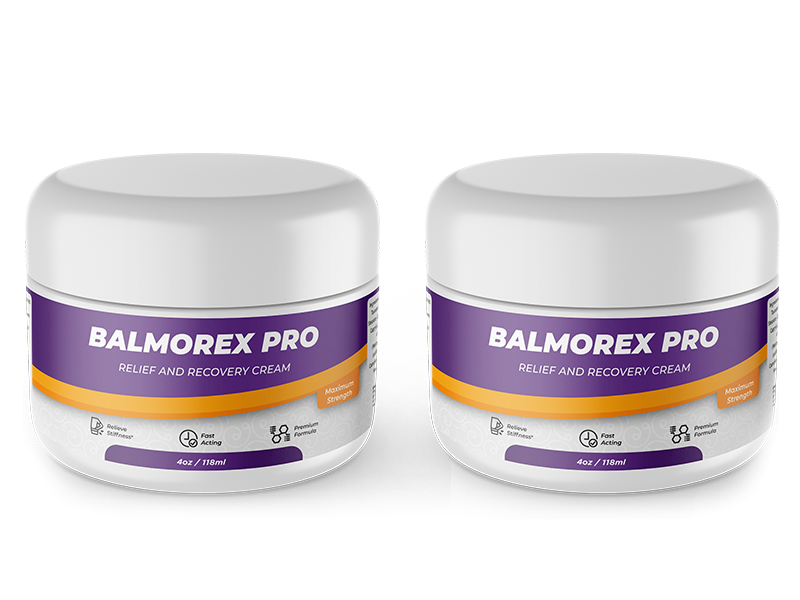
Balmorex Pro Relief & Recovery Cream
Product image is displayed for identification. Seller claims and clinical evidence are evaluated separately throughout this site.
Quick Answer
| Question | Our Finding |
|---|---|
| Has the complete Balmorex formula been clinically tested? | No trial of the finished product was found in the sources we reviewed. |
| Do individual ingredients have supporting research? | Some do — unevenly, and often in different forms (oral vs. topical). |
| Is there a placebo-controlled trial for Balmorex Pro? | Not that we could locate as of this review. |
| Does that mean it definitely doesn't work? | No — it means effectiveness is unproven, not disproven. |
What "Works" Actually Means Here
There are two very different kinds of evidence that get blurred together in most product reviews, and separating them is the whole point of this page.
Ingredient-level evidence asks: has this individual compound — say, Arnica, or MSM — been studied in a lab or clinical setting, in any form, for any related purpose? This is the easier bar to clear, and it’s where most of the “science-backed” marketing language on supplement and topical sites comes from.
Formula-level evidence asks something much stricter: has this specific product, with this specific combination and concentration of ingredients, been tested on real people, ideally against a placebo, to see if it produces a measurable effect? This is the bar that actually determines whether a product “works” in the way most buyers mean the word.
A cream can contain eight ingredients that each have some research behind them individually, without the finished cream itself ever having been tested. That’s not unusual — it’s the norm for multi-ingredient topical products across the industry, not something specific to Balmorex. But it does mean the honest answer to “does it work” has to stay at the level of “plausible, not proven” until formula-specific data exists. We go through each ingredient’s own evidence quality in detail on our Ingredients page; we won’t repeat that breakdown here.
What the Seller Claims
The current Balmorex Pro sales page uses language like “27-in-1,” “fast acting,” and “maximum strength.” These are marketing descriptors, not clinical claims, and it’s worth being precise about what they do and don’t mean.
“27-in-1” refers to the total count of ingredients on the label — including carriers, preservatives and thickeners, not 27 clinically active compounds. “Fast acting” and “maximum strength” are common cosmetic-product phrases that aren’t backed by a disclosed timeframe or dose-response study on the seller’s page. None of this makes the claims false, but none of it functions as evidence either. A seller describing their own product favorably is expected marketing, not an independent finding — the same way a restaurant menu calling a dish “world famous” isn’t a food-critic review.
We did not find the seller’s page linking out to a specific clinical study of the finished cream, which is itself informative: companies that do have trial-backed formulas usually cite them prominently, because it’s a meaningful selling point.
Is There a Clinical Trial on Balmorex Pro Itself?
This is the central question this page exists to answer, so we’ll be direct about our process. We searched standard clinical and research databases (including PubMed) for any published trial — randomized, observational, or otherwise — using the Balmorex Pro product name or its specific eight-ingredient combination as the tested formula. We also checked the seller’s own site and marketing materials for any citation to such a study.
We did not find one. That’s not proof no such study exists anywhere — small, unpublished, or manufacturer-funded studies sometimes exist outside standard databases — but it does mean there’s no publicly available, verifiable formula-level trial for us to point you to, and none that the seller itself references. If that changes, this page will be updated to reflect it.
This is a common situation for topical products in this category, not a red flag unique to Balmorex. Many multi-ingredient creams, balms and rubs on the market share the same evidence gap: real ingredients, no finished-product trial.
What Would Count as Strong Evidence?
It’s worth knowing what the missing piece actually looks like, so “no evidence found” doesn’t feel abstract. Strong evidence for a topical like this would typically involve a randomized controlled trial: one group applies the actual Balmorex formula, a comparable group applies an inactive placebo cream, neither group knows which they’re using, and researchers measure a specific, predefined outcome (like a validated pain scale) over a set period.
This standard exists precisely because subjective outcomes like “pain relief” are highly susceptible to expectation and placebo response — people often report feeling better simply because they expect to, especially with a product they’ve paid for and are actively applying. Without a placebo-controlled design, it’s difficult to separate a real effect from that expectation effect. Topical products face an added complication: even the “inactive” carrier (like shea butter or aloe vera) can produce a genuine cooling, soothing, or moisturizing sensation that feels therapeutic, independent of whether the “active” ingredients are doing anything measurable.
User Reports vs. Clinical Evidence
Individual experiences — “it worked for me,” “I felt relief within days” — are common with products like this, and we’re not dismissing them as meaningless. But personal reports and clinical evidence answer different questions. A user report tells you one person’s outcome, which could reflect a real ingredient effect, a placebo response, the natural course of minor soreness improving on its own, or some combination of all three. A clinical trial is specifically designed to control for those other explanations so the product’s contribution can be isolated.
Neither type of evidence cancels the other out — they’re just not substitutes. We go through what we found when we looked at the pattern of user feedback in detail, including how to separate credible reports from advertorial content, on our Balmorex Complaints & Reviews page.
How Balmorex Compares to Proven Options
It’s useful to see where Balmorex sits relative to a product with a stronger evidence base. Voltaren (diclofenac gel) is an FDA-approved topical NSAID with published randomized trial evidence specifically for osteoarthritis pain — the kind of formula-level, placebo-controlled data that Balmorex currently lacks. That doesn’t automatically make Voltaren “better” for every person or use case, and Balmorex isn’t positioned as a drug or NSAID substitute. But it does mean the two products sit in different evidence categories, and it’s worth knowing that going in. We cover this comparison in more depth on our Balmorex vs Voltaren page.
Bottom Line
Based on what we could verify, Balmorex Pro’s effectiveness claim rests on ingredient plausibility rather than formula-level proof. Several of its components have some research behind them in some form, which is a reasonable starting point — but a reasonable starting point isn’t the same as a demonstrated result for the finished product. If you’re deciding whether to try it, it’s worth going in with that distinction clear: this is an unproven-but-plausible topical, not a clinically validated one, at least based on the evidence publicly available as of this review.
Sources & References
We prioritize primary product information, regulatory sources, peer-reviewed research and recognized clinical guidance. Seller claims are not treated as independent clinical evidence.
Related Research
Ready to Check Balmorex Pro?
Visit the current Balmorex order page to review the latest package pricing, shipping and guarantee terms before ordering.
Editorial owner: Balmorex Reviews Editorial Team · Last reviewed: August 30, 2026
💬 Leave a Comment
Click to rate