
Evidence-first research
Balmorex Ingredients: What's Actually in the Formula?
A closer look at the ingredients listed in Balmorex Pro, what each one is intended to do, and where the evidence is stronger—or still limited.
Evidence Reviewed
Updated August 30, 2026
Sources Cited
Affiliate Transparent
Affiliate disclosure: some links on this page are affiliate links. We may earn a commission at no additional cost to you.
A closer look at the ingredients listed in Balmorex Pro, what each one is intended to do, and where the evidence is stronger—or still limited.
When evaluating a topical pain-relief product, the ingredient list is one of the best places to start. Marketing can describe a product as fast-acting, natural, or deeply penetrating, but the actual formula tells you what is being used to deliver those claimed benefits.
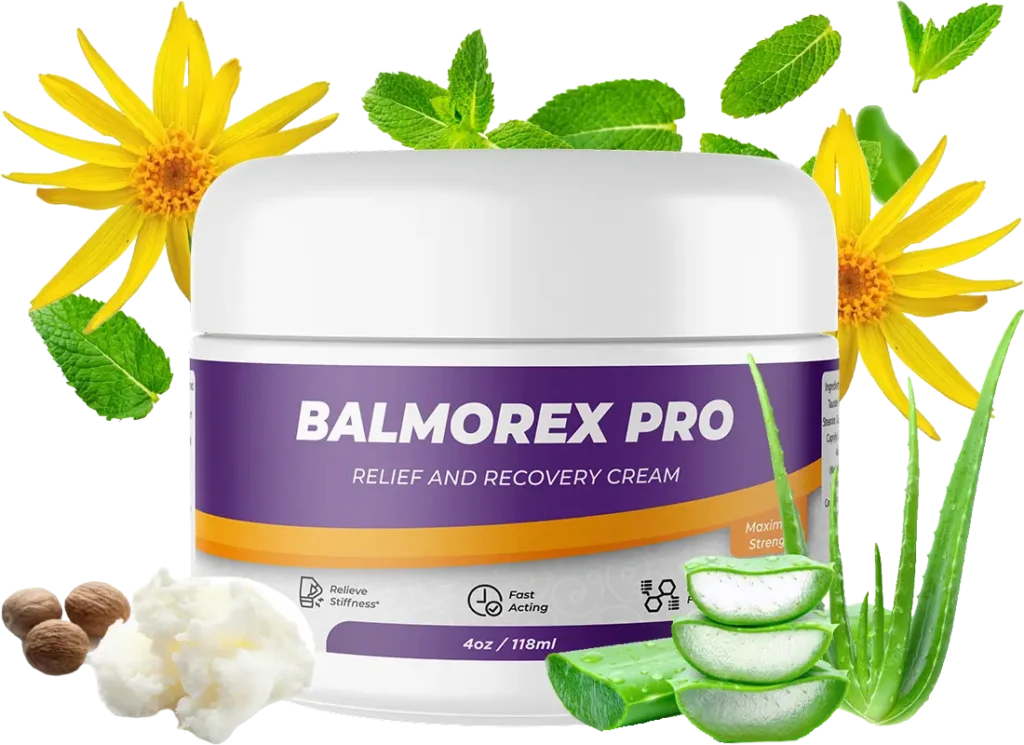
Balmorex Pro is marketed as a natural topical formula for joint, back, and muscle discomfort. Its official presentation currently identifies eight main ingredients: MSM, Arnica Oil, Hemp Seed Oil, Indian Frankincense, Aloe Vera, Epsom Salt, Shea Butter, and Ginger Root. The same page describes the formula as a 27-in-1 blend, while publicly highlighting these eight ingredients individually.
The important question, however, is not simply whether these ingredients have been studied.
It is whether the specific ingredients, amounts, formulation, and delivery method used in Balmorex Pro have been clinically tested as a finished product.
That distinction matters throughout this ingredient review.
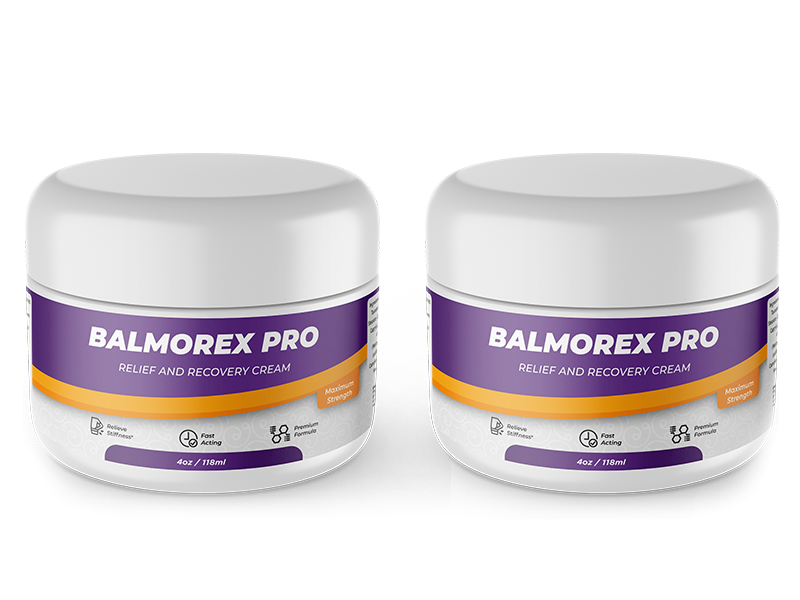
Balmorex Pro Relief & Recovery Cream
Product image is displayed for identification. Seller claims and clinical evidence are evaluated separately throughout this site.
For the broader picture—including our overall assessment of Balmorex Pro, its potential benefits, limitations, and what we found in our investigation—see our complete Balmorex review.
Balmorex Pro Ingredients at a Glance
The official Balmorex Pro presentation lists these eight ingredients:
| Ingredient | General role in the formula | Evidence context |
|---|---|---|
| MSM | Joint and muscle-support ingredient | Mostly oral research; topical evidence is more limited |
| Arnica Oil | Traditionally used for soreness and swelling | Some topical human evidence exists |
| Hemp Seed Oil | Skin-conditioning and topical comfort | Recent topical clinical evidence exists |
| Indian Frankincense (Boswellia) | Botanical associated with joint comfort | Stronger evidence is generally from extracts taken orally |
| Aloe Vera | Soothing and moisturizing support | Topical evidence exists for several skin applications |
| Epsom Salt | Traditional muscle-soothing ingredient | Evidence for broad pain-relief claims is limited |
| Shea Butter | Moisturizing and skin-conditioning base | Primarily supportive rather than a pain-relief active |
| Ginger Root | Traditional botanical for discomfort | Some topical research exists, but evidence remains limited |
The official product page does not provide individual quantities for these highlighted ingredients, so it is difficult to determine whether the amounts in Balmorex Pro match the doses used in clinical studies of individual ingredients.
That is one of the most important limitations to keep in mind.
MSM: What Do We Actually Know?
What Is MSM?
MSM, or methylsulfonylmethane, is a sulfur-containing compound commonly used in joint and muscle-support supplements.
It has attracted research interest because of its potential effects on inflammation, pain, and physical function.
What Research Has Found
Human research on MSM exists, but much of it involves oral supplementation rather than topical creams.
For example, one randomized controlled trial studied 50 people with knee osteoarthritis who received 6 grams of MSM per day for 12 weeks. The study reported improvements in pain and physical function compared with placebo, although the researchers emphasized that the trial was small and that longer-term benefits could not be confirmed.
Another randomized study found improvements in some measures of physical function and overall symptoms, but the researchers described the magnitude of benefit as relatively small and noted uncertainty about its clinical significance.
The Important Topical Question
Those studies do not prove that topical MSM in Balmorex Pro produces the same results.
The route of administration, concentration, absorption, and formulation all matter.
So MSM is a research-backed ingredient of interest, but its presence alone cannot establish that Balmorex Pro is clinically effective.
Arnica Oil: A More Directly Relevant Topical Ingredient
Why Is Arnica Used?
Arnica has a long history of traditional topical use for bruising, soreness, swelling, and minor muscle discomfort.
That makes it particularly relevant to a topical formula such as Balmorex Pro.
What Does the Research Say?
There is some useful human evidence for topical arnica.
A randomized, double-blind study involving 204 people with hand osteoarthritis compared a topical arnica preparation with 5% ibuprofen gel over 21 days. The researchers found no significant differences between the two groups in pain or hand function outcomes.
That is interesting evidence, but it should be interpreted carefully.
The study evaluated a specific arnica preparation at a specified concentration, not Balmorex Pro.
What Can We Conclude?
Arnica has some direct topical human research behind it.
But:
Arnica research ≠ Balmorex Pro clinical proof.
The exact preparation and concentration matter, and those details are not provided for Balmorex’s highlighted ingredient list.
Hemp Seed Oil: What Makes It Interesting?
Why Is Hemp Seed Oil Included?
Hemp seed oil contains fatty acids and is commonly used in topical products for skin conditioning and moisturizing.
Balmorex Pro lists hemp seed oil among its primary highlighted ingredients.
Is There Topical Pain Research?
Interestingly, a recent randomized double-blind controlled trial investigated topical hemp seed oil in 90 people with knee osteoarthritis.
Participants were assigned to hemp seed oil, diclofenac gel, or placebo and used the topical treatments daily for two months. The hemp seed oil group showed greater improvements in several pain and WOMAC measures compared with placebo, although not every outcome improved and the study evaluated a specific hemp seed oil preparation rather than Balmorex Pro.
This makes hemp seed oil one of the more directly relevant ingredients from a topical-evidence perspective.
Still, the same rule applies:
Evidence for one hemp seed oil preparation cannot automatically be transferred to a multi-ingredient cream.
Indian Frankincense (Boswellia): One of the Better-Studied Botanicals
Why Is Boswellia Used?
Indian frankincense, commonly referring to extracts from Boswellia serrata, has been studied extensively in connection with joint discomfort and osteoarthritis.
Balmorex Pro includes Indian Frankincense among its highlighted ingredients.
What Does the Research Show?
Systematic reviews and meta-analyses of Boswellia have found potentially meaningful improvements in pain, stiffness, and physical function in people with osteoarthritis.
However, much of this research involves oral Boswellia extracts or specific standardized preparations.
There is also experimental research examining topical boswellic acid, but some of that evidence comes from animal models rather than human clinical trials.
Why Does That Matter?
The type of Boswellia extract, its concentration, route of administration, and formulation can all affect results.
Therefore, it is reasonable to say that Boswellia has a research background for joint-related symptoms.
It is not reasonable to say that this research proves the exact Balmorex Pro formula has the same clinical effect.
Aloe Vera: Mainly a Soothing and Skin-Support Ingredient
Why Is Aloe Vera Included?
Aloe vera is widely used in topical products because of its soothing and moisturizing properties.
In a cream applied directly to the skin, aloe may serve a useful supporting role alongside more targeted ingredients.
What Does Research Say?
The National Center for Complementary and Integrative Health notes that topical aloe gel has been studied for several skin-related applications. Some research suggests potential benefits for burn healing and burn-related pain, although evidence varies depending on the condition and preparation.
Topical aloe is generally well tolerated, but occasional burning, itching, rash, or eczema have been reported.
What About Joint Pain?
Evidence for topical aloe should not be confused with evidence for treating joint pain.
In Balmorex Pro, aloe is better viewed as a skin-soothing/supportive component rather than evidence by itself that the product can treat an underlying joint condition.
Epsom Salt: Traditional Muscle-Soothing Ingredient
Epsom salt is magnesium sulfate and has long been associated with baths and other traditional approaches to muscle relaxation.
Balmorex Pro lists Epsom Salt among its highlighted ingredients.
Its inclusion makes sense from a traditional muscle-comfort perspective, but there is an important distinction between traditional use and strong clinical evidence.
There is not enough evidence to treat the presence of Epsom salt in a topical cream as proof of a clinically meaningful effect on chronic joint pain.
In other words, it may contribute to the product’s overall sensory or skin experience, but it should not be presented as a stand-alone clinically proven pain treatment.
Shea Butter: More About the Skin Than the Joint
Shea butter is a plant-derived fat commonly used in creams, balms, and moisturizers.
Its primary role in a topical formula is generally skin conditioning and moisturization.
That matters because products designed for repeated application need a base that feels comfortable on the skin and helps prevent excessive dryness.
But there is a key distinction:
A skin-conditioning ingredient is not automatically a pain-relieving active.
Therefore, shea butter is best understood as a supportive formulation ingredient rather than one of the main reasons to expect joint or muscle pain relief.
Ginger Root: Traditional Botanical With Some Topical Research
Why Is Ginger Included?
Ginger root has a long history of traditional use and contains bioactive compounds that have attracted research interest because of their potential anti-inflammatory properties.
Balmorex Pro includes ginger root among its eight highlighted ingredients.
What Does the Research Show?
There has been some research into topical ginger for osteoarthritis symptoms.
One small study evaluated topical ginger treatment in adults with moderate-to-severe osteoarthritis and reported improvements in pain and functional measures following treatment.
However, broader evidence is less conclusive.
A systematic review and meta-analysis examining ginger for knee osteoarthritis found that the available evidence was heterogeneous and of limited methodological quality. For topical ginger specifically, the review did not find statistically significant differences for the outcomes examined in the relevant comparison.
So ginger is scientifically interesting, but it would be an overstatement to call it a proven topical pain treatment based on the current evidence.
See Current Balmorex Pro Pricing
Compare jar bundles, bonus eBooks and the seller’s current guarantee.
How Strong Is the Evidence for the Balmorex Formula?
This is where the ingredient discussion becomes especially important.
Ingredient Evidence vs. Finished-Product Evidence
There are several different levels of evidence:
| Evidence level | What it tells us |
|---|---|
| Ingredient research | An individual ingredient has been studied |
| Topical ingredient research | That ingredient has been studied when applied to the skin |
| Specific preparation research | A particular extract, concentration, or formulation has been tested |
| Finished-product research | The exact Balmorex Pro formula has been clinically tested |
| Randomized trial on Balmorex Pro | Strongest product-specific evidence |
Balmorex’s ingredients do have varying levels of research behind them.
For example, topical studies exist for arnica and hemp seed oil, while Boswellia and MSM have substantial research interest but much of the human evidence comes from oral preparations.
But that is different from having a randomized controlled trial on the complete Balmorex Pro formula.
Where Does Balmorex Fit?
The official product page identifies the ingredients and describes Balmorex Pro as a 27-in-1 formula, but the public-facing page does not provide individual quantities for the eight highlighted ingredients.
That creates an important evidence limitation.
If a clinical study uses a particular dose or concentration, we cannot assume that the same amount exists in Balmorex Pro.
This is why ingredient research should be treated as supporting scientific context, not as proof that the finished product will produce identical results.
For our broader assessment of whether the complete formula actually works, see our full Does Balmorex Work? What the Evidence Actually Shows analysis.
Are the Balmorex Ingredients “Natural”?
The official presentation describes Balmorex Pro as containing natural ingredients and highlights the botanical components of the formula.
But “natural” should not automatically be interpreted as “proven effective” or “risk-free.”
An ingredient can be naturally derived and still have limitations, potential interactions, or side effects.
Likewise, an ingredient being natural does not tell you whether the concentration used in a particular product is sufficient to reproduce results seen in research.
So the more useful question is not simply:
“Are the ingredients natural?”
It is:
“Which ingredients have relevant evidence, in what form, at what dose or concentration, and has the finished formula itself been tested?”
That is a much more meaningful way to evaluate Balmorex.
What the Ingredient List Can—and Can't—Tell You
What You Can Learn
The ingredient information gives you a useful starting point.
You can identify the major highlighted components, including:
- MSM
- Arnica Oil
- Hemp Seed Oil
- Indian Frankincense
- Aloe Vera
- Epsom Salt
- Shea Butter
- Ginger Root
You can then compare those ingredients with independent research.
What You Still Can’t Determine
The ingredient list alone cannot tell you:
- Whether the complete formula has been tested in a randomized clinical trial
- Whether the concentration of each ingredient matches research doses
- How much of each highlighted ingredient is present
- Whether multiple ingredients produce an additive or synergistic effect
- Whether results seen in studies of individual ingredients will occur with Balmorex Pro
Those limitations are important for maintaining a realistic view of what the evidence actually supports.
Bottom Line on Balmorex Ingredients
Balmorex Pro contains a combination of ingredients that are not simply random additions. Several have legitimate research backgrounds, although the strength and relevance of that evidence varies considerably.
Arnica and hemp seed oil have particularly relevant topical human research, while Boswellia and MSM have broader research histories that are often based on oral supplementation or specific preparations. Aloe vera has established topical research for certain skin applications, while Epsom salt and shea butter are better understood as supportive or traditional formulation ingredients. Ginger also has some topical research, but the overall evidence remains mixed.
The biggest limitation is that research on an individual ingredient is not the same as clinical evidence for the finished Balmorex Pro formula.
So, based on the available information, the fairest conclusion is:
Balmorex uses several ingredients with legitimate scientific interest, but the ingredient list alone cannot establish that the complete formula has been clinically proven to deliver the same results seen in individual ingredient studies.
If you want to go beyond the ingredient list and examine whether the finished Balmorex Pro formula actually works, read our full evidence assessment:
Sources & References
We prioritize primary product information, regulatory sources, peer-reviewed research and recognized clinical guidance. Seller claims are not treated as independent clinical evidence.
Related Research
Ready to Check Balmorex Pro?
Visit the current Balmorex order page to review the latest package pricing, shipping and guarantee terms before ordering.
Editorial owner: Balmorex Reviews Editorial Team · Last reviewed: August 30, 2026
💬 Leave a Comment
Click to rate