
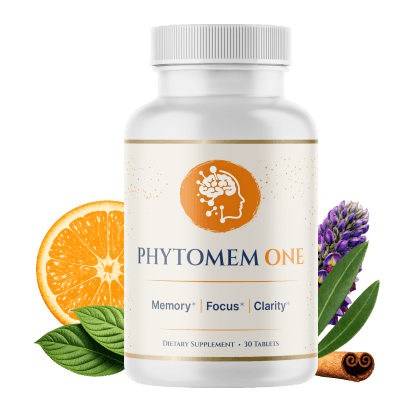
What is Phytomem One, and what is it intended to do?
Phytomem One is sold as a ten-ingredient supplement for memory, focus and clarity; its marketing mechanism is not established clinical benefit.
The seller combines a microplastic narrative with a brain-energy narrative. Those explanations are reasons to investigate the actual formula, rather than proof that taking it restores memory. This review asks whether the available documents let a buyer match the product to research and understand the purchase obligations.
Does the evidence establish a useful memory benefit?
A matched finished-product trial was not identified in this focused search, so improved everyday memory or removal of brain microplastics is not established.
Some human ingredient research provides leads, but ingredients, quantities, preparation, population and outcomes must match. A tissue observation is not a treatment trial, and a metabolic study is not a memory result. The human brain-tissue study does not test Phytomem One or establish that the advertised intervention removes particles. No reliable response timeline can be assigned from the sources reviewed.
For the claim-by-claim interpretation and study limitations, read Does Phytomem One Work?. It examines what was measured and which outcomes remain unsupported.
What should you know about the formula?
The seller names ten components, but a complete current Supplement Facts panel, ingredient amounts and excipients were not verified.
Its list includes saffron, fucoxanthin, fucoidan, oleuropein, berberine HCl, Ceylon cinnamon, corosolic acid, kudzu flower, Morosil/red orange and xylitol. This identifies the advertised formula; it is not laboratory confirmation of bottle contents. Missing amounts prevent a meaningful research-dose match. We do not invent a blend total or call it underdosed from an undisclosed distribution.
The Phytomem One ingredients review explains the listed components, missing label details and preparation comparisons. It shows what documentation would change the interpretation.
What safety issues matter before use?
The advertised berberine content raises medicine-interaction and pregnancy precautions; a complete product safety profile was not established.
NCCIH's berberine guidance identifies gastrointestinal effects, medication interactions and pregnancy/breastfeeding/infant concerns. These are ingredient concerns, not measured Phytomem One event rates. Unknown amounts do not establish negligible risk, and natural language does not guarantee compatibility.
The Phytomem One side-effects review explains the product-specific gaps and what to bring to a pharmacist or clinician. It separates medical suitability from commercial guarantees.
Who is this product for, and who should prioritize another approach?
The seller targets adults concerned about memory and clarity; the evidence does not establish a subgroup that reliably benefits from this formula.
An adult with a clearly defined wellness goal might investigate it after obtaining the current label and checking suitability. That describes a decision process, not a positive efficacy recommendation. Someone seeking proven dementia prevention, microplastic removal or reversal of cognitive decline would be asking for outcomes the reviewed evidence does not establish.
NIA’s memory guidance explains that memory problems can have multiple contributors, including sleep, medicines, mood and medical or nutritional conditions. Persistent or function-limiting change deserves assessment. Sudden confusion is an urgent issue, not an appropriate occasion to trial a supplement; NHS sudden-confusion guidance explains the need for immediate help.
For example, forgetting where keys were placed during an interruption differs from repeatedly getting lost on a familiar route. The second situation calls for assessment and safety support. A supplement’s sales story should not make those two experiences seem like the same purchase problem.
What are the advantages and limitations?
The clearest practical positives concern available purchasing information; meaningful uncertainty remains around formula transparency and clinical benefit.
| Potential practical advantage | Limitation to weigh |
|---|---|
| The seller publishes ingredient names for preliminary investigation. | Complete label quantities, excipients and allergen details were not verified. |
| Several package totals are visible before checkout. | Taxes, starter shipping and final billing selections still need checking; larger bundles increase upfront spending. |
| A written return policy and support email are available. | All items must be returned, shipping fees are excluded and customer-paid return postage means the guarantee is not cost-free. |
| Individual ingredients have relevant research leads. | No matched finished-formula evidence was identified; different outcomes cannot establish memory improvement. |
These are document-based findings. We did not purchase, take or laboratory-test Phytomem One, and do not assign an invented numerical score.
What are the headline price and return conditions?
The inspected offer advertised USD $158 for two bottles, $177 for three and $294 for six; its 60-day policy requires returns.
| Seller package | Advertised total (USD) | Advertised US shipping |
|---|---|---|
| Two bottles | $158 | Extra fee, amount not specified |
| Three bottles | $177 | Free US shipping advertised |
| Six bottles | $294 | Free US shipping advertised |
The per-bottle figures are $79, $59 and $49. These are seller-advertised figures checked October 12, 2026, not a completed checkout quotation; offers may change. Taxes, final billing selections and any optional extras should be checked at checkout. The seller includes three ebook bonuses, whose contents and monetary values were not independently assessed. No coupon, cost per serving or verified reference-price saving is claimed.
The written return policy starts 60 days after receipt, requires all purchased items back, excludes shipping fees and leaves return postage to the customer. Generic condition wording does not clearly settle every opened/empty-bottle case. A short guarantee slogan should not erase those costs and obligations.
The Phytomem One price and refund review compares package arithmetic, billing checks, bonuses and return conditions. It explains why a lower per-bottle figure can still mean a larger upfront commitment.
How can you check the buying route?
The supplied seller pages identify Phytomem One and ClickBank's retailer role; alternate official-looking domains were not verified as authorized sellers.
A legitimate transaction, manufacturer identity, quality testing and clinical effectiveness are separate questions. FDA does not approve supplements for safety and effectiveness before sale, as its consumer guidance explains. No verified authorized marketplace listing or batch certificate is supplied by this review.
Use Where to Buy Phytomem One for identity, product-version and authorization checks. It shows which checks establish authorization and which details remain unverified.
How should Phytomem One be taken?
Do not use this review as a dosing instruction: the seller’s tablet-versus-capsule inconsistency needs resolution against the current physical label.
The usage FAQ says one capsule daily with food, while other sales copy describes tablets. We report that discrepancy rather than selecting one version or borrowing directions from another website. Obtain the current label and follow its verified instructions after a suitability check.
Timing, missed-dose advice, storage requirements and bottle duration cannot be reliably supplied from the material inspected. Do not double a serving, assume an empty-stomach direction or increase intake to reproduce a research dose. The cited saffron trial’s dose is research context, not a Phytomem One instruction.
What do customer reviews and complaints tell us?
The reviewed seller testimonials do not establish typical results, and this search did not produce a verified independent customer sample for quantitative conclusions.
The vendor’s affiliate terms prohibit reusing testimonials and before-and-after photos. We therefore do not quote them, copy their images, or present them as our testing. Affiliate review pages repeating seller stories are also not independent purchasers merely because they use an editorial layout.
The concrete issues we can substantiate are document-level concerns: unspecified ingredient amounts, conflicting format wording, and fuller return requirements than the short sales summary suggests. These should not be described as verified customer complaints or proven refund failures.
If considering a review elsewhere, check whether it identifies the bought package, order date, actual experience and incentive or affiliate relationship. One individual’s experience can be informative without establishing frequency, causation or safety for other users. No rating average, satisfaction percentage or invented review count is assigned here.
Which alternatives deserve consideration?
The most useful alternative depends on the actual problem; clinical assessment, practical supports and another supplement are different kinds of options.
| Option | Useful decision criterion | Evidence or cost boundary |
|---|---|---|
| Clinical assessment and medication review | New, worsening or function-limiting change; possible sleep, mood, medicine or medical contributors. | Helps identify an appropriate pathway; local access and cost vary. |
| Task-specific reminders and reduced interruptions | A practical difficulty such as tracking appointments or remembering instructions. | Judge the chosen daily task; easier functioning does not mean reversal of disease. |
| Sustainable sleep, activity and nutrition support | Relevant general-health needs alongside an assessment plan. | NIA cognitive-health guidance distinguishes useful health measures from unproven prevention promises. |
| Another brain-support supplement | Full disclosure of forms and amounts, relevant human evidence, interaction review and clear transaction terms. | We have not verified a named competing product’s current label and price, so no product ranking or cost comparison is claimed. |
These options should not be ranked by one score: they address different questions. Correcting an established deficiency differs from taking a multicomponent blend without one. The Brain & Memory Guide provides broader context for checking a memory-supplement claim.
What should you confirm before deciding?
Confirm the physical label, suitability, complete payable amount and return obligations before making a purchase decision.
The evidence reviewed supports treating Phytomem One as an unproven optional brain-support supplement, rather than a demonstrated microplastic-removal or memory-restoration treatment. Ingredient names and published studies are worth examining, but missing formulation details prevent the dose and preparation match that would make those studies more applicable.
Ask for the current label first. Then review medicines and relevant conditions, check the exact package and billing selection, and determine whether returning all required items at your expense is acceptable. If your priority is a proven clinical result, the current evidence record does not provide it for this formula. If symptoms are progressive, the appropriate next step is assessment rather than increasing the purchase size or waiting for the refund deadline.
Phytomem One review: frequently asked questions
These answers address the specific evidence and transaction questions raised by the materials reviewed.
Is Phytomem One clinically proven?
This review did not identify a trial demonstrating benefit for the exact marketed formula. Ingredient studies do not make the finished product clinically proven.
Can it remove microplastics from the brain?
We did not locate human evidence establishing that Phytomem One removes brain microplastics. The cited tissue study did not test that intervention.
Is the $49 price for a single bottle order?
No. In the inspected offer, $49 was the per-bottle figure for six bottles totaling $294, before any applicable tax.
Is the guarantee risk-free?
The written terms include shipping exclusions, customer-paid return postage and returning all purchased items. These conditions make “risk-free” an incomplete description.
Is it a tablet or capsule?
The seller’s page uses both descriptions. Resolve the discrepancy with the current physical label before following a serving instruction.
Does a genuine checkout establish that the product works?
No. Payment processing, seller identity, manufacturing quality and clinical effectiveness are separate questions with different evidence requirements.
How was this review prepared?
This is a focused document-and-evidence review, not a personal product trial, laboratory test or independent medical review.
Biraj Health Care is FitnessLifeMag’s editorial brand, not a medical credential. This draft was prepared with AI-assisted research and writing. Seller pages, affiliate terms, pricing and written return conditions were inspected on October 12, 2026; selected human-study abstracts and authoritative guidance were used to evaluate claim applicability. We did not inspect a physical bottle, complete checkout or independently verify the manufacturer. A named clinician or independent human fact-checker did not review this draft.
The original analysis separates microplastic observations from intervention evidence, compares ingredient research with the undisclosed formula, checks package arithmetic and reconciles the short guarantee message with the fuller return policy. Seller statements are attributed rather than treated as independent confirmation.
Read our Methodology, Sources Policy and Affiliate Disclosure for editorial context. The seller’s presentation, affiliate terms and refund policy were the commercial documents checked; scientific references below are independent of the offer links.
Independent sources
These sources support their associated scientific, safety and regulatory discussions; they do not endorse Phytomem One.
- Nihart and colleagues, Nature Medicine, 2025: brain-tissue microplastic study.
- Akhondzadeh and colleagues, 2010: randomized saffron trial.
- Briskey and colleagues, 2022: Moro orange extract weight-management study.
- NCCIH: berberine evidence and safety.
- NCCIH: diabetes and dietary supplements.
- NIA: memory problems and aging.
- NIA: cognitive health and older adults.
- NHS: sudden confusion.
- FDA: consumer information on dietary supplements.