
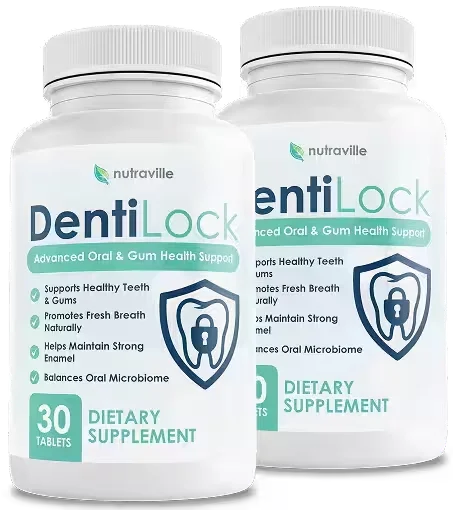
What would show that DentiLock actually works?
Relevant evidence would test the finished DentiLock tablet, at its actual dose and route, against a suitable comparison for a specific outcome.
The seller markets DentiLock for healthy gums and teeth, oral and gut biome support, and fresh breath. Those are several different claims, not one interchangeable endpoint. A study measuring bacterial counts does not necessarily show fewer cavities; a wound-healing observation does not establish a treatment for everyday gum bleeding.
This page focuses on effectiveness. For the product identity, ingredient list, usage and broader buying assessment, start with the DentiLock Review. Here the key decision is narrower: how closely does the research match the tablet and the benefit you want?
- Product match: the same finished formula, not just a shared ingredient name.
- Exposure match: ingredient form, amount, contact time and delivery route.
- Clinical match: a relevant population and an outcome that matters to patients.
- Study quality: appropriate comparison, bias control, adequate sample and transparent reporting.
Were DentiLock clinical studies identified?
We did not identify a controlled trial of this exact DentiLock product in our bounded product-name and research searches.
That is a search finding, not proof that no study exists anywhere. Seller pages and affiliate-style articles were not accepted as clinical-trial reports merely because they referred to “science” or “research.” The ingredient studies discussed here are separately identified so they are not mistaken for testing of the marketed formula.
A useful product-study claim should allow the reader to identify the report, trial registration where available, intervention details, comparison group, prespecified outcomes, follow-up and funding. A matching product name alone would still need formulation verification. A generic oral-health trial or a study about another Denti-named product is not a substitute.
Without that finished-product link, the proportion of users who will benefit, the size of any benefit and a dependable time to results remain uncertain. The correct conclusion is not “proven to work,” but neither is it a laboratory demonstration that every possible benefit is impossible.
How do the listed ingredients compare with the studied preparations?
Several ingredient studies are relevant background, but differences in dose, form, route and clinical setting prevent a reliable transfer to DentiLock.
| Listed DentiLock item | Studied preparation and population | Relevant finding | Applicability limit |
|---|---|---|---|
| Xylitol; amount undisclosed | Five 1-g lozenges daily, 33 months; 691 adults at elevated caries risk | No statistically or clinically significant reduction in the primary caries increment. X-ACT adult xylitol lozenge trial | DentiLock amount, exposure frequency and oral contact time are not established. |
| Xylitol; amount undisclosed | Specific 2.5-g/day chewing gum, one-year use; 179 adults randomized, 130 evaluated at follow-up | Favorable caries findings reported; academic and gum-manufacturer support. Adult xylitol chewing-gum trial | Chewing-gum use is not an unspecified once-daily tablet; attrition and sponsorship matter. |
| Zinc as zinc-L-carnosine; amounts undisclosed | Sodium-alginate mouthwash: 39.53 mg ZnC per 10 mL, twice daily for 28 postoperative days; 10 adults | Preliminary improvement in some later wound-healing measures. Zinc–L-carnosine surgical-mouthwash cohort | Small non-randomized sequential extraction comparison; other formulation components and surgical setting differ. Compound mass is not elemental zinc. |
| Guava fruit powder; amount undisclosed | 200 g whole guava daily in young nonsmoking adults during an experimental gingivitis protocol | Less development of gingival inflammation than water control reported. Guava and experimental gingivitis trial | Whole fruit is not an unknown powder dose; experimental hygiene abstention is not routine care. |
| Cranberry powder; standardization unknown | Review of selected cranberry polyphenols and mainly laboratory anti-caries mechanisms | Promising mechanisms; authors called for clinical trials. Cranberry polyphenols review | Powder is not a verified standardized extract; laboratory results do not establish patient benefit. |
| FOS; amount undisclosed | Systematic review of varied human FOS interventions and gut microbiota | An increase in colonic Bifidobacterium was reported. FOS gut-microbiota systematic review | Gut-bacterial changes do not establish fresh breath, gum benefit or this formula’s clinical effect. |
The seller’s complete Supplement Facts panel and ingredient quantities were not verified in the inspected material. That is why this table does not calculate “equivalent tablets,” declare underdosing or assume a proprietary blend. Even with the amounts, matching a number would not demonstrate matching formulation, delivery or clinical effectiveness.
Honey granules and magnesium stearate are also named by the seller. We did not identify a directly applicable basis in this review for treating either item as proof of the finished tablet’s gum, tooth or breath benefits. A complete formula can have multiple formulation roles; the list should not be converted into seven proven therapies.
Why do the xylitol findings point in different directions?
Different xylitol products, populations and study methods produce different evidence; a favorable result from one gum does not validate every tablet.
The 2015 Cochrane review included ten studies with 5,903 participants. Most studies were at high risk of bias. It found low-quality evidence for a particular xylitol-containing fluoride toothpaste comparison in children, while evidence for many other products was insufficient. That is narrower than a general claim that a supplement prevents cavities. Cochrane: xylitol products for caries prevention
The X-ACT trial enrolled 691 adults and used five 1-g xylitol lozenges daily for 33 months. The reported reduction in the primary caries increment was not statistically or clinically significant. This is important unfavorable evidence for a relevant adult lozenge approach, but it does not prove that every xylitol formulation has no useful effect. X-ACT adult xylitol lozenge trial
The other adult gum trial used a different intervention and reported favorable outcomes. Of 179 participants randomized, 66 xylitol and 64 comparison participants were evaluated at the reported follow-up. Its funding included Perfetti Van Melle as well as academic support. Those features belong in the interpretation alongside the result; funding alone does not invalidate it, and a favorable result does not erase its limits. Adult xylitol chewing-gum trial
For DentiLock, the practical lesson is that exposure and delivery are not incidental details. Without its xylitol quantity and verified use method, none of these studies can be used to calculate a product-specific probability of preventing decay.
Affiliate link · Check current price, billing and return terms.
Does an oral-microbiome mechanism establish a clinical benefit?
No. A proposed microbiome mechanism needs evidence connecting the actual formula to a meaningful outcome, not just an appealing biological explanation.
The oral microbiome is not simply a collection of harmful organisms to eliminate. Seller wording about “balance” needs a clear definition: which organisms or functions changed, how they were measured, and whether that translated into better oral health. A higher or lower laboratory count alone is not an all-purpose health score.
FOS is studied as a substrate that can influence gut microbes; it is not a named probiotic strain or CFU dose. The reviewed FOS synthesis reported changes in colonic Bifidobacterium, but that does not answer whether DentiLock freshens breath or improves gums. Different body sites and endpoints cannot be merged into one proven “oral-gut” outcome. FOS gut-microbiota systematic review
Similarly, cranberry’s anti-adhesion or anti-biofilm effects in laboratory work are reasons to investigate a preparation, not evidence that this tablet prevents cavities. In the cranberry review, the authors explicitly called for well-designed clinical trials. Cranberry polyphenols review
For accessible context on plaque, oral microbes and the distinction between disease measures and marketing claims, read the published Oral Health Guide.
Which advertised outcomes remain uncertain?
Product-specific support for gum, tooth and breath outcomes remains uncertain because the finished formula and its exposure have not been linked to reliable outcome data.
| Outcome | Evidence question that matters | Current product-level conclusion |
|---|---|---|
| Gum health | Does the exact formula improve relevant gingival or periodontal outcomes alongside appropriate care? | Not established by the evidence located. Surgical wound healing is a different setting. |
| Teeth and cavities | Does it reduce clinically assessed caries under a defined protocol? | Not established; xylitol findings cannot be transferred without formulation and exposure matching. |
| Fresh breath | Does it improve appropriately measured malodor, rather than only taste or sensation? | No applicable finished-product outcome identified in this review. |
| Oral/gut biome support | Is a measured microbial change connected to a meaningful benefit from this product? | A plausible pathway or ingredient-level bacterial shift is not sufficient. |
The distinction is consequential. The “gut” finding in one paper should not be used to imply gum repair. A report of less inflammation should not become a promise to restore supporting bone. Biological plausibility can guide research while the advertised clinical claim remains unproven for the product.
How long does DentiLock take to work?
A DentiLock-specific time to results cannot be determined from the research located; the seller’s supply lengths are not validated treatment timelines.
The studies above use very different follow-up periods because they study different preparations and outcomes. Twenty-eight days of postoperative mouthwash observation is not a schedule for a general supplement. A long caries trial does not mean the buyer must take DentiLock for years to obtain a benefit.
We therefore do not recommend a fixed “fair trial” of several bottles or months based on those papers. Before deciding on any optional supplement, clarify what outcome you would actually be assessing, what necessary care continues, and which symptoms should prompt professional evaluation rather than more time on the product.
Changes in brushing, diet, dental treatment, dryness or expectations can occur alongside supplement use. An individual before-and-after impression may be genuine but cannot isolate the tablet’s effect. Persistent bleeding, loose teeth or other concerning oral symptoms should not be used as an unsupervised effectiveness experiment. NIDCR: periodontal disease and care
What are the useful strengths and limits of this evidence?
The literature gives concrete comparison points and includes unfavorable findings, but it cannot supply a product-specific effect estimate or individualized recommendation.
- Useful strength: relevant human xylitol and guava research can be examined rather than relying entirely on mechanisms.
- Useful strength: conflicting xylitol findings and formulation differences can be made explicit.
- Principal limit: the DentiLock quantities and complete use instructions are not verified, so dose-and-route matching is incomplete.
- Principal limit: the located studies do not establish finished-product benefits, individual response rates or a dependable timeline.
These limitations are different from a safety verdict. If medicines or personal risk are the main concern, use the DentiLock Side Effects and Safety page rather than interpreting efficacy uncertainty as evidence that the product is safe or unsafe.
Questions readers ask before deciding
These answers address specific DentiLock questions; they do not replace the evidence and conditions explained above.
Does “clinically studied ingredients” mean DentiLock is clinically proven?
No. The study must be evaluated for the preparation and outcome it actually tested. A shared ingredient does not make the finished product clinically proven.
Does missing trial evidence mean DentiLock definitely does not work?
No. It means the relevant benefit remains uncertain from the evidence identified. Demonstrated lack of benefit in an appropriate product trial would be a different conclusion.
Is a bigger package a more effective course?
We did not identify evidence that package size establishes a necessary course or better outcome. It changes the quantity purchased, not the strength of the clinical evidence.
Can a study dose be copied by taking more DentiLock?
No. Do not increase use to imitate a research dose. The ingredient amounts and route are not established, and study protocols are not personalized dosing instructions.
How was this page researched?
We checked documents and relevant research, separating what the seller displays from clinical evidence and from outcomes we have not tested.
Biraj Health Care is FitnessLifeMag’s editorial identity, not a medical qualification. This is a document-based review: seller pages and packaging artwork, publicly accessible checkout screens, and the independent sources linked beside relevant statements were inspected. We did not buy or physically test DentiLock, assay a bottle, conduct a clinical trial, obtain a refund or commission a qualified clinical review.
Research and commercial checks: . Ingredient studies are assessed separately from finished-product trials. Checkout observations were made without personal address or payment details and are not a completed order. Seller statements are attributed rather than treated as independent clinical findings.
Read our review methodology, sources policy and affiliate disclosure. The editorial profile explains the byline; use our contact page for a sourced correction.
- Cochrane: xylitol products for caries prevention
- X-ACT adult xylitol lozenge trial
- Adult xylitol chewing-gum trial
- Zinc–L-carnosine surgical-mouthwash cohort
- Guava and experimental gingivitis trial
- Cranberry polyphenols review
- FOS gut-microbiota systematic review
- NIDCR: periodontal disease and care
Commercial documents checked: DentiLock sales-page ingredient list and FAQ; seller Shipping & Return Policy and Terms and Conditions; the two-, four- and six-bottle checkout screens; and ClickBank’s Return and Subscription Cancellation Policy and Terms of Sale. They establish what was displayed or promised, not whether a health claim is true. Prices and terms can change.
What is the evidence-led decision?
Do not buy DentiLock on the assumption that ingredient plausibility proves its benefits; first decide whether its unresolved evidence and label details are acceptable.
The available research is useful for asking better questions, not for assigning an invented success rate. A transparent complete label and a relevant finished-product study would materially improve this assessment. Until then, keep established oral care and professional evaluation separate from the optional supplement decision.
If you still want to inspect the commercial offer, treat that as checking current transaction information rather than a clinical recommendation. The main DentiLock review brings the broader product and buyer questions together.
Affiliate link · Check current price, billing and return terms.