
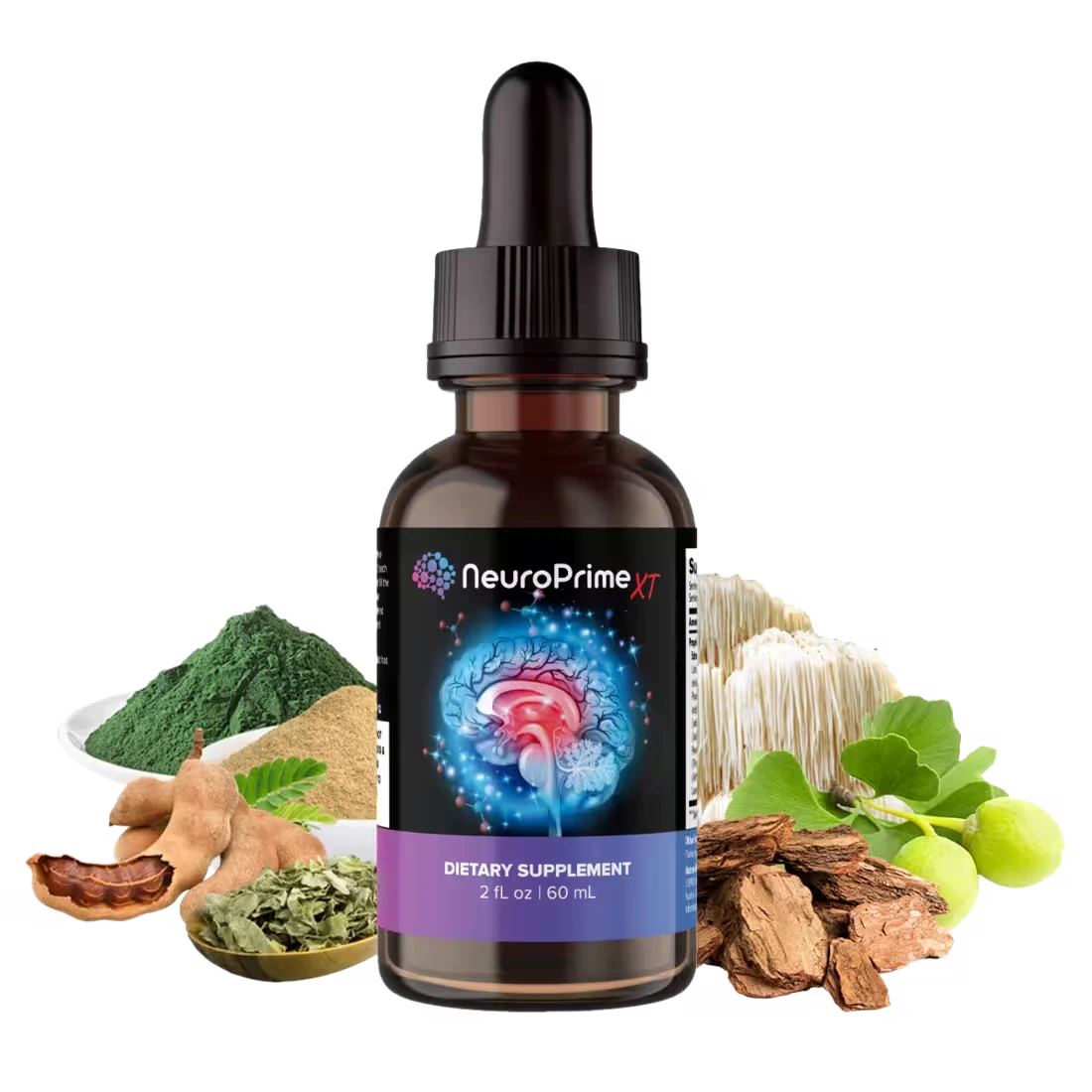
NeuroPrime side effects: the direct answer
No reliable rate of side effects for the finished NeuroPrime liquid is established in the sources reviewed. We did not identify a controlled safety trial or product-specific adverse-event dataset for the exact marketed nine-ingredient blend. That gap is not proof of harm or proof of safety. The seller-hosted label itself says, “The safety of this product has not been determined,” and says to keep it out of the reach of children under 12.
The same label image, viewed 28 September 2026, lists a 2 mL serving, 30 servings per 60 mL bottle, and an 800 mg proprietary blend per serving. It does not disclose each ingredient’s milligrams. Its suggested use says adults take 2 mL orally once daily, preferably morning, and may take another serving later if tolerated. A different seller FAQ saying “one drop” conflicts. Confirm the directions on the currently shipped bottle rather than resolving the difference yourself. Read our full ingredient-label breakdown for the nine forms and blend arithmetic.
What the seller-hosted label actually warns
The readable label image includes a caution that the product’s safety has not been determined and instructs adults on use. It is seller-provided artwork, not an independent analysis of a batch or confirmation that every delivered bottle carries identical instructions. The panel lists lion’s mane fruiting-body powder, Bacopa whole-herb powder, moringa leaf powder, tamarind fruit powder, chlorella powder, ginkgo leaf powder, maritime pine bark extract, neem leaves powder and spirulina powder. Water, glycerin, flavor and potassium sorbate appear under “other ingredients.”
| What is disclosed | What remains unknown | Why it matters for safety |
|---|---|---|
| 2 mL per serving; 800 mg total proprietary blend | Individual amounts of all nine components | Cannot judge exposure to ginkgo, Bacopa or another component against a particular study or interaction threshold. |
| 30 servings per 60 mL bottle | Whether the seller-hosted panel matches the shipped lot | Formulation, warnings and instructions should be checked on the actual package. |
| Second serving later if tolerated | How a “one drop” FAQ should be reconciled | Two measured servings would contain 1,600 mg blend in total, but not known individual doses. |
| Other ingredients: water, glycerin, flavor, potassium sorbate | Flavor composition and individual allergen sensitivity | Bring the actual bottle to an allergy or medication review when relevant. |
Important arithmetic: 800 mg applies to all nine combined in 2 mL. It would be incorrect to label any single herb as 800 mg. The list order cannot disclose its exact amount. Likewise, a study of a standardized ginkgo extract cannot be treated as a dose-equivalent test of this ginkgo leaf powder.
Possible side effects by ingredient: what can be said responsibly?
Research on a single substance may flag a question to raise with a clinician. It cannot produce a side-effect percentage for this finished blend. Published trials vary in preparation, dose, duration and population. The table separates a documented concern from product-specific unknowns.
| Ingredient or group | Relevant safety signal | Limit for this product |
|---|---|---|
| Ginkgo biloba leaf powder | NCCIH describes headache, digestive complaints, dizziness or allergic reactions with ginkgo supplements and cautions about bleeding with anticoagulants. | Many studies use defined extracts; this label gives powder without individual mg. Do not quantify NeuroPrime risk from those studies. |
| Bacopa monnieri whole-herb powder | A randomized trial of a specified Bacopa extract reported primarily digestive complaints and no serious adverse reactions in that study. | That extract and exposure differ from an undisclosed share of this liquid blend. |
| Lion’s mane, moringa, tamarind, chlorella, pine bark, neem leaf, spirulina | These are distinct materials. A symptom after use should be assessed in the context of the complete formulation and medical history. | We did not establish a product-specific reaction rate or comprehensive interaction profile for these seven ingredients. Do not transfer reports about neem seed oil to neem leaf powder. |
| Flavor and other ingredients | Individual intolerance or allergy is possible with products containing unspecified flavor. | The image does not identify the flavor constituents or independently test allergens or contamination. |
Digestive upset, headache or dizziness may occur with certain individual preparations, but symptoms can have many causes. Do not assume that a symptom after a supplement is harmless, and do not assume that every new symptom was caused by it without medical evaluation. There is no verified NeuroPrime adverse-event frequency from which to say “common” or “rare.”
Medication interactions: the questions worth taking to a pharmacist
Anticoagulants and bleeding: NCCIH says ginkgo may increase bleeding risk in people taking anticoagulant medicines such as warfarin. If you take a prescribed blood thinner, other medicine affecting bleeding, or have a bleeding disorder or planned surgery/dental procedure, ask the relevant clinician or pharmacist before use. This is an ingredient-level warning, not evidence that every NeuroPrime user will bleed.
Other regular medicines: a nine-component blend makes a generic “safe with all medicines” assurance untenable. Interaction evidence for many herbs is incomplete, and the exact amount of each component is unavailable. Bring a list of prescription and nonprescription drugs, supplements and the actual bottle; have the professional check each ingredient and your conditions. Do not stop or adjust a prescribed medicine because a supplement page makes a claim.
Drug monitoring: people whose medication dose is closely monitored, particularly those using warfarin, should not try to infer safety from a seller’s “natural” marketing phrase. A pharmacist can determine whether the product should be avoided, whether monitoring is relevant, and how to handle a suspected reaction. We do not provide a drug-by-drug clearance chart without clinically supported exposure data.
Who should pause and get personal advice first?
- Pregnant or breastfeeding people: NCCIH notes that many supplements have not been tested in these groups. We found no NeuroPrime-specific pregnancy or lactation safety study; do not treat absence of evidence as a green light.
- Children: the seller-hosted panel says to keep the product out of reach of children under 12. No child-dose recommendation follows from the adult directions.
- People with bleeding disorders or upcoming procedures: discuss the ginkgo component and all medicines before use; the clinician handling your procedure should know what you take.
- People with allergies, chronic illness or complex medication regimens: get a product-specific review, especially because individual ingredient amounts and the flavor composition are not disclosed.
- People with new, persistent or worsening memory symptoms: seek evaluation instead of using a supplement to delay diagnosis or treatment.
These groups are decision prompts, not a claim that the product is proven harmful to every member of a group. A responsible answer depends on the actual package and individual health situation.
Alcohol, driving and the conflicting instructions
We did not find a product-specific human study showing whether NeuroPrime changes reaction time, alertness or alcohol effects. The label does not establish that combining it with alcohol is safe. If you feel dizzy, unwell or less alert after use, do not drive or operate machinery and seek appropriate medical advice. This is practical caution, not a claim that this formula is a sedative.
Do not interpret a “one drop” FAQ as equivalent to the seller-hosted 2 mL measured serving. Do not add an extra serving to compensate for a missed one based on a testimonial. Confirm directions and suitability with the seller and a pharmacist if they conflict. For a full routine and measuring checklist, see the planned how-to-take guide when it is live.
Before making a purchase decision, also review the main NeuroPrime review, including the limits of the evidence and the return terms. The commercial link below lets you inspect the current offer; it does not establish safety.
View Current Offer ↗Affiliate link. Compare its label and instructions against the bottle before deciding.
When should someone stop and seek care?
If a new or concerning symptom starts after taking a supplement, stop using it and contact a qualified clinician. Seek urgent medical help for severe allergic symptoms such as breathing trouble or swelling, significant bleeding, fainting, or another severe reaction. Tell the clinician when you took it, how much you measured, any other medicines or supplements, and bring the bottle or photos of its label. Do not attempt a “test dose” to confirm a suspected serious reaction.
The FDA advises people who suspect a dietary-supplement adverse event to stop taking it, seek care and report the event. In the United States, consumers can use the FDA’s reporting route; elsewhere, use the local health authority. A report is a signal for investigation, not proof of causality in one individual. Keep the lot, expiry date, purchase record and packaging if available.
We cannot promise that a supplement caused or did not cause a specific symptom. If the symptom involves bleeding or a possible drug interaction, the value of timely medical assessment is higher than waiting for an online product review to settle it.
NeuroPrime safety FAQs
Is NeuroPrime safe for everyone?
No universal safety conclusion is supported. The seller-hosted panel explicitly says its safety has not been determined. Ingredient-level research does not establish a safety rate for this exact formula or your circumstances.
Does NeuroPrime cause side effects?
Possible reactions cannot be ruled out. Ginkgo supplements have documented adverse-effect and bleeding-interaction concerns; Bacopa extract trials have reported digestive complaints. The exact NeuroPrime risk and frequency remain unknown.
Can I take it with a blood thinner?
Discuss the ginkgo-containing label with the clinician or pharmacist managing the medicine before use. Do not change your prescription on the basis of this article.
How much ginkgo or Bacopa is in one serving?
The panel shows 800 mg total for nine ingredients in 2 mL, but does not disclose the amount of either component.
Is it safe during pregnancy or breastfeeding?
We found no product-specific evidence establishing safety in these groups. Seek professional advice and do not assume an herbal blend is automatically safe.
What about alcohol or driving?
No NeuroPrime-specific alcohol or driving study was verified. Avoid driving if you feel dizzy or unwell; ask your clinician about alcohol given your own conditions and medicines.
Should I take a second serving?
The seller-hosted label allows a second serving later if tolerated, but another seller FAQ contradicts its measured directions. We cannot give a personalized dose recommendation. Confirm the current shipped bottle and resolve the discrepancy with a qualified professional.
Sources, method and limitations
- Seller-hosted NeuroPrime label image, viewed 28 September 2026. Source recorded as `label-fe.webp`; the image is seller information, not a tested batch certificate.
- NCCIH: Ginkgo usefulness and safety — ingredient-level warning on anticoagulant bleeding risk.
- NCCIH: Ginkgo adverse effects and procedure cautions.
- Randomized Bacopa extract trial — preparation-specific adverse-event reporting; not this blend.
- NCCIH: Dietary and herbal supplements — interaction and higher-risk-group context.
- FDA: Dietary supplements and adverse-event reporting.
Method: we reviewed a seller-hosted label image and selected primary clinical/public-health sources. We did not physically inspect the currently shipped lot, review an adverse-event registry for this exact formula, perform an exhaustive safety review of all nine ingredients, or conduct a clinical assessment. These limits are why the page does not assign a safety score or numerical side-effect rate.
If you still want to inspect the offer after resolving those questions, this marked commercial link is available:
Check Current Offer ↗