
Is ProvaDent Legit or a Scam? Evidence and Buyer Checks
What is independently documented, and which sales claims still need proof?
Affiliate disclosure: Fitness Life Mag may earn a commission through marked product links at no added cost. Compensation does not change the verification criteria. Read our disclosure.
Answer at a glance
A seller presents ProvaDent as a two-tablet oral supplement, shows a package checkout and publishes a return process. These facts can be documented without declaring every shipment authentic or every promised outcome real. The label’s plant-name conflict and the absence of a located finished-product efficacy study are concrete questions to resolve. For the full purchase assessment, see the complete ProvaDent review.
A fair answer without an unsupported accusation
ProvaDent appears as a marketed chewable tablet product with a published label and ClickBank-directed package checkout. Those are product and transaction indicators, not proof that every health claim is correct. The package page publishes a two-tablet serving, bottle counts and ClickBank payment links; the seller refund page displays contact and return information. We have not independently confirmed that every order goes through and arrives as described. We cannot establish fraud from an overstated headline or an inconsistent label entry, nor can the presence of a payment link establish that overnight enamel repair occurs. Calling it “legit” without saying which dimension is being verified would hide those differences.
Is ProvaDent legit or a scam? Four separate questions
| Dimension | What can be checked | What remains open |
|---|---|---|
| Product identity | Current label image, package count and listed distributor. | Delivered lot and independent assay. |
| Transaction | Seller page, cart details and written returns. | Individual fulfillment/refund outcomes. |
| Health claims | What the seller promises and what research evaluates. | Human trial of this finished formula for overnight enamel results. |
| Quality claims | Marketing badges and manufacturer statements. | Actual certificates, scope and batch-level records. |
Our assessment is an evidence ledger, not an invented numeric trust score. A website may have real contact details while a claim remains weak; an inconsistent label can warrant correction even if customers receive the item. Each line in the table needs its own supporting document.
The label discrepancy is a real finding
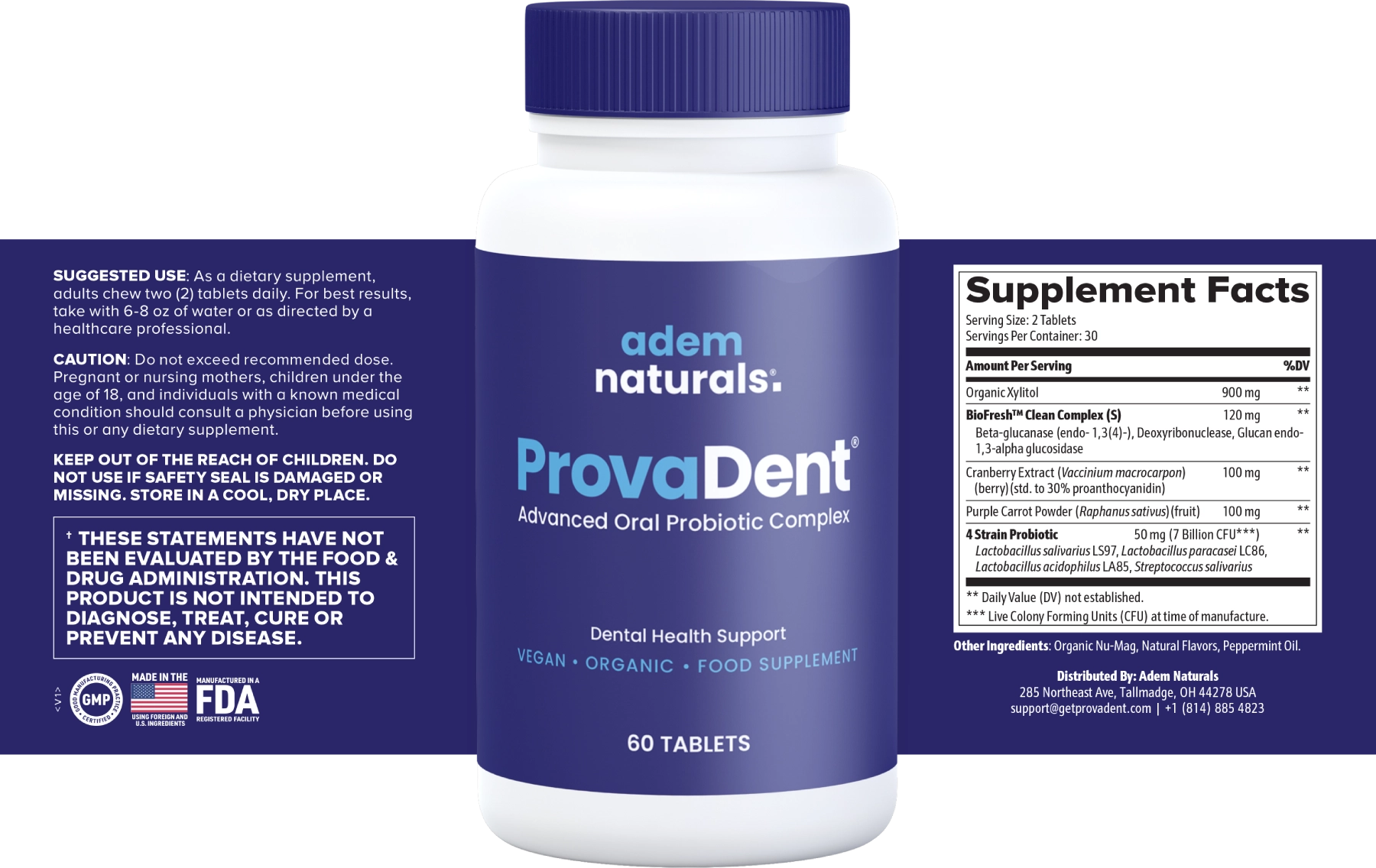
The seller-published ingredient panel pairs “Purple Carrot Powder” with Raphanus sativus, which denotes radish. Purple carrot normally refers to Daucus carota. We cannot resolve whether the error is a common name, a Latin name or product identity from a screenshot. Ask for written clarification before relying on this as a verified carrot ingredient. Preserve the exact label wording in your request so the supplier can identify the revision and material in question. That conflict supports a question, not a categorical fraud allegation.
The conflict is reproducible from the published ingredient panel; it is an original product-specific finding rather than a rumor about the seller. If the plant matters to an allergy or dietary choice, wait for a corrected specification and compare it with the delivered lot. A visual of a purple vegetable on a page cannot settle a Latin-name mismatch.
Compare offer-domain name, legal merchant on the cart, product quantity and the displayed 60-day window. Look for optional extras and any recurring charge on the actual payment screen; we did not establish an automatic subscription. If the page changes materially between affiliate landing and payment, pause to resolve the discrepancy. The written return page mentions customer-paid return postage; do not mistake a guarantee badge for a no-cost return.
How to treat “clinically tested” and badges
A badge stating GMP or “third-party tested” and a “clinically tested” line are seller representations. To evaluate them, request the identity and scope of any certifying body, the current facility or batch document where relevant, and a published trial that uses the finished ProvaDent formulation with a relevant outcome. We have not independently verified those documents. The FDA says dietary supplements are not approved for safety and effectiveness before sale, so an “FDA registered” logo cannot be treated as product approval. A facility registration or a manufacturing-standard claim answers a different question from whether a supplement reverses tooth damage.
A meaningful trial request names the formula, participants, comparison, dose, duration, dental outcome and full results. An ingredient experiment or a testimonial should be identified as such. A quality certificate would need a lot, date, laboratory and exact tests; even a credible certificate for composition would not establish clinical benefit. These distinctions let a buyer ask for specific records rather than accept or reject marketing as a single package.
Checkout questions to ask before purchase
Confirm product name, amount payable, merchant, location-specific shipping, whether the purchase recurs, how to contact support and which items must be returned. Save dated screenshots or receipts. The package page points its payment buttons to a ClickBank domain, but we did not enter a payment method or verify a completed order. The processor’s existence is not a clinical endorsement of the product. A live marketplace listing with a similar name does not establish it is the same formula, lot or return agreement as the seller’s package page.
Our documented assessment
The product is marketed for sale, but the strongest efficacy assertion is unverified in the materials we could locate. The botanical-name mismatch warrants correction. No independently validated customer sample or fulfillment audit lets us label the transaction a scam or guarantee satisfaction. The seller-selected star graphic is not a statistically verified survey of buyers. Report the evidence gap rather than imply that absence of independent reviews establishes wrongdoing. A cautious buyer should prioritize documented claims and total checkout terms over urgency or large crossed-out discounts.
Compare the current label, merchant, final total and return policy. Treat clinical claims and quality badges as unverified until documentation is supplied.
Inspect current offer and terms ↗What evidence would settle each open question?
A current bottle photograph and documented lot can help identify a delivered item. A written response from the supplier can clarify whether the disputed purple ingredient is carrot or radish. A complete independent batch report, with tests and date, would support a defined quality claim. A trial of the exact marketed tablets with measured dental outcomes would support a defined efficacy claim. These documents answer different questions; none should be substituted for another. For an actual refund dispute, you would also need the dated order, support request, shipping record and response; a published policy alone cannot tell you how one claim was handled.
Similarly, a satisfied customer can confirm their own delivery but cannot validate a clinical effect across buyers. An unsuccessful refund story requires transaction records to assess the written policy and the actual request. The word “scam” covers too many separate issues to function as an evidence grade.
If the seller supplies new evidence, check whether it identifies this exact formulation and the period when the buyer purchased it. Product names can stay the same while labels or lot details change. A corrected label can fix a naming ambiguity but cannot by itself validate an overnight remineralization promise.
A simple decision rule for readers
First verify that the delivered label matches the claimed product and that the checkout clearly identifies your total and return terms. Second ask whether the specific result you want is supported by finished-formula evidence. Third decide whether the remaining unknowns matter given your health concern and budget. For overnight enamel repair, the current documented research gap is material. The NIDCR explanation of tooth decay describes natural mineral loss and replacement, but it is not evidence that these tablets repair enamel after one night. For an optional mint-like oral routine, a buyer may place different weight on price and format, but should not reinterpret the claim as proven.
There is no single binary badge that settles product identity, transaction reliability and clinical efficacy at once. Make the decision that matches your actual goal. If a claimed dental outcome is essential to the purchase, ask for a matching finished-product study. If a botanical identity is essential to safety, obtain written clarification before use. If the price is the sticking point, compare the current final cart with the policy you can document.
Questions readers ask
Is ClickBank an endorsement?
No. A payment route does not constitute independent validation of the health claim.
Is ProvaDent FDA approved?
Do not assume a dietary supplement is FDA approved; a marketing badge cannot establish approval.
Does a label typo prove a counterfeit?
No. It establishes a discrepancy requiring written clarification.
Sources, method and related guides
Product identity, seller claims, label wording, package buttons and advertised badges were checked against the package page and offer; published return conditions against the refund page. General regulatory context comes from FDA supplement guidance; enamel context from NIDCR. Checked September 20, 2026. We did not buy or independently assay the product, audit a return, verify a factory certificate, or establish fraud. Seller content is not independent corroboration; revise this guide if material documents emerge.
Fitness Life Mag Editorial Methodology · Sources Policy · Affiliate Disclosure
Before any order
Ask for written clarification of any issue that matters to you, especially the plant identity and evidence behind the health claim. Compare the actual cart with the dated seller policy before authorizing payment.
Check current seller information ↗