
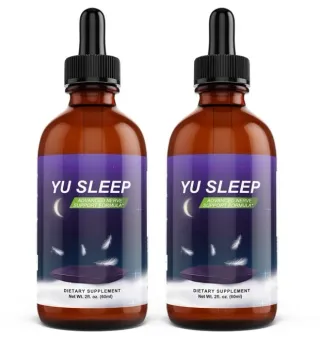
Formula source note: the seller lists 0.9 mg melatonin. The 0.5 mg B2/B6 and 637 mg blend figures are reported by secondary label analyses; a current complete manufacturer panel was not independently authenticated. Compare your bottle with the formula-source record before relying on those figures.
Is Yu Sleep Legit or a Scam? The Short Answer
We found concrete product signals: a labeled liquid supplement, disclosed amounts for vitamin B2, vitamin B6 and melatonin, a named 637 mg proprietary blend, seller pages, checkout routes and marketplace listings. Those facts support the conclusion that Yu Sleep is a real product being offered for sale.
However, legitimacy is not a single yes-or-no property. A genuine bottle can still be marketed with claims stronger than the evidence. A real company can still create checkout or support frustration. A legitimate brand can appear in an unauthorized or mismatched marketplace listing. And a customer can receive no benefit without that result proving fraud.
Verdict: we do not have a sound basis to label Yu Sleep itself a scam. We also do not have a reliable exact-formula trial that justifies calling it clinically proven. Evaluate the product, evidence, seller and transaction separately.
Signals That Support Yu Sleep Being a Real Product
| Signal | What it supports | What it does not prove |
|---|---|---|
| Seller bottle images and secondary label analyses | A product identity is commercially presented | Label accuracy or clinical efficacy |
| 0.9 mg melatonin disclosed | A seller-listed amount can be compared with your bottle | Performance of the full combination |
| Seller and checkout routes | A functioning commercial transaction path | Every domain or reseller is authorized |
| Advertised 60-day guarantee | A stated buyer-protection promise | Eligibility without reading full terms |
| Marketplace presence | A September 2026 listing was previously observed; current availability is unverified | Authorization, freshness or identical formula |
These are meaningful operational signals, but none substitutes for independent laboratory verification, a finished-product clinical trial or transparent customer-service data.
Evidence Gaps That Buyers Should Not Ignore
The most important limitation is evidence distance. Studies on melatonin, magnesium or L-theanine do not automatically test Yu Sleep. We did not identify a reliable human trial of the exact current formula at its labeled serving. Therefore, claims about guaranteed onset, uninterrupted sleep, deep sleep or a universal timeline go beyond what can be established.
Seven ingredients—red tart cherry concentrate, magnesium glycinate, apigenin, lemon balm extract, 5-HTP, L-theanine and GABA—share a 637 mg proprietary blend. Listing the components is useful, but the individual quantities remain undisclosed. That prevents confident dose-by-dose comparison with research and complicates interaction assessment.
Marketing Red Flags vs Proof of a Scam
Strong sales language should trigger verification, not an automatic fraud accusation. Countdown timers, “limited supply” warnings, dramatic testimonials, mechanistic diagrams and guaranteed-sounding results can create urgency without improving the evidence. The responsible response is to narrow each claim and ask what source directly supports it.
Trust-supporting behavior
- Readable current label
- Secure checkout and stated merchant
- Accessible refund and contact terms
- Affiliate and testimonial disclosure
- Qualified health language
- Consistent product details across steps
Red flags requiring pause
- Disease-cure or guaranteed-result claims
- Seller identity changes unexpectedly
- Hidden recurring charge
- Missing complete terms
- Payment requested outside checkout
- Formula or bottle differs materially
A red flag is a reason to investigate or stop a transaction. It is not automatically proof of criminal intent. Document exact pages, charges, messages and dates before drawing a conclusion or filing a complaint.
How to Verify the Seller and Checkout
- Confirm the entire URL and HTTPS before entering information.
- Match the product name, bottle count, volume and ingredient panel.
- Identify the merchant shown at checkout and expected on the statement.
- Check the final total, shipping, tax and any recurring-order language.
- Read the written guarantee, return address and contact procedure.
- Save screenshots plus the order confirmation and tracking record.
- Inspect the delivered seal, label, lot details and condition.
A product-name matching domain is not proof of ownership or authorization. Likewise, an Amazon listing can exist without establishing that it shares the seller funnel’s guarantee. Verify each transaction route independently.
Check the dated partial-refund policy and BBB complaints and resolutions. These need context and do not alone prove fraud. Seller presentations and secondary formula analyses do not authenticate an independently inspected bottle.
Yu Sleep Legitimacy Scorecard
| Question | Assessment | Confidence limit |
|---|---|---|
| Does a real product appear to exist? | Yes, supported by product and listing evidence | Does not authenticate every seller |
| Is the formula fully dose-transparent? | Partly; three amounts disclosed, seven share a blend | Individual blend doses unknown |
| Is the exact formula clinically proven? | No reliable matching trial identified | Ingredient research is indirect |
| Is a refund window advertised? | Yes, a 60-day period is promoted | Current complete terms must be verified |
| Will it work for every buyer? | No such conclusion is justified | Sleep causes and responses differ |
Affiliate disclosure: We may earn a commission through the purchase link below, at no extra cost to you.
Is Yu Sleep Legit or a Scam? FAQs
Is Yu Sleep legit or a scam?
Yu Sleep appears to be a real supplement offered through functioning seller and marketplace routes, but that does not prove every marketing claim or every listing. Buyers should verify the exact product, merchant, checkout and refund terms.
Is Yu Sleep clinically proven?
We did not identify a reliable human clinical trial of the exact current finished formula, so it should not be described as clinically proven.
Does the proprietary blend make Yu Sleep a scam?
No. A proprietary blend is not proof of fraud, but it limits dose transparency because seven ingredient amounts are not disclosed separately.
Do Yu Sleep complaints prove fraud?
No. Complaints may identify performance or service concerns, but fraud requires stronger evidence. Review dates, documents, seller responses and the relevant policy.
Is every Yu Sleep website official?
No. A product name in a domain or page title does not prove authorization. Verify the merchant, checkout domain, label, support information and terms.
What is the safest way to evaluate Yu Sleep?
Separate formula evidence, personal suitability, seller identity, transaction terms and customer feedback instead of collapsing them into one star rating.
Method and Sources
This assessment separates product existence, scientific evidence, seller legitimacy and transaction quality. It does not claim laboratory testing, private business records or a verified customer success rate.