
Neuro Serge Complaints: 90-Day Returns vs 180-Day Supply
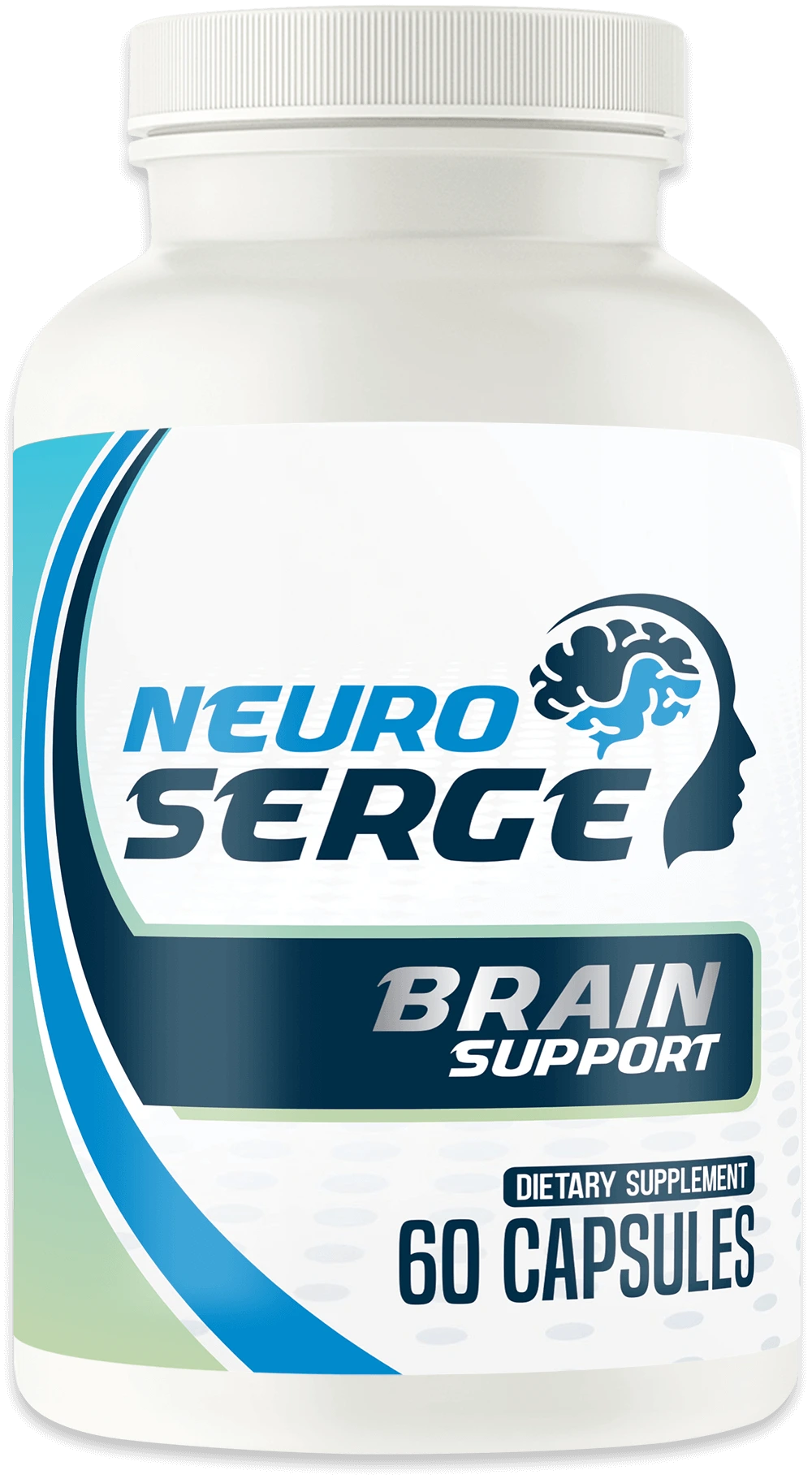
Independent editorial analysis. Commercial links below may earn a commission.
Neuro Serge’s buying terms need careful reading because short sales statements and detailed policies are not fully aligned. This page distinguishes documented offer friction from unverified complaints and compares practical alternatives. The main Neuro Serge review owns full pricing; here, the decision is how to evaluate claims, preserve return eligibility and avoid choosing a replacement on equally weak evidence.
| Option | Evidence focus | Label needs | Appropriate use | Key limitation |
|---|---|---|---|---|
| Neuro Serge | Unestablished finished-formula efficacy. | Full quantified formula needed. | An elective purchase only after questions are resolved. | Current disclosures constrain confidence. |
| Clinical assessment | Investigates the individual problem. | Medicine and symptom history. | Persistent or function-limiting changes. | A review cannot diagnose the cause. |
| Practical routines | Daily organization and healthy habits. | No proprietary formula. | Support alongside appropriate care. | No guaranteed disease prevention. |
| Targeted nutrient support | A documented clinical need. | Known nutrient identity and dose. | Professional guidance when indicated. | Not a universal memory solution. |
Documented friction versus unverified allegations
The available evidence supports an offer-consistency audit, not a numerical complaint rate. Ingredient counts vary between six highlights, a four-plant heading and a 20+ claim. Bonus descriptions also differ across sections. Those are observable document problems; they do not establish how often a buyer experiences a delivery, billing or health problem.
A useful complaint includes a dated order, the offer presented, correspondence and a specific unresolved issue. Anonymous comments can suggest questions, but they do not verify product identity, purchase status or causation. The seller’s own customer total should be treated with the same discipline: it is not an independently audited satisfaction survey.
| Observed issue | What it supports | What it does not prove |
|---|---|---|
| Conflicting ingredient counts | Ask for one complete current formula. | It does not identify the contents of every shipped bottle. |
| Two versus three bonuses | Confirm the exact items at checkout. | It does not prove that no buyer receives bonuses. |
| Different US delivery estimates | Treat the timing as an estimate and request tracking. | It does not establish a universal late-delivery rate. |
| Revaslim wording in policy footers | Seek written confirmation that the policy applies to Neuro Serge. | It does not by itself establish deceptive conduct. |
The seller FAQ gives 7–10 US business days, while the shipping page gives 5–7 and describes next-working-day dispatch. Preserve the version relevant to your order rather than choosing the most favorable sentence. Policy-page template residue is worth clarifying, but an editorial review should describe the observed fact without inventing motive.
The 90-day deadline is an arrival deadline
The return process is more demanding than the short guarantee suggests. The shipping policy requires every bottle, including empty or partially used ones, to reach the return facility within 90 days of original purchase. Buyer-paid postage and transit time therefore matter, particularly when the six-bottle offer advertises 180 supply days.
The short guarantee suggests contacting the seller, and the FAQ refers to unused product. The fuller policy requires all bottles and identifying details. Treat the stricter published process as an important pre-purchase question, and obtain written instructions rather than assuming that an email on the last day preserves eligibility.
- Keep the receipt, order ID, bottles and relevant policy copy.
- Ask support to confirm eligibility, the current address and required contents.
- Allow time for tracked delivery before the purchase-based deadline.
- Keep postage and delivery records until the refund is resolved.
For illustration, recovering a $294 product payment and spending $8–$12 on return postage produces $282–$286 net recovery before any other deductions. Those postage figures are hypothetical, not a quoted shipping charge. The reviewed policy expressly excludes international shipping refunds; domestic outbound-fee treatment was not clear.
Do not wait for a six-month outcome promise before reviewing a three-month return deadline. At the end of 90 days, roughly half of an advertised 180-day supply remains, even before allowing for delivery time. The complete package table belongs in the main review’s pricing section.
Verify the transaction without inventing counterfeit claims
A familiar product name on a marketplace does not establish an authorized seller. The supplied offer uses ClickBank as retailer, while marketplace authorization was not verified. That calls for seller and product checks rather than a claim that every Amazon or Walmart listing is counterfeit. The final checkout still needs review before payment.
Check the product name, quantity, final total and merchant identity. Optional upgrades should be distinguishable from the original order. The seller FAQ describes no autoship, while affiliate material promotes upsells; those statements can coexist if additional purchases are genuinely optional. No completed payment transaction was inspected in this review.
- Use the order receipt to identify the merchant handling billing support.
- Distinguish a product question from a payment or refund dispute.
- Do not send card details in a public comment or to an unverified contact.
- Retain a written record of the exact resolution requested.
A retailer’s involvement does not mean the retailer clinically endorses the formula. Similarly, a facility badge does not prove independent batch testing. FDA explains the different responsibilities of supplement manufacturers and regulators. FDA FDA source [1] The label analysis addresses formula verification without repeating buying instructions.
Compare alternatives by the problem they solve
The strongest alternative may be assessment rather than another brand. New or function-limiting memory changes require a different response from occasional organizational lapses. A clearly labeled ingredient product is easier to assess than an undisclosed blend, but transparency alone does not establish cognitive benefit. No competitor is declared clinically superior without a suitable comparison.
There is no verified current certified generic memory-product price in this audit. A bargain comparison would be misleading if the cheaper option has no established role for the reader’s problem. Nutrient replacement should address a demonstrated need, not an assumption that all concentration problems reflect a deficiency.
| Decision priority | Approach | Useful evidence | Limit |
|---|---|---|---|
| Understand the symptom | Appropriate clinical assessment. | A history and evaluation relevant to the problem. | A web review cannot diagnose a cause. National Institute on Aging NIA source [2] |
| Support daily function | Calendars, routines and health habits. | Practical supports considered in context. | They are not guaranteed dementia prevention. National Institute on Aging NIA source [2] |
| Evaluate a capsule | Full label and suitable quality documentation. | Known preparation, quantity and batch evidence. | Ingredient transparency is not proof of benefit. |
| Treat a deficiency | Clinician-guided targeted replacement. | A demonstrated need and follow-up. | Do not generalize to unexplained symptoms. |
Use the Brain & Memory Guide for broader decisions and the ingredient library for terminology. These comparisons explain what to ask for; they do not prescribe a substitute product.
When to step back from the offer
Step back when the evidence needed for your decision remains unavailable. An unanswered full-label request, unresolved medicine interaction or unclear return condition is a reason to pause, not a reason to buy more bottles. The advertised 90-day window and 180-day supply should be considered separately when deciding how much money to commit.
Someone already satisfied with a purchase can still ask for a complete label and keep records. Someone dissatisfied should describe the concrete problem rather than borrow accusations from another affiliate page. A refund request is stronger when it identifies the order, applicable policy and requested remedy clearly.
Our methodology separates evidence, safety and commercial clarity. If persistent symptoms are driving the purchase, arrange appropriate care before trying another supplement. No public review can establish that continuing, switching brands or increasing a dose is the correct personal medical decision.
Questions specific to complaints
These answers focus on documentation and return eligibility rather than alleged customer success rates. The 90-day arrival deadline, 180-day advertised supply and conflicting bonus wording create specific questions for the seller. Keep written records, confirm the current policy and distinguish an unresolved transaction from an unsupported allegation about every buyer.
Are there verified recurring Neuro Serge complaint percentages?
Must empty bottles be retained?
Does mailing on day 90 satisfy the published policy?
Are three bonus items definitely included?
Is a lower-price marketplace listing necessarily fake?
References
- FDA. Questions and Answers on Dietary Supplements. Accessed October 30, 2026. FDA source
- National Institute on Aging. Memory loss and forgetfulness. Accessed October 30, 2026. NIA source
Seller documents and offer checked October 30, 2026. Prices are advertised, not a completed checkout. Research comparisons are based on the cited abstracts and official health resources.